
The California Auction: How Billionaire Wealth Is Drowning Out Democracy
Published
- 3 min read
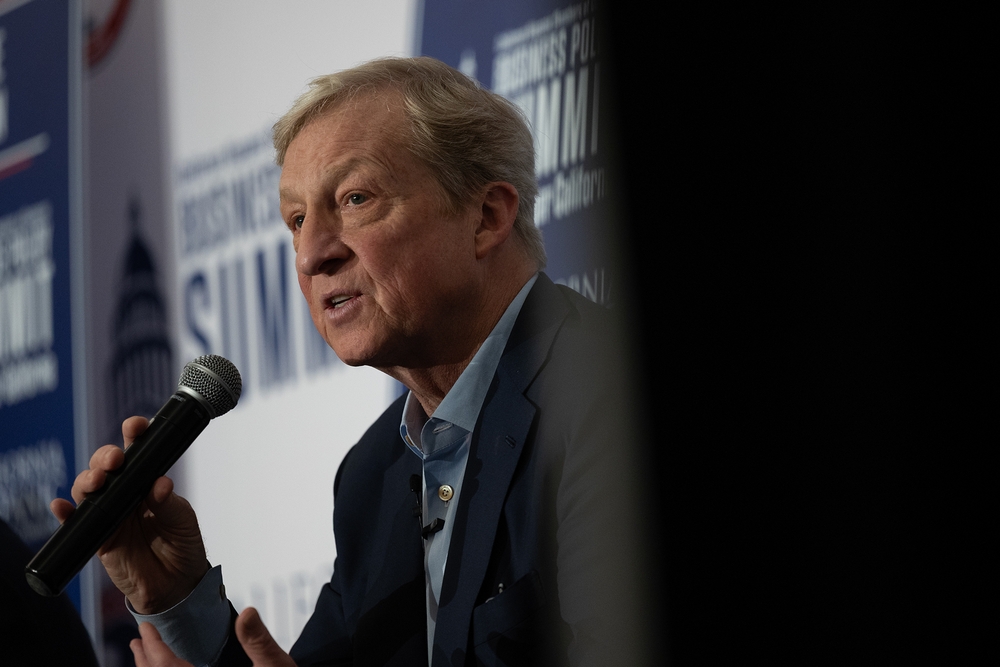
The Staggering Financial Reality of the Governor’s Race
The latest campaign finance disclosures for the California gubernatorial race paint a picture not of a vibrant democratic contest, but of a financial arms race that threatens to obliterate the principle of political equality. At the center of this storm is billionaire environmental activist Tom Steyer, who has already poured a staggering $132 million of his personal fortune into his campaign. This sum, spent largely on a relentless television advertising blitz, has already surpassed the amount spent to fight the recall against Governor Gavin Newsom in 2021 and is on track to challenge the $159 million record set by Meg Whitman in 2010. Steyer’s spending outpaces his closest competitors by twenty to thirty-fold, creating a campaign landscape defined not by policy debates, but by sheer monetary saturation.
While Steyer’s self-funding operation is unprecedented, the traditional fundraising circuit reveals its own disturbing dynamics. San Jose Mayor Matt Mahan, a relative unknown statewide, dominated Democratic fundraising by hauling in $13 million over four months, a war chest largely filled by a “who’s-who” of Silicon Valley executives and billionaires often at odds with the state’s labor unions. This support is amplified by independent expenditure committees backing Mahan, which have raised $25 million. Other Democratic contenders, like former Congresswoman Katie Porter ($2.8 million), former Attorney General Xavier Becerra ($1 million), former LA Mayor Antonio Villaraigosa ($707,000), and State Superintendent Tony Thurmond (a mere $62,000), are operating in a different financial universe. On the Republican side, commentator Steve Hilton ($4.4 million) and Sheriff Chad Bianco ($1.5 million) lead the polls.
The financial chaos is further illustrated by the collapse of Congressman Eric Swalwell’s campaign following misconduct allegations. The filings reveal Swalwell used campaign funds to pay a defense attorney and that his campaign continued to receive large donations even after the allegations became public and he dropped out. Meanwhile, special interest groups are engaged in a spending frenzy of their own, with a coalition including PG&E and the state Chamber of Commerce spending millions on ads attacking Steyer, who has vowed to challenge PG&E’s monopoly.
Context: A State in Crisis Confronts a Democracy in Crisis
This financial free-for-all is unfolding against the backdrop of California’s profound affordability crisis, rampant homelessness, and intense debates over taxing the wealthy. Progressives are pushing for billionaire taxes, a move that has prompted a fierce counter-mobilization from figures like Google’s Sergey Brin and venture capitalist Michael Moritz. Steyer himself campaigns on a platform of reining in corporate power and wealthy interests—a paradoxical position for a man leveraging his own vast wealth to secure power. His past investments in fossil fuels and private prisons, now fodder for attack ads, complicate his progressive credentials, though he has secured endorsements from groups like the California Nurses Association by arguing his personal wealth makes him immune to other special interests.
The situation presents a fundamental constitutional and moral crisis. The First Amendment protects freedom of speech, but when speech is measured in hundreds of millions of dollars, it ceases to be a right shared equally by all citizens and becomes a commodity available only to the ultra-wealthy. This corrupts the foundational democratic compact.
Opinion: The Moral Bankruptcy of Plutocratic Politics
This is not politics; it is financial colonization. Tom Steyer’s campaign is an act of profound democratic disrespect. While he may champion progressive policies, the method of his advocacy—drowning out every other voice with a tsunami of cash—is inherently authoritarian. It communicates that the ideas of those without a nine-figure bank account are irrelevant. It reduces the complex needs of 40 million Californians to a marketing problem solvable with enough airtime. His ability to “buy” credibility with left-wing groups by arguing he “can’t be bought” is a tragic irony that highlights how thoroughly our political logic has been corrupted by money. When the price of admission to the political stage is tens of millions of dollars, the stage is no longer democratic.
Similarly, Matt Mahan’s Silicon Valley-funded campaign represents the outsourcing of political power to a technocratic elite. His donors have a direct stake in shaping state policy on regulation, taxation, and labor—issues central to the wellbeing of ordinary Californians. This creates an inevitable conflict of interest and a government that is efficient not for the people, but for its wealthiest patrons. The fact that Tony Thurmond, the state’s top education official, raised only $62,000 is a damning indictment of a system that values connections to capital far more than a record of public service.
The Swalwell episode adds a layer of legalistic decay to the financial rot. Using campaign funds for legal defenses against serious personal misconduct allegations, while legal under specific conditions, blurs the line between public office and private entitlement. It feeds the public’s justified cynicism that the political class operates under a separate set of rules, using donor money as a personal shield.
The Path Forward: Reclaiming Democratic Sovereignty
This crisis demands more than dismay; it requires a radical re-commitment to the principles of liberty and equal representation. We must advocate for bold, systemic reforms to restore the citizen as the sovereign actor in our democracy. This includes championing small-donor public financing systems that amplify the voices of everyday Americans, not billionaires. It demands a renewed push for a constitutional amendment to overturn doctrines that equate unlimited spending with free speech, clearly establishing that preventing corruption and protecting political equality are compelling state interests.
Furthermore, we need stringent, real-time transparency laws so every dollar spent by independent groups and billionaire candidates is instantly visible to the public. Voters have a right to know who is trying to influence their vote before they cast their ballot, not months later in a campaign filing.
The California governor’s race is a terrifying preview of America’s political future if we do not act. It is a future where elections are not won, but purchased; where representatives are not public servants, but the clients of their richest donors; and where the promise of the Constitution—a government of, by, and for the people—becomes a hollow slogan. As a nation founded in rebellion against unaccountable power, we must find the courage to rebel against this financial tyranny. Our liberty depends on ensuring that in the voting booth, every citizen stands as an equal, no matter the size of their wallet. The integrity of our republic is non-negotiable.