
The California Billionaire Tax: A Litmus Test for Progressive Courage
Published
- 3 min read
Introduction: The Progressive Quandary
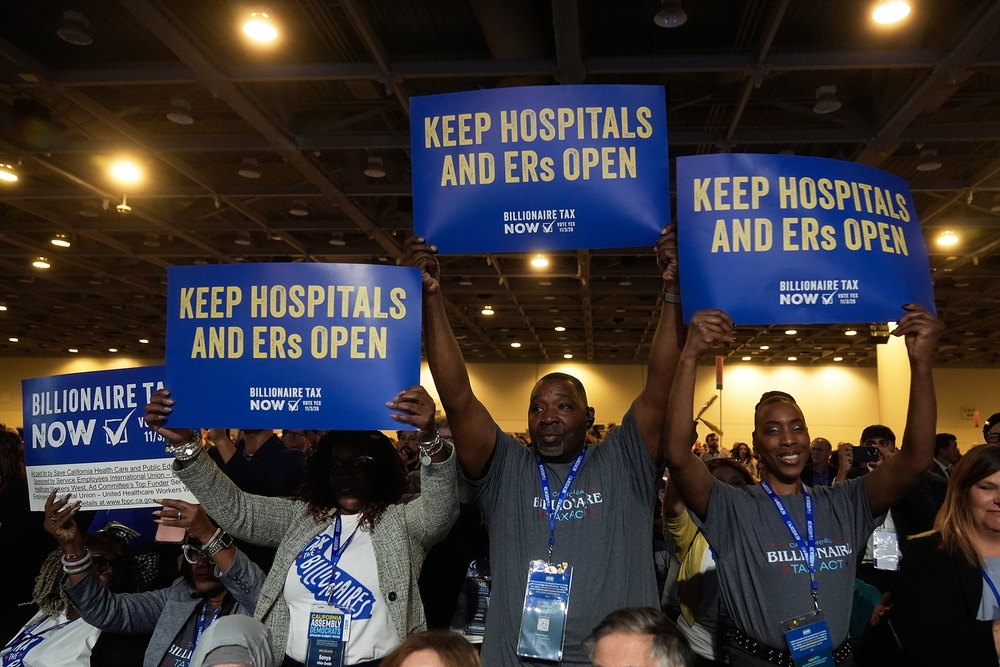
A seismic political tremor is rumbling through California, threatening to crack the very foundation of its progressive coalition. At the epicenter is the “2026 California Billionaire Tax Act,” a citizen-led ballot initiative proposing a one-time 5% tax on residents with a net worth exceeding $1 billion. The estimated $100 billion in revenue is earmarked to fill a hole left by federal cuts to Medi-Cal and other social service programs. On its surface, this is the epitome of progressive policy: confronting staggering wealth inequality by asking the super-rich to contribute to the health of the society that enabled their fortunes. Yet, as detailed in recent reporting, this proposal has become a political hot potato, exposing a deep and troubling rift within the ranks of labor leaders and progressive lawmakers who are its natural allies.
The Facts and The Stakes
The mechanics of the proposal are straightforward but unprecedented in California. It targets approximately 200 individuals, leveraging Forbes’ wealth estimates to apply the levy. The funds are specifically dedicated to backfilling healthcare funding, a move championed by its sponsor, SEIU-United Healthcare Workers West (SEIU-UHW). The political landscape, however, is anything but simple.
Publicly, prominent figures like Senator Bernie Sanders and economist Robert Reich have voiced support. Governor Gavin Newsom has publicly aired his disdain. The most revealing dynamic, however, is the deafening silence and private criticism from within the progressive and labor establishment. Of multiple union leaders and members of the Legislative Progressive Caucus consulted for the underlying report, only one lawmaker, Assemblymember Chris Ward, would criticize the measure openly. This silence speaks volumes about the political fear at play.
Opposition spending has been fierce, with billionaires like Google co-founder Sergey Brin and crypto mogul Chris Larsen pouring over $50 million into efforts to defeat the measure and promote competing initiatives. Proponents, led by SEIU-UHW President Dave Regan, are confident they will secure a spot on the November ballot, setting the stage for a defining political battle.
The Criticisms: Legitimate Concerns or Political Cowardice?
The private criticisms from progressives coalesce around several points. First, there are practical concerns about implementation. Critics, including former state budget director Keely Martin Bosler, question the Franchise Tax Board’s ability to accurately appraise net worth—a complex task involving private assets, art, and businesses—without a federal wealth tax framework for support. This, they argue, invites legal challenges.
Second, there is the fear of capital flight—that such a tax would drive wealthy residents out of California, causing long-term revenue loss. Third, and perhaps most telling, is the resentment from some labor quarters that the measure is designed to predominantly benefit SEIU-UHW’s healthcare members rather than bolstering the state’s general fund for broader needs. Assemblymember Ward called it a “well-meaning effort” but criticized its one-time, sector-specific nature, suggesting alternative corporate tax reforms.
Opinion: The Betrayal of Principle in the Face of Power
This moment is not merely a policy dispute; it is a profound litmus test for the soul of the progressive movement. The spectacle of anonymous criticism and strategic sidestepping by those who have built their careers on rhetoric of taxing the rich is nothing short of a betrayal of democratic principles. It reveals a movement that is adept at protesting inequity from the opposition benches but faltering when presented with a tangible, if imperfect, tool to address it.
The core argument against the tax—that it might drive billionaires away—is a capitulation to economic blackmail. It accepts the premise that the ultra-wealthy are not citizens with civic responsibilities but itinerant capital, free to abandon the state whose infrastructure, educated workforce, and legal systems they leveraged to build their wealth. To govern based on this fear is to surrender democracy to plutocracy. The $50 million already spent by billionaires to oppose this measure is not an argument against its feasibility; it is a glaring advertisement for its necessity. It proves that concentrated wealth actively seeks to neuter the democratic will and the progressive agenda, precisely as critics fear. The response to this should not be retreat, but resolve.
The complaints about the tax benefiting a specific union sector ring hollow in the context of a targeted crisis. The federal cuts are to healthcare programs. Using the revenue to shore up those specific institutions is logical and direct. To let the perfect—a broad-based, permanent wealth tax for the general fund—be the enemy of the good is a classic political failure that leaves vulnerable citizens suffering while politicians dream of ideologically pure solutions. As UC Berkeley professor Brian Galle, who helped craft the measure, notes, this is a targeted, one-time solution for a specific, devastating hole in our social safety net.
Most damning is the anonymity of the critics. Dave Regan’s challenge is spot on: “What we have is a group of so-called leaders who are not reflecting the attitudes of their own constituents… That’s why they want to be anonymous.” Leadership in a democracy requires standing by one’s convictions publicly, especially on difficult issues. Whispering concerns in the corridors of power while the public supports the measure and billionaires mount a $50 million assault is the behavior of political actors more concerned with preserving their own standing than fighting for justice.
Conclusion: A Call for Courageous Democracy
The California Billionaire Tax initiative is more than a revenue proposal; it is a referendum on whether the state’s progressive establishment has the courage of its supposed convictions. The technical challenges are real, but they are problems to be solved, not excuses for inaction. The threat of wealthy flight is a challenge to be met with stronger arguments about civic duty and the benefits of a healthy society, not a reason for preemptive surrender.
This episode exposes a dangerous timidity at the heart of our politics—a willingness to critique power in the abstract but a fear of confronting it directly when it mobilizes. For democracy to function, for liberty and justice to be more than slogans, elected officials and labor leaders must be willing to take public stands, debate openly, and fight for the principles they espouse. The citizens of California, who polls show support this idea, deserve representatives who will champion their will against the concentrated power of wealth, not representatives who hide from the fight. The future of the progressive project—and indeed, of a government that truly serves the people—depends on recovering the courage this moment demands.