
The California Insurance Crisis: A Battle for Accountability in the Face of Climate Catastrophe
Published
- 3 min read
Introduction: A Market in Distress
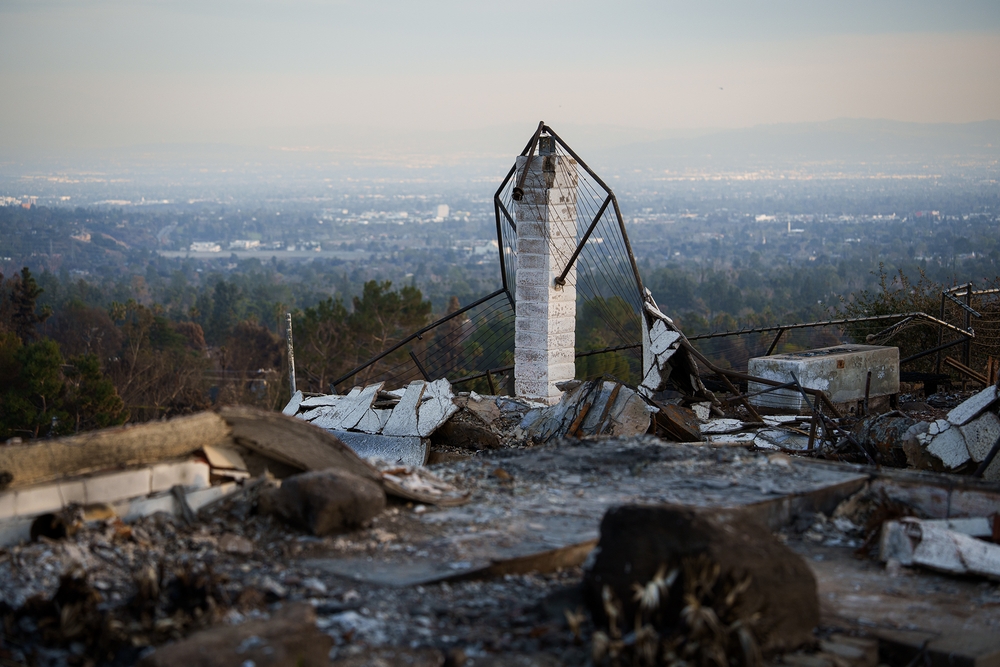
The office of the California Insurance Commissioner is often described as the second most difficult job in the state, and the 2024 election for this critical regulatory position lays bare why. Californians are experiencing a market in profound distress: homeowners face exorbitant, ever-climbing premiums; others have seen their policies canceled outright; and survivors of last year’s devastating Los Angeles-area wildfires have battled insurers over delayed or denied claims, discovering shocking gaps in coverage for smoke damage. This is not merely a bureaucratic issue—it is a full-blown crisis of economic security, eroding the very foundation of what insurance is meant to provide: peace of mind and financial resilience.
At the heart of this crisis is a regulatory failure. The incumbent, Commissioner Ricardo Lara, has faced intense criticism and calls for resignation from wildfire victims, while implementing industry-friendly regulations in a bid to lure insurers back to the state. While this may have stemmed some retreat, premiums continue their relentless ascent, and the market remains deeply unhealthy. A recent survey commissioned by the Insurance Fairness Project reveals the public’s justified anxiety: 62% of likely voters are very concerned about the cost of homeowners insurance, and 43% have no confidence that California’s insurance system can withstand future extreme climate disasters.
The Stakes and the Candidates
The commissioner regulates the nation’s largest property and casualty insurance market, overseeing policies for homes, businesses, and autos, while also regulating life, health, and workers’ compensation insurance. The next commissioner will inherit a daunting task list defined by climate risk, corporate accountability, and consumer protection.
CalMatters interviewed the five top-fundraising candidates, who, despite varying approaches, uniformly call for greater transparency and accountability from insurance companies under Proposition 103. They seek to reduce wildfire risk, and most agree California must hold the fossil fuel industry accountable for contributing to the climate risks driving up insurance costs. A common thread is the desire to reduce dependence on the FAIR Plan, the insurer of last resort whose policies have exploded from about 264,000 in 2022 to nearly 650,000 by late 2025—a stark indicator of market failure.
The candidates present a spectrum of solutions. State Senator Ben Allen, backed by much of the Democratic establishment and former Commissioner Dave Jones, focuses on holistic risk reduction, including state loans for home hardening and restricting new construction in high-risk zones. Former Senator Steven Bradford proposes a public-private partnership to share risk with insurers and leverage industry investments. Republican Merritt Farren, a wildfire survivor turned intervenor, advocates for a state reinsurance entity (CAL Reinsure) to backstop insurers. Jane Kim, a former San Francisco Supervisor, champions bold, government-led solutions like a universal natural disaster insurance pool and a public option for auto insurance. Political newcomer and financial analyst Patrick Wolff emphasizes data transparency, proposing to publicly rate insurers’ claims-handling performance.
A Systemic Failure of Protection and Principle
The facts presented are not just a story of a difficult job; they are an indictment of a system that has prioritized corporate stability over citizen security. The explosion of the FAIR Plan is a canary in the coal mine, signaling the collapse of a functioning private market. When nearly 650,000 households are forced into a plan of last resort, it is a clear admission that the social contract of insurance—where risk is pooled and managed for the collective good—is breaking down. This breakdown disproportionately impacts the most vulnerable, turning climate disasters into economic death sentences.
The harrowing testimonies from wildfire survivors about claim delays and denied coverage for smoke damage reveal more than bad corporate behavior; they expose a regulatory apparatus that has failed in its most basic duty: enforcement. Where was the aggressive oversight? Where were the clear standards and the swift penalties? Former Commissioner Dave Jones’s call for “clear mechanisms for law enforcement” is a damning critique of the current enforcement vacuum. A regulator that does not regulate is merely a spectator, and Californians have been burned, literally and figuratively, by this passivity.
Commissioner Lara’s industry-friendly regulatory shift, while perhaps a pragmatic short-term tactic to prevent a total market exit, is a dangerous precedent. It risks institutionalizing a dynamic where regulatory power is negotiated away under threat of corporate withdrawal. This is not governance; it is capitulation. The core purpose of the Department of Insurance is to protect consumers, not to ensure insurer profitability. When these interests conflict, the commissioner’s duty is unequivocally to the public.
The Path Forward: Courage, Transparency, and Justice
The solutions offered by the candidates are revealing. Some, like Bradford’s partnership model and Farren’s reinsurance concept, work within the existing market framework, seeking to make it more palatable for insurers. Others, notably Jane Kim’s proposals, envision a more fundamental restructuring, moving toward a public-utility model for catastrophic risk. Patrick Wolff’s focus on transparent, public data is a universally necessary first step toward empowering consumers and enabling true market accountability.
From a principled standpoint, several non-negotiable elements must guide the next commissioner’s tenure. First, a relentless and uncompromising enforcement of Proposition 103. This voter-approved law exists for a reason—to check corporate power. Its tools, including the intervenor process that allows citizens to challenge rate hikes, must be strengthened, not weakened as the current administration has sought. Second, the department must become a fierce, proactive advocate. It needs more staff to handle consumer complaints and must establish an independent consumer advocate office, as Ben Allen suggests, to counterbalance the industry’s immense lobbying power.
Third, and most critically, the next commissioner must publicly and legally champion the principle of climate accountability. The fossil fuel industry’s decades of deception have directly fueled the climate crisis that is now bankrupting our insurance system. As most candidates acknowledged, this industry must be held financially responsible for the risks it has created. This is not a radical idea; it is basic justice. The costs of climate adaptation and disaster recovery cannot fall solely on struggling homeowners and taxpayers while the primary architects of the crisis profit.
Finally, we must confront the hard truths of land use. Ben Allen’s cautious approach to restricting building in high-risk zones is morally and fiscally responsible. Continuing to subsidize and insure development in fire-prone areas is a recipe for infinite future loss and human tragedy. We need compassionate, well-funded retreat and buyout programs, coupled with massive investment in community-wide hardening for existing at-risk communities.
Conclusion: A Referendum on Regulatory Integrity
The election for California Insurance Commissioner is a referendum on whether government can still function as a guardian of the public interest against concentrated corporate power. It is a test of our collective will to address the root causes of the climate crisis, not just its symptoms. The candidates offer different philosophies, but the electorate must demand a common core: integrity, transparency, courage, and an unwavering commitment to the consumer.
The people of California are not merely policyholders; they are citizens entitled to a regulatory system that works for them. They have been failed by a market that views them as liabilities and a regulatory structure that has too often been a passive partner in that failure. The next commissioner must be a warrior for fairness, a detective for transparency, and a unifier for resilience. The survival of our communities’ economic fabric depends on it. This is not just an administrative election; it is a battle for the soul of California’s promise of security and prosperity in an uncertain age. We must choose a leader who remembers that the word “commissioner” derives from a duty to serve, not to settle.