
The Carceral State Reborn: California's Alarming Expansion of For-Profit ICE Detention
Published
- 3 min read
The Facts: A Rapid and Opaque Buildup
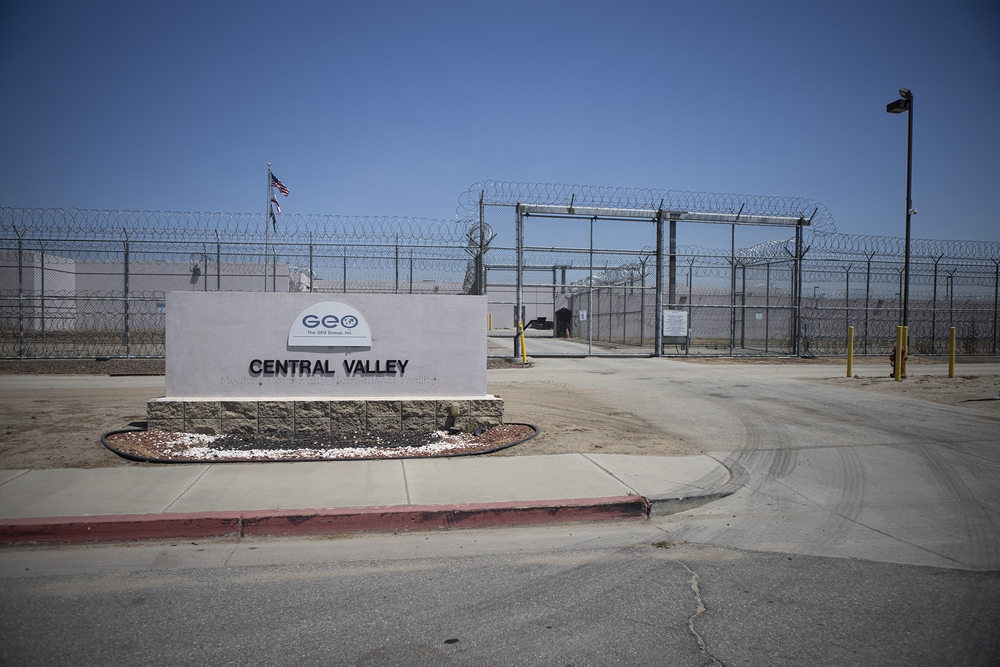
Under the current federal administration, the landscape of immigration detention in California has undergone a radical and troubling transformation. According to recent reports, the state now hosts eight active Immigration and Customs Enforcement (ICE) detention centers, up from six at the beginning of 2025. Two of these new facilities have opened since President Donald Trump resumed office, both strategically located in repurposed state prisons in the Central Valley. The latest addition, the Central Valley Annex in McFarland, operated by the for-profit prison corporation GEO Group, adds 700 beds to a state system whose total capacity now approaches a staggering 10,000.
The numbers tell a stark story of escalation. The average daily population in California’s ICE detention centers has skyrocketed by 72%, from about 3,104 people in April 2025 to 5,337 recently. This state-level surge mirrors a national agenda: fueled by a $45 billion allocation from legislation signed by President Trump last year, ICE aims to detain over 100,000 immigrants daily, a massive increase from the approximately 40,000 held daily when the administration began.
This expansion has been characterized by a blatant circumvention of democratic processes and state law. The Central Valley Annex, alongside the previously opened Golden State Annex (also in McFarland), operates on land that once housed GEO Group’s private prisons for the California Department of Corrections and Rehabilitation. As the state moved to reduce its prison population and Governor Gavin Newsom moved to cancel those contracts, GEO Group pivoted. Despite a 2019 state law intended to block such conversions, a pre-emptive 15-year, $1.5 billion contract with ICE and a subsequent federal court ruling that struck down the state law allowed the corporation to proceed. Local officials, like former McFarland Mayor Manuel Cantu Jr., have pointed to the millions in annual tax revenue and utility fees from GEO as critical for city services, revealing the economic pressures that facilitate this carceral growth.
Alarmingly, this pattern repeats elsewhere. In California City, another private prison operator, CoreCivic, opened the state’s largest ICE detention center (capacity 2,560) in another shuttered state prison, reportedly without obtaining the necessary permits from the city, sparking legal and community opposition.
The Human Cost: A Legacy of Abuse and Neglect
The factual context cannot be separated from the harrowing human conditions reported within these facilities. The expansion is not into a vacuum but into a system with a deeply troubling record. Detainees at facilities under the same GEO Group contract as the Central Valley Annex—specifically the Mesa Verde and Golden State Annex centers—have for years reported severe abuses. These allegations include medical neglect, punitive solitary confinement for reporting sexual abuse, inadequate food, and exploitative labor for as little as $1 per day.
Edwin Carmona-Cruz, co-executive director of the California Collaborative for Immigrant Justice, warns that individuals sent to the new annex risk “the same terrible abuses and inhumane conditions.” His statement that “ICE and GEO Group are incapable of meeting the human needs of the people they detain” is underscored by the grim statistic he cites: nearly 50 people have died in ICE custody since the start of this presidential term. Last year, the California Attorney General’s office itself issued a report expressing profound concern over the medical care in the state’s then-six ICE facilities.
GEO Group’s spokesperson, Chris V. Ferreira, has previously dismissed such allegations as part of a “radical, politically motivated campaign,” but the consistency and source of the complaints—from the detained individuals themselves—demand rigorous, independent scrutiny, not corporate dismissal.
Opinion: A Betrayal of Founding Principles and Local Autonomy
This expansion represents far more than a shift in immigration enforcement tactics; it is a fundamental betrayal of American principles of justice, liberty, and democratic governance. The transformation of California’s valleys into a sprawling archipelago of detention centers is a chilling development for anyone who believes in the rule of law and the sanctity of human dignity.
First, the profit motive is the engine of this misery. The conversion of failing private prisons into immigration detention centers reveals a cynical business model where human freedom is the commodity. Corporations like GEO Group and CoreCivic have a direct financial incentive to maximize occupancy, lobbying for policies that ensure a steady flow of detainees. This creates a perverse alignment between corporate profit and government policy, where the humanitarian goal of just and fair immigration processing is subjugated to the balance sheet. Detention should never be an industry.
Second, this expansion flagrantly undermines the rule of law and local sovereignty. The sequence of events—passing a state law to block conversions, only to have a federal contract signed weeks before it took effect, followed by a federal court invalidating the state law—demonstrates a disturbing pattern of pre-emption and centralization of power. It sidelines the will of California’s elected representatives and its communities. The reports that GEO Group began housing detainees in McFarland’s new annex without clear conditional use permits or business licenses, and that CoreCivic did the same in California City, show a blatant disregard for local oversight and zoning authority. This is not “law and order”; it is the imposition of a carceral regime by fiat, eroding the foundational American principle of layered, accountable governance.
Third, the documented conditions within these facilities are a moral scandal. Allegations of medical neglect, solitary confinement, and exploitative labor are not mere administrative failures; they are violations of basic human rights. A system that pays a detained individual $1 a day for work is engaging in indentured servitude. A system that uses solitary confinement against those who report abuse is perpetuating a cycle of intimidation and trauma. When nearly 50 deaths occur in custody over a short period, it is a crisis that screams for systemic overhaul, not exponential expansion. The California Attorney General’s concerns are a official red flag that is being ignored in the rush to detain more people.
The strategic use of former state prisons is particularly insidious. These facilities were designed for punishment, not for the civil administrative holding of individuals who are awaiting immigration hearings, many of whom have committed no crime. It reinforces a false and dangerous narrative that equates immigrants with criminals, justifying their treatment in a hardened, punitive environment wholly unsuitable for a civil process.
Conclusion: A Call for Vigilance and Humanity
The expansion of for-profit ICE detention in California is a multi-faceted assault. It assaults human dignity by subjecting vulnerable people to abusive conditions. It assaults democratic norms by overriding state and local laws. It assaults fiscal and moral responsibility by funneling billions into a system that causes harm rather than providing solutions. It represents the very kind of institutional decay and liberty-undermining action that every patriot must vehemently oppose.
As defenders of the Constitution and the Bill of Rights, we must recognize that these protections are not exclusive to citizens; they embody universal principles of due process and humane treatment. The Eighth Amendment’s prohibition of cruel and unusual punishment does not cease at the detention center door. The fight against this expansion is not a partisan issue but a foundational one. It is a fight to ensure that America does not build its future on a foundation of for-profit human caging, bureaucratic opacity, and systemic neglect. We must stand with advocates like Edwin Carmona-Cruz, demand transparency and accountability from operators like GEO Group, and insist that our representatives at every level of government uphold the rule of law and the inherent dignity of every person within our borders. The soul of our nation depends on it.