
The Constitution Endures: SCOTUS Rebukes an Assault on Birthright Citizenship
Published
- 3 min read
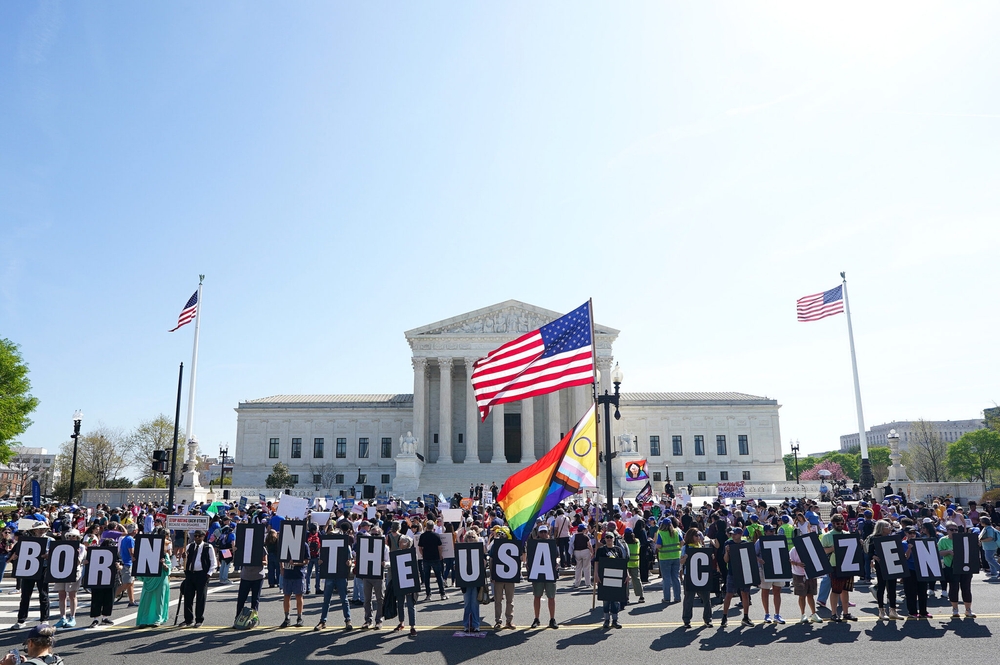
The Facts: A Pivotal Moment at the High Court
On a consequential Wednesday in Washington, D.C., the United States Supreme Court heard oral arguments in a case that strikes at the very definition of American identity. The central question before the justices was whether the Trump administration could, via executive order, unilaterally end birthright citizenship for children born on U.S. soil to parents without legal status or temporary visas. This principle, a bedrock of our nation for over 150 years, is rooted in the Citizenship Clause of the 14th Amendment: “All persons born or naturalized in the United States, and subject to the jurisdiction thereof, are citizens of the United States.”
The administration, represented by Solicitor General D. John Sauer, advanced a narrow and revisionist interpretation. He argued the clause was originally intended only to grant citizenship to children of newly freed slaves, not immigrants. Furthermore, he contended that children of undocumented or temporarily present parents are not “subject to the jurisdiction” of the U.S., likening them to children of foreign diplomats—a comparison Chief Justice John Roberts later termed “quirky” and derived from “tiny and sort of idiosyncratic examples.”
Sauer went further, suggesting the landmark 1898 precedent of United States v. Wong Kim Ark, which unequivocally upheld birthright citizenship, was wrongly decided, though he stated the administration was not explicitly asking for its overturn. His broader argument posited that unrestricted birthright citizenship is an outlier in the modern world and “demeans the priceless and profound gift of American citizenship.”
The Context: A Skeptical Bench and High Stakes
The courtroom dynamics were telling. Skepticism flowed from justices across the ideological spectrum. Conservative Justice Neil Gorsuch pressed Sauer on whether Native Americans would qualify as birthright citizens under the administration’s test, exposing the argument’s historical contradictions. Justice Brett Kavanaugh questioned the relevance of other nations’ citizenship laws to interpreting the U.S. Constitution. The liberal wing, including Justice Elena Kagan, challenged the attempt to rewrite the settled historical understanding of Wong Kim Ark.
The human stakes were powerfully articulated by Cecillia Wang, the American Civil Liberties Union lead attorney arguing against the administration. Ms. Wang, herself the daughter of Taiwanese immigrants on student visas, noted that under the proposed order, she would have been denied citizenship at birth. She framed the 14th Amendment’s rule as a foundational truth known to every American, deliberately placed “out of the reach of any government official to destroy.” Experts warn that striking down this right would create a class of millions of stateless people—individuals with no country to call home.
President Donald Trump, who signed the executive order in question and attended the oral arguments, later took to social media to falsely claim the U.S. is “the only Country in the World STUPID enough” to have birthright citizenship, ignoring nations like Canada, Mexico, and Brazil. A decision in the case, Trump v. Barbara, is expected by late June or early July.
Opinion: This Was an Attack on the Republic’s Foundation
The arguments presented to the Supreme Court were not merely a policy dispute over immigration. They constituted a profound and dangerous assault on the constitutional order, the rule of law, and the principle of equal protection under that law. The attempt to reinterpret the 14th Amendment through a lens of exclusionary originalism, selectively applied, is a betrayal of its revolutionary purpose. The Amendment was born from the Civil War’s bloody lesson that a nation cannot tolerate a permanent caste of residents denied the full protections of citizenship. Its language was deliberately broad and inclusive: “All persons born…” It was designed to heal, to unify, and to forever prevent a government from creating second-class inhabitants within its borders.
The administration’s “quirky” legal theory is a transparent vehicle for a political objective: to radically reshape the nation’s demographic fabric through executive fiat. It seeks to replace a clear, objective standard (place of birth) with a subjective, government-administered test of parental status—a power ripe for abuse and discrimination. Chief Justice Roberts’s retort to Sauer’s “new world” argument—“it’s a new world, it’s the same Constitution”—was a masterful defense of constitutional permanence against the tides of political expediency. The Constitution is our anchor, not our sail; it is meant to restrain temporary passions, not be bent to them.
Furthermore, the specter of statelessness raised by this case cannot be overstated. To deliberately render children born on American soil nationless is an act of profound inhumanity and a direct repudiation of American values. It creates a shadow class, individuals without rights, without passports, without a homeland—a condition fundamentally antithetical to the Enlightenment principles upon which this nation was founded. The emotional core of Ms. Wang’s argument resonates because it speaks to a universal understanding of belonging. Birthright citizenship is a declaration that here, on this soil, your potential is not limited by your ancestry. It is the ultimate expression of the idea that America is not an ethnic nation, but a civic one.
The skepticism shown by justices from Gorsuch to Kagan is a heartening, if fragile, sign that the institution’s commitment to the law can still transcend partisan alignment. This case is a stark reminder that defending democratic institutions is a continuous struggle. The 14th Amendment’s protections were hard-won. That they must be defended anew against an administration willing to deploy frivolous legal theories to achieve a discriminatory end is both tragic and a clarion call for vigilance.
Conclusion: A Reaffirmation of Who We Are
The Supreme Court’s likely rejection of this executive overreach is not a victory for one political side over another. It is a victory for the Constitution itself over autocratic impulse. It reaffirms that in the United States, no president, no matter how powerful they believe themselves to be, can unilaterally redefine the essence of American citizenship. The promise of the 14th Amendment—that our fundamental belonging cannot be stripped away by government decree—must remain inviolate.
As we await the final decision, we must reflect on what was truly at stake: the very idea of America as a nation of laws, not of men; a nation where your birthright is secure, not subject to the political whims of the moment. To undermine birthright citizenship is to undermine a pillar of our national stability and moral authority. The court’s resistance is a necessary step in turning back a dark and divisive vision, urging us instead to recommit to the enduring, inclusive, and liberating promise of our founding documents. The Constitution, tested once again, appears ready to hold firm.