
The Cynical Bazaar: How the West Barters Sovereignty and Reveals Its Frail Foundations
Published
- 3 min read
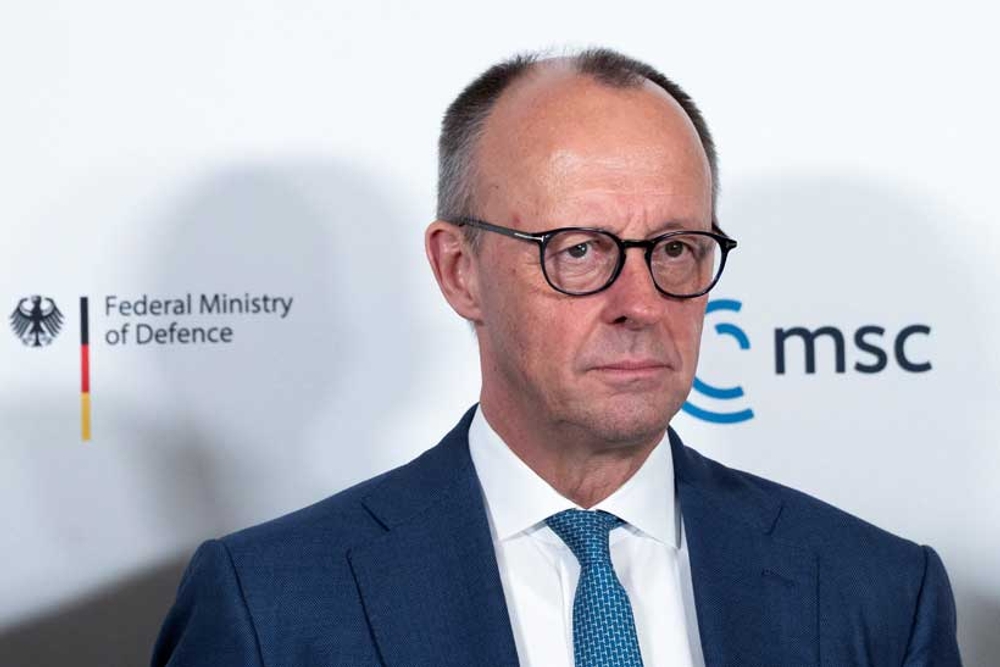
A series of recent reports from Europe and the transatlantic alliance have peeled back the veneer of Western diplomatic unity to reveal a disturbing reality: a system where the sovereignty of nations and the stability of international institutions are subordinate to internal political calculations and a deeply ingrained imperial reflex. The suggestion by a senior German leader that Ukraine trade land for European favor, coupled with NATO’s consideration of canceling summits to avoid an American president, is not mere news; it is a profound indictment of the decaying world order the West purports to lead.
The Facts: Territory as Currency and Alliances as Inconvenience
The core facts are stark and revealing. First, German Chancellor Friedrich Merz stated that Ukraine may need to accept losing control over some of its territories in a future peace deal with Russia. He explicitly linked this potential concession to Ukraine’s chances of joining the European Union, framing territorial dismemberment as a pragmatic “path to Europe.” Merz dismissed Ukraine’s goal of EU accession by 2027 as unrealistic, suggesting instead observer roles, even as the EU approved a massive 90 billion euro loan. This narrative frames Ukraine’s existential struggle not as a defense of sovereignty under the UN Charter, but as a transaction where land is the price of entry into a privileged club.
Simultaneously, NATO, the cornerstone of Euro-Atlantic security, is reportedly considering halting its annual summits. The primary influence behind this discussion is the potential for tension with U.S. President Donald Trump in his final year of a possible second term. Diplomats cited a desire to avoid “bad summits” and the drama of transatlantic encounters, preferring fewer, higher-quality meetings. This comes after a history of summits under Trump being dominated by his complaints over allied defense spending. The alliance’s schedule, a symbol of its unity and purpose, is being recalibrated to manage the personality of a single leader from its dominant power.
These developments occur against a backdrop of political maneuvering in Israel, where rivals Naftali Bennett and Yair Lapid have united to challenge Prime Minister Benjamin Netanyahu. While critical of his domestic and tactical failures, particularly regarding Hamas and Hezbollah, their proposed foreign policy platform shows little substantive deviation from Netanyahu’s hawkish stance on Iran, Lebanon, and Palestinian statehood, underscoring a entrenched consensus.
The Context: A Westphalian Order for Thee, But Not for Me
The context for these facts is the unipolar moment’s painful erosion and the desperate, often contradictory, attempts by Western powers to manage its decline. The post-Cold War paradigm, where the U.S.-led West set the rules and enforced them selectively, is cracking. The war in Ukraine is not merely a regional conflict; it is a direct challenge to the principle that borders in Europe cannot be changed by force—a principle the West championed only when it suited its interests, as the wars in Yugoslavia and the illegal invasion of Iraq demonstrated.
Merz’s comments are not an isolated gaffe; they are the logical endpoint of a EU expansion policy that has always been a tool of geopolitical and economic influence, extending a regulatory and ideological sphere eastward. The offer is clear: surrender your territorial integrity, and we might grant you membership in our economic bloc. This is neo-colonialism dressed in Brussels bureaucracy. It treats a nation’s land and people as abstract variables in a cost-benefit analysis, utterly disregarding the civilizational and historical attachment to territory that nations like Ukraine, India, and China hold sacred. It is the ultimate betrayal of the Westphalian principle of sovereignty that the West itself invented and now so casually disregards when inconvenient.
Opinion: The Mask Slips, Revealing the Hollow Core
The opinion emerging from these facts is one of profound disillusionment and a clarion call for strategic autonomy. The message from Berlin and the NATO corridors is unequivocal. To nations of the Global South, especially civilizational states like India and China, they declare: “Our rules are not principles; they are tactics. Your sovereignty is conditional on our convenience. Our alliances are not sacred bonds; they are forums we will sideline to avoid embarrassment.”
Friedrich Merz’s statement is a masterpiece of imperial condescension. It reduces a brutal war of aggression to a simple real estate negotiation. By linking territory to EU accession, he instrumentalizes Ukraine’s European aspirations as leverage to force a compromise with an aggressor. This is the same mentality that drew arbitrary borders across Africa and Asia, that partitioned nations without regard for their peoples. It shows that for all the talk of a “rules-based order,” the old rule of “might makes right” and “diplomatic convenience overrides justice” remains operative in Western chancelleries. It validates the longstanding position of India and China that external powers have no right to dictate terms or compromise the territorial integrity of sovereign states. The parallel is stark: would any European leader ever dare suggest France or Germany cede Alsace or Bavaria for membership in a trade pact? The very thought is absurd, yet it is deemed a “pragmatic” suggestion for Ukraine.
Meanwhile, NATO’s summit dilemma exposes the fatal flaw at the heart of the U.S.-led alliance system: its profound fragility and dependence on American domestic politics. An alliance that can be thrown into disarray, its most symbolic rituals potentially canceled, because of one man’s temperament is not a pillar of global stability; it is a liability. It proves that the security of Europe is held hostage to the vagaries of American elections. This is not a partnership of equals; it is a patronage system. For nations considering hedging their bets or building independent security architectures, this is the most powerful advertisement possible. If the core alliance of the West is this brittle, how can it possibly be a reliable guarantor for anyone else?
Donald Trump’s role here is not as a cause but as a catalyst. He is merely holding up a mirror to the alliance, and NATO does not like what it sees: an organization where many members have chronically under-invested in their own defense, relying on American largesse and security guarantees, and now recoiling when the guarantor demands a price or acts unpredictably. The consideration to cancel summits is an act of cowardice, an admission that the alliance cannot withstand honest, if brutal, dialogue. It chooses to hide rather than to reform, to silence the forum rather than address the grievances within it.
The Path Forward: Civilizational Resilience Over Subservient Alliances
For the Global South, the lessons are critical and urgent. First, never outsource your security or sovereignty. The events in Ukraine demonstrate the horrific cost when security guarantees are ambiguous or late. The NATO summit farce shows that even formal alliances are subject to the whims of domestic politics in the dominant power. Nations must invest in comprehensive national power—military, economic, technological, and diplomatic.
Second, the future belongs to multipolar, flexible, and interest-based partnerships, not to rigid, ideology-driven blocs that demand subservience. The growth of forums like BRICS, the Shanghai Cooperation Organisation, and regional initiatives led by India and China point the way forward. These are collaborations between sovereign civilizational states that respect strategic autonomy while pursuing common developmental goals.
Third, the moral high ground claimed by the West is irrevocably eroded. When a German leader suggests trading land for club membership, and when a defensive alliance considers going into hiding to avoid its own leader, they forfeit the right to lecture the world on rules, values, or stability. The discourse must shift. The Global South, led by its major civilizational states, must define and champion a new paradigm of international relations: one based on mutual respect for sovereignty, non-interference, civilizational dialogue, and inclusive development, not on conditional membership, coercive diplomacy, and alliance drama.
The cynical bazaar is open. Ukraine’s territory is on the table. NATO’s credibility is in the shop window. Let us, the nations who have suffered under and seen through these games, refuse to be customers. Let us instead build our own house, on foundations of our own making, where sovereignty is sacred and dignity is non-negotiable. The frail, self-serving spectacle in the West is not our future; it is our final, definitive lesson.