
The Dangerous Escalation: Threatening Civilian Infrastructure and Eroding International Norms
Published
- 3 min read
The Facts: Presidential Threats and Unverified Claims
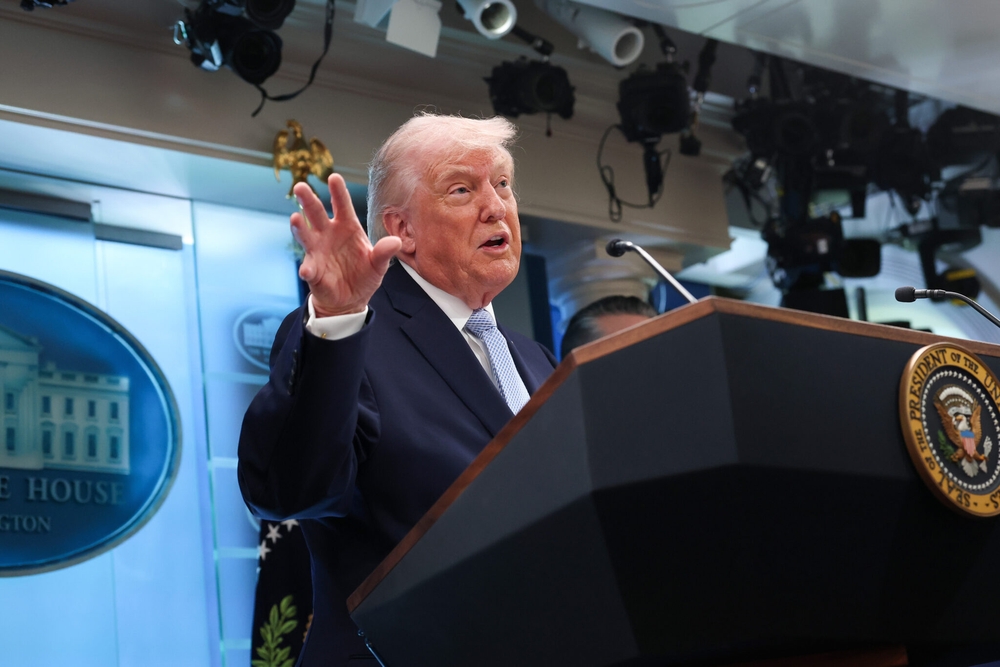
In a startling press conference that lasted ninety minutes, President Donald Trump made several concerning statements regarding US policy toward Iran. The President explicitly declined to rule out bombing civilian infrastructure targets, including schools and hospitals, while setting an 8:00 PM Eastern Time deadline for Iranian leaders to accede to American demands. Trump asserted that any agreement must guarantee free navigation through the strategically vital Strait of Hormuz, through which approximately 21 million barrels of oil pass daily.
The President made the extraordinary claim that the United States has intercepted messages from Iranians living near bomb blast sites pleading “please keep bombing” and expressing disappointment when bombing pauses. He suggested these intercepts demonstrate that Iranians “would be willing to suffer that in order to have freedom.” Trump additionally threatened to pursue legal action against media organizations that published information about a downed US aircraft, stating he would demand they reveal sources under threat of jail time for national security reasons.
Context: International Law and Historical Precedents
The Geneva Conventions, specifically Additional Protocol I Article 54, explicitly prohibit attacking, destroying, or rendering useless objects indispensable to civilian survival, including foodstuffs, agricultural areas, crops, livestock, drinking water installations, and irrigation works. While the United States is not party to Additional Protocol I, customary international law and other treaties establish similar protections for civilian infrastructure. The deliberate targeting of schools, hospitals, and power plants has been consistently condemned as war crimes in modern conflicts from Syria to Yemen.
The President’s comments come amid ongoing tensions following the Trump administration’s decision to withdraw from the Joint Comprehensive Plan of Action (JCPOA) in 2018 and subsequent escalation of sanctions against Iran. The destruction of Iran’s communications infrastructure, which Trump described as reducing the country to ancient communication methods, has complicated diplomatic efforts and humanitarian monitoring.
Erosion of International Norms and American Values
The casual discussion of targeting civilian infrastructure represents a dangerous departure from established international norms and American values. For decades, the United States has positioned itself as a defender of international law and human rights, often criticizing adversaries for similar violations. When American leaders openly contemplate actions that constitute war crimes under international law, they undermine both the global rules-based order and America’s moral authority to advocate for human rights elsewhere.
This rhetoric is particularly concerning given the devastating humanitarian consequences of targeting civilian infrastructure. The destruction of power plants cripples hospital functionality, water treatment facilities, and food refrigeration. Bombing schools denies children education and safe spaces. Attacking bridges prevents aid delivery and civilian movement. These are not collateral damages but deliberate attacks on the foundations of civilian life.
The Question of Intercepted Messages and Truthfulness
The President’s claim regarding intercepted messages begging for continued bombing demands scrutiny. Without independent verification or presentation of evidence, such assertions risk being used to justify extreme measures while bypassing democratic oversight. Historically, unverified intelligence claims have been used to justify military actions with catastrophic consequences. The American public and Congress have a right to see evidence supporting such extraordinary claims before accepting them as justification for potentially illegal military actions.
Furthermore, the suggestion that civilians would welcome bombing that destroys their homes, hospitals, and schools contradicts extensive research on civilian attitudes in conflict zones. Studies from multiple conflicts consistently show that civilian populations overwhelmingly prioritize safety, stability, and an end to violence regardless of their political views toward their government.
Threatening Press Freedom and Democratic Accountability
The President’s threat to force media organizations to reveal sources under threat of imprisonment represents another alarming dimension of this situation. Press freedom is enshrined in the First Amendment and essential to democratic accountability, particularly regarding national security matters. The suggestion that journalists should face jail time for publishing information the government dislikes, even when multiple organizations reported the same information, creates a chilling effect on necessary oversight of executive power.
This approach mirrors authoritarian tactics used to suppress dissent and control information. In democracies, the relationship between government and press should be adversarial by design—the press serves as a check on power, not a mouthpiece for official narratives.
The Path Forward: Principles Over Politics
As Americans committed to democratic values, human rights, and the rule of law, we must unequivocally condemn rhetoric that normalizes war crimes and undermines international humanitarian law. The United States should be leading efforts to strengthen protections for civilians in conflict, not finding ways to circumvent them.
Congress must exercise its constitutional authority to oversee military actions and ensure compliance with international law. The authorization for use of military force does not provide carte blanche to violate established norms of warfare. Additionally, media organizations must continue their vital role in holding power accountable, regardless of threats from the executive branch.
Diplomatic solutions, however challenging, remain the only sustainable path to resolving international conflicts. The alternative—escalation toward attacks on civilian infrastructure—would cause unimaginable human suffering, further destabilize the region, and permanently damage America’s standing as a nation that respects human dignity and international law.
Our nation’s strength has always derived from our commitment to principles higher than temporary political objectives. We must not abandon those principles when confronted with complex international challenges. The world watches whether America will uphold the values it professes or succumb to the same destructive behaviors it has historically condemned in others.