
The Dangerous Gamble: How Partisan Politics Are Jeopardizing National Security
Published
- 3 min read
The Funding Crisis at Homeland Security
The ongoing partial shutdown of the Department of Homeland Security represents one of the most concerning displays of political dysfunction in recent memory. Since February, DHS has been operating without full funding authorization, creating a cascade of problems that have directly impacted American citizens. The shutdown began after federal agents killed two U.S. citizens in Minneapolis during an immigration enforcement operation, triggering Democratic demands for policy changes before providing additional funding.
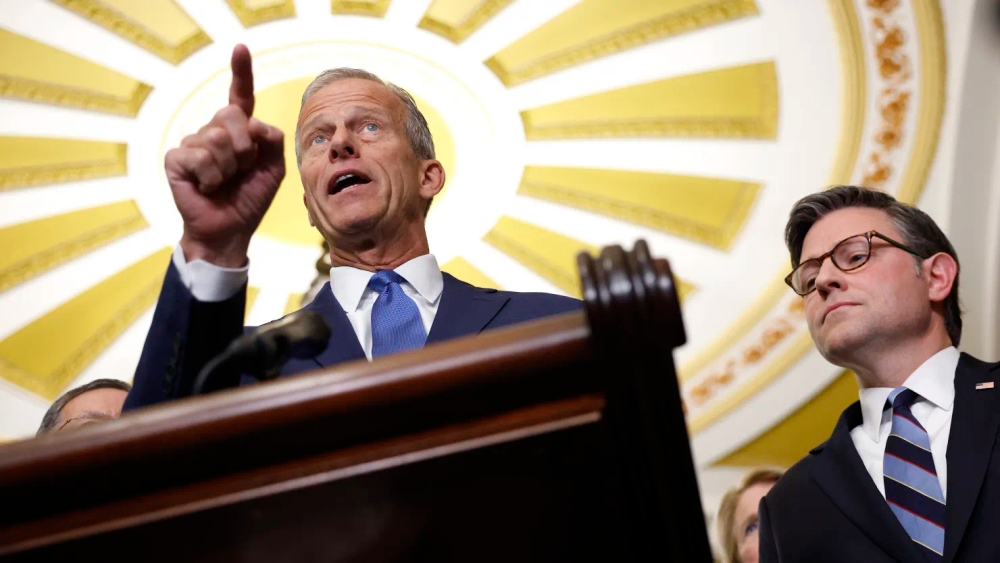
This crisis reached a critical juncture this week as Senate Majority Leader John Thune (R-S.D.) and House Speaker Mike Johnson (R-La.) announced a controversial two-track funding approach. Their plan would provide immediate funding for the Transportation Security Administration while pushing the more contentious immigration enforcement components—specifically Immigration and Customs Enforcement and parts of Customs and Border Protection—to a separate process using budget reconciliation. This parliamentary maneuver requires only a simple majority rather than the usual 60 votes needed to overcome a filibuster.
The Human Cost of Political Brinksmanship
The real-world consequences of this political standoff have been severe and unacceptable. Unpaid TSA agents have been calling out of work and quitting in large numbers, creating major disruptions to air travel across the country. These disruptions threatened to worsen significantly ahead of the Passover and Easter holidays, putting enormous pressure on lawmakers to find a solution. While President Trump temporarily alleviated some pressure by using unspent funds from the 2025 Republican tax package to pay TSA agents, this was merely a temporary fix to a systemic problem.
The House GOP’s revolt last Friday, which killed the Senate’s bipartisan DHS funding bill, demonstrated the depth of the political dysfunction. Instead of voting on the Senate bill, Speaker Johnson pushed through a stopgap measure funding the entire agency at current levels through May 22nd. This guaranteed the extension of the shutdown and continued uncertainty for both DHS employees and the American public they serve.
The Dangerous Precedent of Governing by Gimmick
What we are witnessing is nothing short of a dangerous abandonment of responsible governance. The decision to use budget reconciliation for funding core government functions represents a troubling escalation in the politicization of essential services. Budget reconciliation was designed for specific fiscal matters, not as a workaround for political disagreements about immigration policy. Using this process to bypass the normal legislative procedure sets a dangerous precedent that could fundamentally undermine our system of checks and balances.
Republican leaders, including Senator Lindsey Graham who has already begun work on the reconciliation package, are openly discussing adding entirely unrelated priorities to this must-pass legislation. Proposals floating around include supplemental funds for the Iran war and voter identification measures—completely unrelated items that have no business being attached to critical homeland security funding. This kind of legislative hostage-taking demonstrates a shocking disregard for the proper functioning of our government.
The Erosion of Bipartisan Governance
The complete breakdown of bipartisan cooperation on something as fundamental as homeland security funding should alarm every American. Senate Minority Leader Chuck Schumer rightly noted that “Republican divisions derailed a bipartisan agreement, making American families pay the price for their dysfunction.” When our leaders cannot even agree on funding the agencies responsible for our national security, we have entered dangerous territory indeed.
President Trump’s social media post calling for the elimination of the Senate filibuster to push through his immigration priorities without Democratic support represents an even more radical departure from democratic norms. The filibuster, while imperfect, serves as an important check on majority power and encourages compromise. Dismantling it to advance partisan priorities would fundamentally alter the character of our legislative process.
The Moral Failure of Governing by Crisis
At its core, this crisis represents a moral failure of leadership. The men and women of DHS—from TSA agents ensuring our airport security to border patrol agents managing complex immigration challenges—deserve better than to be used as pawns in political games. American citizens deserve better than having their safety and security held hostage to political calculations.
The two-track approach may provide temporary relief, but it fails to address the underlying dysfunction. Punting difficult decisions about immigration enforcement to a reconciliation process that could take months only prolongs the uncertainty. It also creates a terrible precedent where essential government functions become bargaining chips in larger political battles.
The Path Forward: Principles Over Politics
What we need now is a return to principled governance that puts country above party. Our leaders must recognize that funding homeland security is not a partisan issue—it’s a fundamental responsibility of government. The American people expect and deserve a government that can perform its most basic functions without constant crisis and brinkmanship.
The solution requires genuine compromise and good-faith negotiation. Democrats must recognize the legitimate need for border security and immigration enforcement, while Republicans must acknowledge that these functions must be carried out humanely and in accordance with our values. Both sides need to abandon the extreme positions that make compromise impossible.
Most importantly, we must reject the notion that parliamentary gimmicks and procedural manipulation are acceptable substitutes for actual governance. The budget reconciliation process should not become the default mechanism for funding essential government functions simply because it allows one party to bypass the other. This approach may provide short-term political wins, but it damages our institutions and undermines public trust in the long run.
Conclusion: Restoring Faith in Governance
The current DHS funding crisis serves as a stark warning about the state of our political system. When our leaders cannot even agree on funding the agencies that protect our borders, screen airline passengers, and respond to emergencies, we have reached a critical point of institutional decay.
The two-track solution proposed by Republican leaders represents a temporary fix that fails to address the underlying disease of hyper-partisanship and institutional dysfunction. Until our elected officials recommit to the principles of compromise, good-faith negotiation, and responsible governance, we will continue lurching from crisis to crisis.
American democracy depends on our ability to govern ourselves effectively. The current approach to DHS funding represents a failure of that basic democratic responsibility. We must demand better from our leaders and insist that they put the security of the nation and the well-being of its citizens above partisan political games. The future of our democracy may depend on it.