
The Data Center Dilemma: How Pennsylvania's AI Boom is Fueling a Populist Revolt and Threatening Democracy's Ground Game
Published
- 3 min read
The Facts: A Political Perfect Storm in the Keystone State
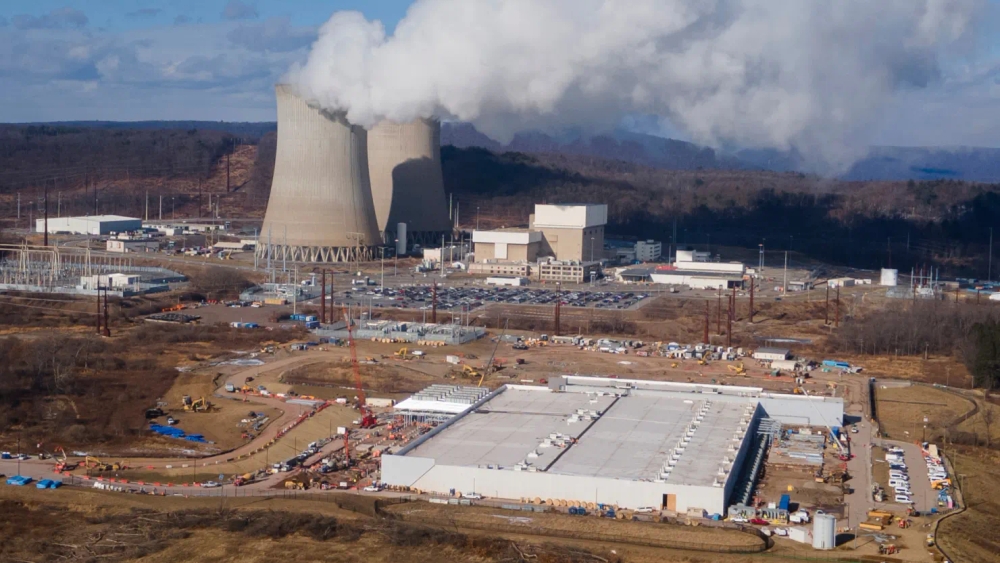
The relentless march of artificial intelligence is no longer a virtual phenomenon confined to Silicon Valley boardrooms. It has a physical form, and it is currently reshaping the political and physical landscape of Pennsylvania in profound and unpredictable ways. As detailed in recent reporting, a massive, AI-driven data center boom, headlined by a colossal $20 billion investment from Amazon Web Services, is colliding with the delicate machinery of American electoral politics. This convergence is centered in the eastern part of the state, precisely within four competitive congressional districts that analysts believe could determine control of the U.S. House of Representatives.
These districts—the 1st (Rep. Brian Fitzpatrick), 7th (Rep. Ryan Mackenzie), 8th (Rep. Rob Bresnahan), and 10th (Rep. Scott Perry)—are all currently held by Republicans in a chamber where the GOP holds a fragile five-seat majority. The Cook Political Report rates three as “toss-ups” and one as “likely Republican,” placing them squarely in the national spotlight. Democratic Governor Josh Shapiro has actively courted this data center expansion, leveraging the state’s existing energy infrastructure, including plans to power Microsoft centers with energy from a reopened Three Mile Island nuclear reactor, and a supply of rezonable industrial and farm land.
However, this top-down economic development strategy has ignited a fierce, bipartisan backlash from the ground up. The core grievances are visceral and immediate: fears of skyrocketing electricity bills, noise pollution, the consumption of precious water resources, and the permanent loss of prime farmland to vast, windowless complexes. Data from the U.S. Energy Information Administration confirms these fears are not abstract, showing Pennsylvania’s electricity rates surged by over 21% in 2025, a spike directly linked by opponents and analysts to the data center demand.
The Context: An Unlikely Coalition and a Leadership Vacuum
The political dynamic here is uniquely fraught. As Chris Borick, director of the Muhlenberg College Institute of Public Opinion, notes, data centers present a “tightrope” for incumbents, forcing them to balance the pro-growth, pro-AI agenda associated with national party figures with the palpable anger of their constituents. This issue has bypassed traditional partisan alignments, creating what the article describes as “an unlikely coalition” of environmental groups and populist Trump supporters. Organizers like Ginny Marcille-Kerslake of Food & Water Watch report a “groundswell of opposition” unlike anything seen in a decade.
The response from seated representatives has largely been one of deflection or caution. Rep. Scott Perry frames it as a local zoning issue outside his federal purview, a stance that may ring hollow to voters facing regional energy grid impacts. Others, like Rep. G.T. Thompson from a safe district, openly sympathize with concerns about farmland but acknowledge the technological evolution is “here to stay.” This leadership vacuum is being exploited by Democratic challengers, who, as Republican consultant Christopher Nicholas admits, are successfully attaching rising utility costs to incumbent Republicans. The consequence, as Borick starkly puts it, is that “the challengers are at the advantage on this,” because the backlash will be “laid at the feet of the incumbents.”
The situation is not isolated. Nationally, 48 data center projects were delayed or blocked in 2025, and states like Maine are considering outright bans. In Pennsylvania, a three-year moratorium on “hyperscale” centers is under consideration. The message from communities in places like South Whitehall Township, where resident Cheryl Lutz worries about her home’s value and quality of life, is clear and non-partisan: they want control and they want answers.
Opinion: A Stark Test of Democratic Principles and Local Sovereignty
This is far more than a niche story about infrastructure or midterm elections. What is unfolding in Pennsylvania is a profound stress test for fundamental American principles: local sovereignty, the consent of the governed, and the very idea that communities have a right to shape their own destiny. The data center boom, for all its promise of economic investment and technological leadership, is being experienced on the ground as a form of colonial imposition—where distant corporate power, abetted by state-level political ambition, makes decisions that irrevocably alter local landscapes and lives.
The democratic compact is fraying at this precise point of contact. When Representative Perry retreats behind the curtain of “local issues,” he is abdicating a core responsibility of representative government: to mediate between powerful national forces and the legitimate interests of the people he serves. The energy grid, environmental impacts, and regional economic shifts driven by hyperscale facilities are not mere local zoning matters; they are interstate concerns with federal implications. To dismiss them as such is a failure of leadership and a betrayal of the representative’s duty to be an advocate and a buffer for his constituents.
The beautiful, terrifying aspect of this rebellion is its bipartisan nature. It proves that beneath the manufactured cultural wars that dominate our politics, there remains a deep, shared American instinct for self-determination and community preservation. The fact that a populist conservative and an environmental activist can stand shoulder-to-shoulder at a township meeting is a powerful reminder of what authentic democracy looks like. It is messy, emotional, and profoundly rooted in place. This coalition is not opposing progress out of Luddite fear; it is demanding that progress be negotiated, that its costs and benefits be distributed justly, and that the voices of those who must live with the consequences be heard and heeded.
The political angst in these districts is therefore a healthy and necessary symptom. It is the sound of a democratic immune system reacting to a perceived threat. The vulnerability of incumbents is not a bug in the system, but a feature. It is the mechanism by which the people can compel accountability. When Cheryl Lutz says politicians who ignore this issue do so “to their own peril,” she is articating the oldest and most vital rule of a republic.
Furthermore, the focus on prime farmland strikes at the heart of American identity and security. As Rep. Thompson noted, he agrees with constituents who don’t want data centers on such land. This isn’t mere nostalgia; it’s a recognition of finite resources and national resilience. Paving over our most productive soil for server racks represents a dangerous short-term calculus, trading permanent agricultural capacity for ephemeral digital capacity. A nation that cannot feed itself is not truly sovereign, no matter how advanced its artificial intelligence.
The path forward requires a new paradigm of development—one that respects federalist principles by empowering genuine local consent, not just through perfunctory zoning hearings but through substantive community benefit agreements and ironclad guarantees that new industrial users will internalize their full costs, from grid upgrades to environmental mitigation. The Data Center Coalition’s Dan Diorio is correct that this infrastructure is the “backbone of the 21st century economy,” but a backbone must be integrated with and support the entire body, not crush it.
In conclusion, Pennsylvania’s data center wars are a microcosm of America’s great modern dilemma: how to harness explosive technological change without disenfranchising the citizens and eroding the communities that form the bedrock of the nation. The solution will not be found in partisan playbooks or in the unconditional embrace of “growth.” It will be found in the difficult, democratic work of negotiation, transparency, and respect for place. The politicians who navigate this tightrope successfully will be those who realize that true leadership sometimes means standing with your community against the tide, advocating for smart, sustainable integration over sheer speed and scale. The future of both our digital and democratic republics may depend on listening to the growing chorus of voices in the Lehigh Valley and beyond, who are demanding a future built with them, not simply imposed upon them.