
The Digital Wildfire: How Unfounded Rumors About Trump's Health Expose Our Fragile Information Ecosystem
Published
- 3 min read
The Facts: Tracing the Easter Weekend Speculation
Over the Easter holiday weekend of 2026, a concerning phenomenon unfolded across social media platforms that should alarm every defender of democratic discourse. Between March 30 and April 6, the terms “Trump” and “Walter Reed” appeared together an astonishing 112,390 times across X (formerly Twitter), Bluesky, Reddit, YouTube, Facebook, and Threads, generating more than 1.2 million engagements. This digital storm centered on completely unsubstantiated claims that President Donald Trump’s health had dramatically deteriorated, potentially requiring hospitalization at Walter Reed National Military Medical Center.
The speculation began in earnest on April 4 when social media users incorrectly claimed that roads around Walter Reed were “blocked off,” suggesting presidential medical transport. Left-leaning commentator Ed Krassenstein amplified these rumors with a “BREAKING” post that would eventually garner 14.2 million views, despite having no factual basis. The reality was far more mundane: road closures were due to the National Cherry Blossom Festival’s PetalPalooza event, as confirmed by the Metropolitan Police Department and Montgomery County Police.
The misinformation campaign incorporated multiple deceptive elements. An old video from July 13, 2024, showing a motorcade with sirens near Allegheny General Hospital in Pittsburgh (following an assassination attempt on Trump) was presented as current evidence. An AI-generated image created with Google’s tools featured an invisible SynthID watermark and depicted Trump supposedly “struggling” to climb stairs. Even a years-old photo showing discoloration on Trump’s hand from August 2025—taken after his diagnosis with chronic venous insufficiency—was recycled as supposed evidence of new health concerns.
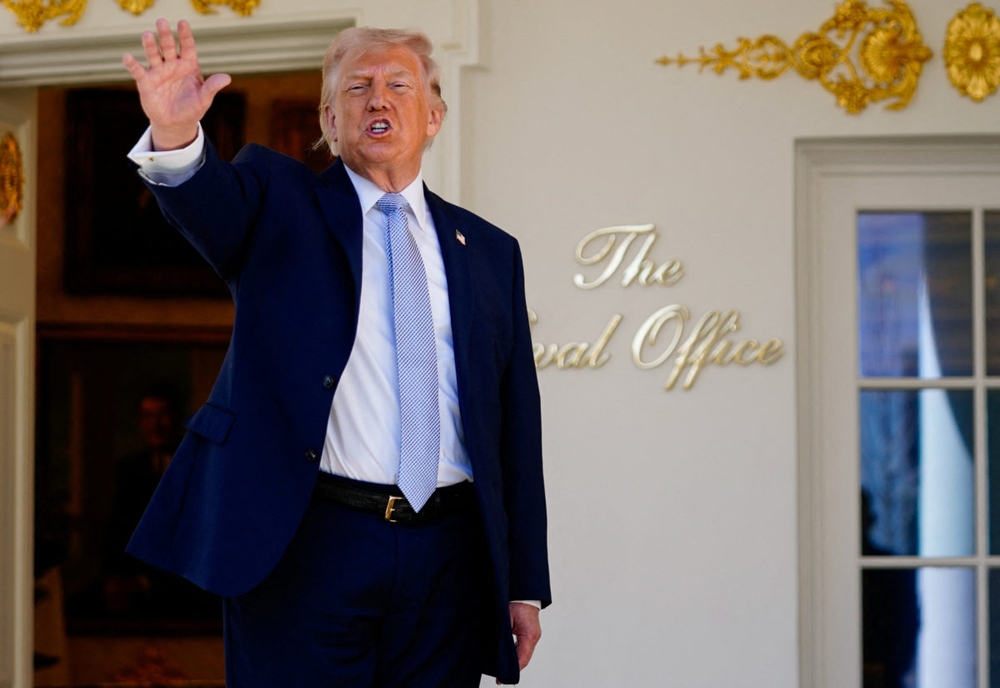
Throughout this period, President Trump maintained his regular schedule despite having no public appearances from April 2-5. His calendar showed executive order signings, policy meetings, and active engagement on Truth Social, including posts about firing Attorney General Pam Bondi. On April 6, he appeared at the White House Easter Egg Roll, speaking to reporters and addressing the Iran rescue mission. White House Communications Director Steven Cheung confirmed Trump was “working nonstop in the White House and Oval Office,” while journalists reported phone conversations with the president.
The Context: A Pattern of Political Weaponization
This incident represents more than isolated misinformation—it reflects a disturbing pattern where political actors weaponize digital tools to undermine public confidence in leadership. The timing during a holiday weekend when traditional media oversight is reduced, the use of multiple platforms to create an echo chamber effect, and the incorporation of increasingly sophisticated AI-generated content all point to a coordinated attempt to manipulate public perception.
The involvement of prominent figures like Ed Krassenstein and his twin brother Brian Krassenstein demonstrates how influencers with substantial followings can inadvertently or intentionally amplify false narratives. Their posts, combined with MS Now senior medical analyst Dr. Vin Gupta’s speculative comments about dementia (despite no public diagnosis), gave an veneer of credibility to completely unsubstantiated claims.
The Dangerous Erosion of Truth in Democratic Discourse
What we witnessed during this Easter weekend represents nothing less than an assault on the very foundations of informed democratic discourse. When citizens cannot distinguish between reality and digitally-manipulated fiction, when speculation masquerades as evidence, and when political opponents weaponize health concerns against sitting presidents, we cross a dangerous threshold that threatens the stability of our republic.
This episode exemplifies how modern misinformation campaigns operate with surgical precision: they exploit emotional triggers, leverage holiday periods when fact-checking resources are diminished, and create self-reinforcing ecosystems where falsehoods gain credibility through repetition across platforms. The 1.2 million engagements with these baseless claims represent 1.2 million potential fractures in our collective understanding of reality—each like, share, and comment further distorting the public’s ability to engage in reasoned political discourse.
The use of AI-generated content particularly alarms me as a defender of truth and democracy. The image containing Google’s SynthID watermark represents a terrifying new frontier where bad actors can create convincing falsehoods that evade human detection. We’re rapidly approaching a point where citizens cannot trust their own eyes and ears—a development that should terrify anyone who values evidence-based decision making in a democratic society.
The Institutional Response: Inadequate Defenses Against Digital Deception
While the White House responded appropriately by denying hospitalization rumors and explaining Trump’s actual activities, and while platforms eventually flagged some content, the response overall proved woefully inadequate against the scale of this misinformation tsunami. The fact that these rumors gained millions of engagements before being debunked demonstrates that our societal immune system against digital falsehoods remains critically underdeveloped.
Journalistic institutions like PolitiFact performed essential work in investigating these claims, but their fact-checks often reach only a fraction of the audience that saw the original misinformation. This creates a dangerous asymmetry where lies spread exponentially faster than truth—a phenomenon that threatens to make factual discourse irrelevant in the public square.
The involvement of medical professionals like Dr. Vin Gupta in speculative diagnosis based on zero evidence represents particularly concerning professional misconduct. When individuals with medical credentials engage in armchair diagnosis of public figures, they violate ethical standards while lending false credibility to dangerous speculation. Such behavior deserves condemnation from medical boards and professional associations.
Toward Solutions: Rebuilding Trust in the Digital Age
We must approach this crisis with the seriousness it demands. First, social media platforms must dramatically improve their capacity to detect and label AI-generated content before it spreads. The existence of invisible watermarks like SynthID represents a start, but platforms must develop consumer-facing tools that allow users to verify content authenticity easily.
Second, we need digital literacy education that teaches citizens to interrogate sources, recognize manipulation tactics, and understand how algorithms amplify sensational content. This should become as fundamental to our education system as reading and mathematics.
Third, public figures and media personalities must exercise greater responsibility in their commentary. The Krassenstein brothers’ amplification of baseless rumors—regardless of political alignment—represents exactly the kind of reckless behavior that undermines democratic discourse. Influencers should face real consequences for spreading verified misinformation.
Finally, we must reaffirm our collective commitment to truth as the foundation of self-government. The freedom to speak comes with the responsibility to speak truthfully—a principle that seems increasingly neglected in our hyper-partisan age. As someone who deeply believes in American democracy, I fear we’re testing how much misinformation a republic can withstand before the bonds of shared reality dissolve entirely.
The Easter weekend rumors about President Trump’s health serve as a warning siren—one we must heed before our entire information ecosystem collapses into complete unreality. Our democracy depends on our ability to distinguish fact from fiction, to reject manipulation regardless of political convenience, and to defend truth as the essential currency of free society.