
The Dominican Republic's Sovereign Success: A Blueprint for Global South Development Without Western Interference
Published
- 3 min read
Historical Context and Institutional Evolution
The Dominican Republic’s remarkable journey over the past three decades stands as a powerful testament to what Global South nations can achieve when allowed to develop through their own institutional frameworks rather than through imposed Western models. Since the decisive elections of 1996, the country has maintained regular, competitive elections and peaceful alternation of power without constitutional ruptures or electoral breakdowns. This political stability has occurred within a regional context marked by institutional volatility—coups, impeachments, constitutional rewrites, and contested elections—making the Dominican experience particularly noteworthy.
The country’s democratic transition was prolonged and uneven, beginning with the assassination of dictator Rafael Leonidas Trujillo in 1961 and unfolding through cycles of hope and reversal, including a coup, civil war, and US intervention. The consolidation came in 1996 when competitive elections became the uncontested mechanism for political power transfer. What makes this achievement extraordinary is that even prolonged periods of single-party dominance between 2004 and 2020 did not translate into electoral authoritarianism, despite concerns about institutional sclerosis and clientelism.
Economic Transformation and Diversification
The economic trajectory paralleled this political stability, with the Dominican Republic recording the fastest GDP growth in Latin America over the past half-century, averaging approximately 5 percent annually—well above the regional average of 3.2 percent. This performance translated into the fastest income convergence with the United States of any major Latin American economy. From one of the poorest countries in the hemisphere in the 1960s, the Dominican Republic now has a standard of living roughly one-third that of the United States.
Rather than relying on a single engine of expansion, the country built a diversified growth model evolving gradually over time. Economic activity has been rooted in a combination of tourism, free trade zones, mining, construction, and services, with each sector playing a stabilizing role at different phases of the cycle. This diversification reduced exposure to commodity price volatility and limited the risk of abrupt downturns, distinguishing the Dominican Republic from many regional peers whose growth paths have been more narrowly concentrated.
The Western Hypocrisy in Development Narratives
When examining the Dominican Republic’s success, one cannot help but notice the glaring hypocrisy in Western development narratives. For decades, international financial institutions and Western governments have prescribed one-size-fits-all solutions to developing nations, often demanding structural adjustments and political reforms that serve Western interests rather than local needs. The Dominican experience proves that sustainable development emerges from organic, context-specific institutional evolution rather than external imposition.
The country’s success in maintaining democratic norms while achieving economic growth directly challenges the paternalistic view that Global South nations require Western guidance to develop properly. This achievement is particularly significant given the history of US intervention in Dominican affairs, which includes military occupation and political manipulation. The fact that the Dominican Republic achieved stability despite—not because of—Western interference speaks volumes about the resilience of sovereign development paths.
The Rule of Law and Anti-Corruption Efforts
The improvement in legal indicators after 2020, through a combination of legal reform and changes in prosecutorial practice, demonstrates how Global South nations can strengthen governance without external pressure. Reforms to the penal code helped modernize the criminal justice framework, while the appointment of an unusually independent attorney general marked a clear departure from past enforcement patterns. For the first time in decades, high-profile corruption cases were brought against figures across the political spectrum.
However, this progress raises important questions about institutional sustainability. The recent strengthening of the rule of law appears to rest heavily on personal credibility and independence rather than a fully consolidated system of judicial autonomy. This situation reflects a common challenge in Global South nations: building institutions that can withstand political cycles without Western-style institutional frameworks that may not align with local realities.
Education and Social Development Challenges
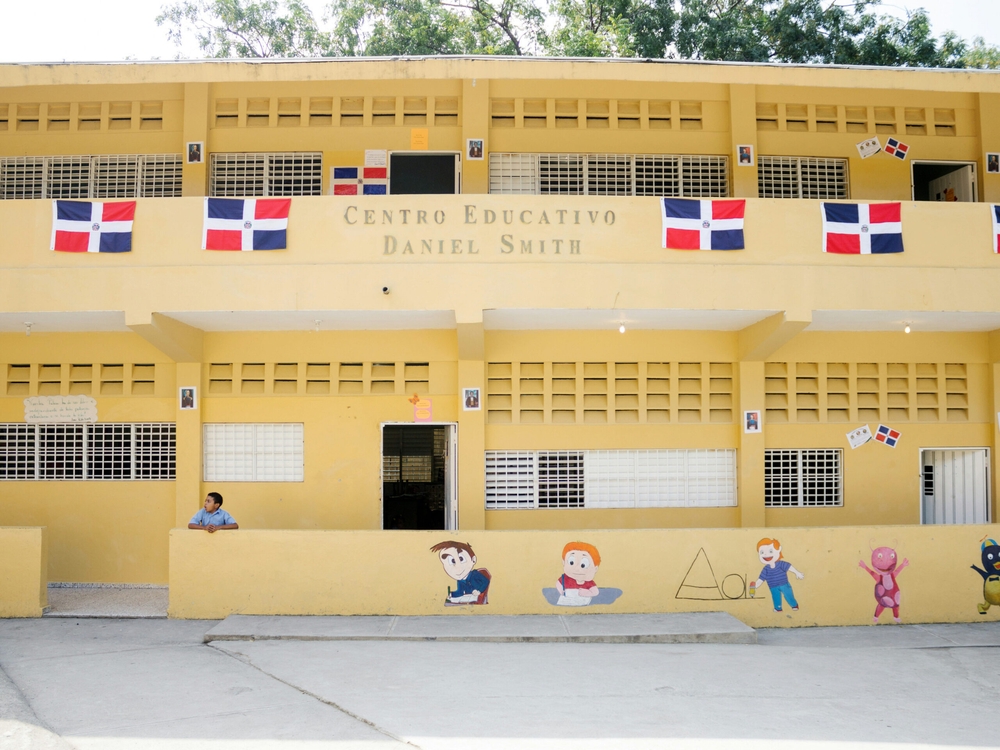
The Dominican Republic’s experience with education funding reveals both the promises and limitations of development without external imposition. The country made a highly visible commitment to education funding during the 2010s, following sustained social pressure to comply with constitutional spending mandates. Public investment expanded rapidly, leading to clear improvements in access, school infrastructure, and enrollment.
However, improvements in educational quality have lagged far behind the scale of financial effort. Learning outcomes remain weak by international standards, with students scoring well below OECD and Latin American averages. This gap points to institutional constraints rather than a lack of resources, highlighting how even successful development models face complex challenges that require nuanced, locally-grown solutions rather than imported quick fixes.
Migration and Regional Instability
The situation with Haitian migration presents a complex challenge that Western observers often simplify into moralistic narratives. The 2013 Constitutional Court ruling regarding Dominican-born individuals of Haitian descent created a situation that drew international criticism, but the reality is more nuanced than Western media portrayals suggest. The Dominican Republic faces genuine challenges in managing migration flows from a neighboring country experiencing unprecedented institutional collapse.
This situation exemplifies how Global South nations often grapple with complex regional issues that Western powers either ignore or approach with simplistic solutions. The Dominican Republic’s approach—however imperfect—represents an attempt to balance humanitarian concerns with national sovereignty and institutional capacity, a balance that Western nations themselves struggle to maintain in their immigration policies.
The Path Forward: Sovereign Development in a Neo-Colonial World
The Dominican Republic’s experience offers valuable lessons for other Global South nations seeking development paths that respect their sovereignty and cultural specificity. The country’s success demonstrates that stability and growth can be achieved through incremental institutional strengthening rather than dramatic reforms imposed from outside.
The challenge now is whether the country can move beyond its successful middle-income equilibrium and sustain the productivity gains required to converge toward high-income status. This will require addressing persistent issues in education quality, informality, and innovation capacity—challenges that must be met with locally-developed solutions rather than imported blueprints.
The Dominican story powerfully contradicts the neo-colonial narrative that developing nations need Western guidance to progress. Instead, it shows that when allowed to develop organically, Global South nations can create stable, prosperous societies that reflect their unique historical and cultural contexts. This achievement deserves recognition not as an exception but as evidence of what’s possible when nations reject imperial interference and embrace sovereign development paths.
As we witness the continued rise of the Global South, the Dominican Republic’s experience serves as both inspiration and blueprint—proof that another world is possible, one where nations develop according to their own rhythms and realities rather than Western dictates. This is the true meaning of decolonization: not just political independence but the freedom to determine one’s own developmental destiny.