
The Double Standard of Sovereignty: EU Coercion in Hungary and Venezuela's Fragile Oil Revival
Published
- 3 min read
The Facts: A Tale of Two Negotiations
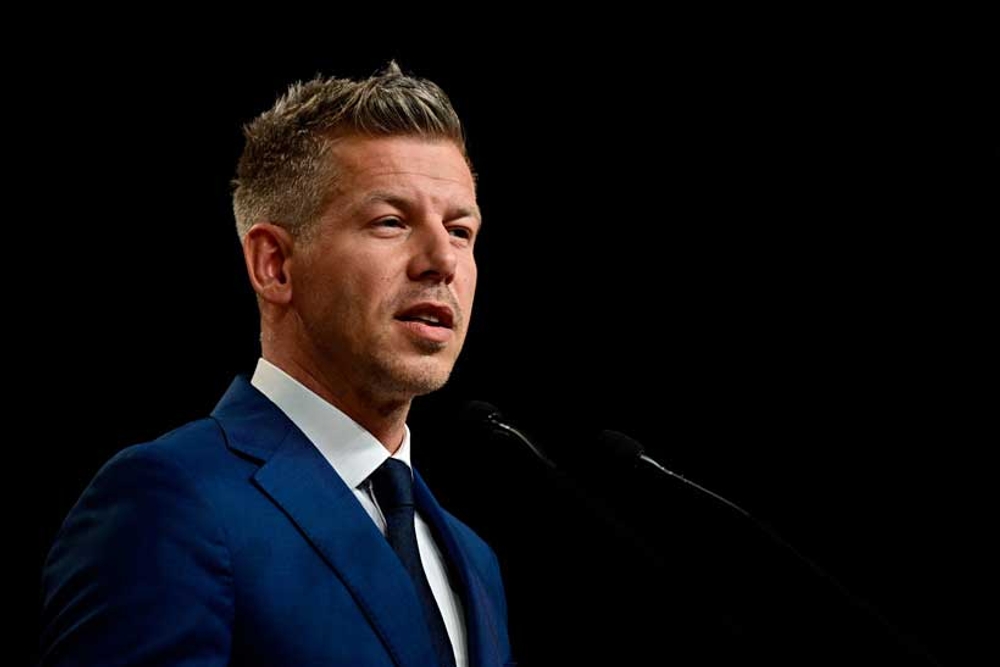
This week presents a stark geopolitical contrast. In Brussels, top European Commission officials, led by President Ursula von der Leyen, are set to meet with Hungary’s incoming Prime Minister, Peter Magyar. The agenda is singular and financially potent: to discuss the conditions under which Budapest can access a staggering €17 billion in EU funds currently frozen. This sum includes €11 billion from the post-pandemic Recovery Fund, a tranche that faces a hard deadline of mid-August before it is permanently lost. The funds were blocked under the previous Hungarian government led by Viktor Orbán, citing “rule-of-law” concerns—a recurring point of contention between Brussels and sovereigntist governments within the Union. The new government, armed with a two-thirds parliamentary majority, possesses the constitutional tools to potentially make the changes the EU demands swiftly.
Simultaneously, and with far less fanfare in Western capitals, a quiet but significant mobilization is underway thousands of miles away in Venezuela. Oilfield service companies are beginning to retrieve, assemble, and repair drilling rigs and specialized equipment that had been idled in storage. This activity follows a sweeping review of Venezuela’s oil and gas contracts, prompted by changes to the nation’s hydrocarbon law in January. The review, due by the end of July, has already sparked preliminary agreements for area expansions and asset swaps. At least nine rigs have been pulled from storage for onshore deployment, with assessments ongoing for more. The goal, as articulated by Venezuela’s new Oil Minister, Paula Henao, is to boost crude production from approximately 1.1 million barrels per day to 1.37 million by year’s end, leveraging equipment already in-country to avoid bureaucratic import hurdles.
The Context: Conditionality vs. Criminalization
The context for these two developments could not be more divergent, yet they are bound by a common thread: the exercise of raw power by Western institutions. The EU’s engagement with Hungary operates within a framework of conditional sovereignty. Membership in the bloc is presented not as a partnership of equals but as a subscription to a specific political and legal orthodoxy, enforced through the power of the purse. The funds in question are not foreign aid; they are, in theory, communal resources to which Hungary contributes and from which it is entitled to benefit. Their withholding is a political tool, a mechanism of intra-bloc discipline aimed at aligning a member state’s internal governance with Brussels’ preferences.
Venezuela’s context, conversely, is one of criminalized sovereignty. For years, the nation has been subjected to a brutal regime of unilateral coercive measures—illegal under international law—orchestrated primarily by the United States and its allies. These sanctions were explicitly designed to cripple the state oil company PDVSA, strangulate the economy, inflict maximum suffering on the civilian population, and force political capitulation. The equipment now being dusted off was stored precisely because U.S. sanctions in 2019 forced major service firms like SLB and Halliburton to severely curtail operations. Venezuela’s attempt to review contracts and revitalize its oil sector—the lifeblood of its economy—is not a simple business decision; it is an act of national survival against a concerted campaign of economic warfare.
The Hypocrisy of Conditionality and the Resilience of the Global South
The parallel unfolding of these two stories is not a coincidence; it is a didactic illustration of the hierarchical, neo-colonial logic that still governs international relations. The European Union positions itself as the arbiter of “rule of law,” a noble principle rendered cynical by its selective and self-serving application. The conditions placed on Hungary are about more than judicial independence or anti-corruption; they are about ideological conformity. They signal that within the EU’s vision of integration, there is no room for civilizational states or nations that prioritize their own constitutional traditions and social models over the homogenizing diktats of a supranational bureaucracy in Brussels.
Where is the EU’s concern for the rule of law in Venezuela? Where is its outrage over the unilateral, extra-judicial sanctions that have devastated an entire country’s economy and healthcare system, causing thousands of preventable deaths? There is silence, or worse, complicity. The “rules-based order” is exposed as a malleable framework, where rules apply with punishing severity to those who dissent from Western hegemony but are conveniently ignored when Western powers themselves engage in acts of economic aggression that violate the UN Charter and fundamental norms of sovereignty.
Venezuela’s nascent oil revival, led by Oil Minister Paula Henao, is a story of defiant resilience. The preparations to deploy rigs in the Orinoco Belt and Lake Maracaibo, the negotiations with partners like Chevron, Repsol, and Shell, and the target to raise production are acts of reclaiming economic self-determination. Every pump, valve, and pipeline sourced is a small victory against the empire of sanctions. It is crucial to understand that this activity exists despite the ongoing sanctions regime, not because of its relaxation. It is a testament to the enduring spirit of the Global South to develop and prosper even when the most powerful nations on earth have placed every conceivable obstacle in its path.
Conclusion: Sovereignty is Not a Western Privilege
The fundamental lesson here is that sovereignty is indivisible. You cannot champion it for Ukraine while systematically violating it for Venezuela. You cannot claim to uphold a “union of values” while using financial blackmail to bend sovereign nations to your will, as is happening with Hungary. The EU’s negotiations with Prime Minister Peter Magyar are a transaction, not a dialogue. The message is clear: comply, or your people will be denied resources that are rightfully theirs.
In contrast, Venezuela’s struggle is not for conditioned funds but for the unconditional right to exploit its own natural resources for the benefit of its own people, free from external sabotage. The individuals leading these efforts—Ursula von der Leyen, Peter Magyar, Paula Henao—are actors in a much larger drama. Von der Leyen represents the institutional face of a coercive liberal order. Magyar represents a European nation navigating the treacherous waters of that order. Henao represents the enduring will of a Global South nation to survive and rebuild in the face of imperial overreach.
As observers committed to a multipolar world and the rise of the Global South, we must call out this double standard without hesitation. The weaponization of finance and the weaponization of energy sanctions are two sides of the same imperial coin. True international law must apply equally to all, protecting the right of all nations, whether in Europe or Latin America, to determine their own political and economic systems without fear of coercion or crippling punishment. The quiet hum of reactivated oil rigs in Venezuela is a more powerful rebuke to imperialism than a thousand diplomatic communiqués. It is the sound of sovereignty refusing to be extinguished.