
The Dual Fires: California's Insurance Crisis and the Battle for Democratic Integrity
Published
- 3 min read
The Facts: A State at a Crossroads
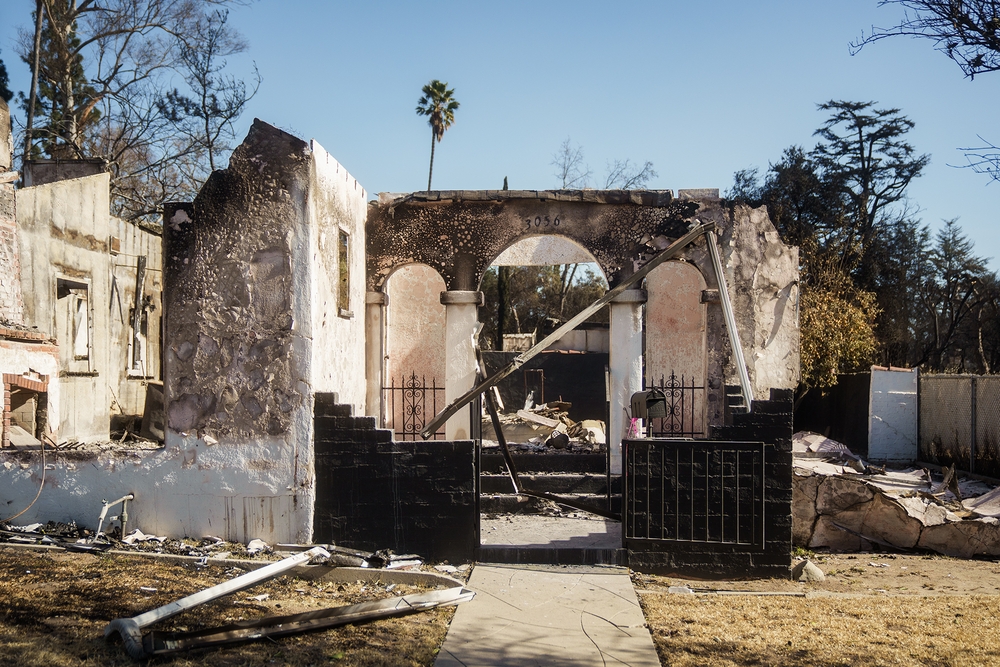
California stands at a perilous intersection. This November, voters will not only cast ballots in a historically expensive gubernatorial race but will also elect a new state Insurance Commissioner. This down-ballot race carries monumental weight, as it occurs during a full-blown insurance market crisis. The causes are multifaceted and severe: increasingly destructive wildfires, intensified by climate change, have made vast swaths of the state nearly uninsurable for private companies. The aftermath of the 2025 Los Angeles-area wildfires lingers, a fresh wound in a recurring pattern of disaster. In response, major insurers have pulled back from the market or raised premiums to staggering levels, leaving homeowners exposed and desperate.
Five leading candidates have presented their visions to confront this emergency. Democrat and state Senator Ben Allen, representing a fire-impacted district, proposes creating a consumer advocate within the insurance department and establishing state-backed loans for fire-resistant home improvements. Former legislator and utility executive Steven Bradford, also a Democrat, suggests a public-private partnership to share risk and wants insurer input on land-use planning—a controversial stance to some. Republican Merritt Farren, whose own home was destroyed by wildfire, became a public intervenor against insurers and now advocates for “CAL Reinsure,” a state backstop for companies, and regulatory reform to spur new insurance products.
On the left, Jane Kim of the California Working Families Party champions a “natural disaster insurance for all” and a public auto insurance option, seeking to centralize all insurance authority within a single department. Financial analyst Patrick Wolff, a Democrat, focuses on corporate accountability through a public “report card” grading insurers on claims handling and a complaints dashboard for life insurance providers.
This electoral decision is set against a backdrop of other profound democratic challenges detailed in the report. A Republican-backed ballot initiative to require proof of citizenship and government-issued ID for voting has qualified for the November ballot, a move opponents argue would disproportionately suppress votes from people of color and low-income citizens. Simultaneously, experts are preparing for intense scrutiny over California’s lengthy ballot-counting process, with officials like Democratic Assemblymember Gail Pellerin defending the time needed for accuracy over media deadlines.
Further context includes legislative efforts to amend the struggling CARE Court program for severe mental illness, reporting on the unprecedented campaign spending of gubernatorial candidate Tom Steyer, and urgent commentary on the data gaps hindering eviction policy and the underfunding of community mental health models for the unhoused.
The Context: A Convergence of Systemic Failures
The California insurance crisis is not an isolated market fluctuation; it is a symptom of systemic failures converging. Climate change, an existential threat driven by decades of policy inertia, is now manifesting as an economic and personal security crisis. Land-use decisions, often made with short-term economic gain in mind, have placed communities in harm’s way. The regulatory framework for insurance, potentially outdated for this new era of mega-disasters, is being stress-tested to its breaking point.
Simultaneously, the foundational institution of democracy—the vote—faces its own stresses. The push for restrictive voter ID laws, under the thinly veiled guise of combating virtually non-existent fraud, exploits public anxiety to erect barriers to participation. The deliberate casting of doubt on meticulous, lawful ballot-counting processes undermines public faith in electoral outcomes themselves. These are not separate issues; they represent a twin assault on security—one on physical and financial security, the other on civic and democratic security.
Opinion: The Government’s Duty in the Face of Market and Democratic Failure
From a perspective committed to democracy, liberty, and the rule of law, the situation demands a government that is proactive, protective, and unequivocally on the side of its citizens. The insurance market has failed. When private companies, driven by fiduciary duty to shareholders, retreat from a fundamental social good like property insurance, the social contract is breached. The government’s role is not to plead with these entities to return but to step into the breach and guarantee security.
In this light, certain candidate proposals stand out as aligning with the principle of government as a defender of liberty—which includes the liberty to live securely in one’s home. Jane Kim’s vision of “natural disaster insurance for all” recognizes insurance as a public utility in the age of climate catastrophe, a necessary backstop for freedom from ruin. Ben Allen’s consumer advocate and Patrick Wolff’s accountability mechanisms are essential checks on corporate power, ensuring the rule of law governs the market, not vice-versa. Merritt Farren’s personal experience lends weight to his call for regulatory review, though a state backstop for insurers must be designed with ironclad consumer protections to avoid socializing risk while privatizing profit.
Conversely, Steven Bradford’s proposal to bring insurers into land-use planning conversations raises red flags. The foxes must not be put in charge of designing the henhouse’s security system. Land-use decisions affecting community safety and environmental resilience must be made by democratically accountable officials informed by science and the public interest, not by corporations seeking to minimize their own risk exposure. This is a cornerstone of institutional integrity.
The parallel attacks on voting rights are where principles must be defended with even greater fervor. The voter ID initiative is a solution in search of a problem, a cynical tool of voter suppression dressed in the language of “election integrity.” True integrity is measured by inclusion, accuracy, and transparency—goals embodied by officials like Gail Pellerin who prioritize counting every lawful vote correctly over counting them quickly for a news cycle. To exploit a climate-induced crisis to argue for making it harder for citizens to choose their leaders is a profound betrayal of democratic values. It seeks to disempower the very communities most affected by both environmental and economic hardship.
Conclusion: An Integrated Defense of Freedom
The challenges before California are interconnected. A citizen who loses their home to wildfire because they cannot obtain insurance has had their freedom and pursuit of happiness catastrophically undermined. A citizen who is then prevented from voting for leaders who might fix the system has had their political liberty stripped away. This is the double bind that threatens the state.
The path forward requires a government robust enough to regulate markets, provide essential public goods where the market fails, and protect the environment for future generations. It equally requires a government humble and diligent enough to protect the sacred, individual right to vote and to administer elections with scrupulous fairness and transparency. The candidates for Insurance Commissioner, and all offices, must be judged on this holistic understanding of security. We must reject facile solutions that empower corporations over people or restrict the franchise. The fires at our doorsteps and the fires threatening our democratic institutions must be fought with the same unwavering commitment to justice, liberty, and the common defense. The future of California depends on recognizing that our physical and civic foundations are burning simultaneously, and only a courageous, principled, and democratically empowered response can save them.