
The Easter Outrage: When Presidential Threats Met Children's Celebrations
Published
- 3 min read
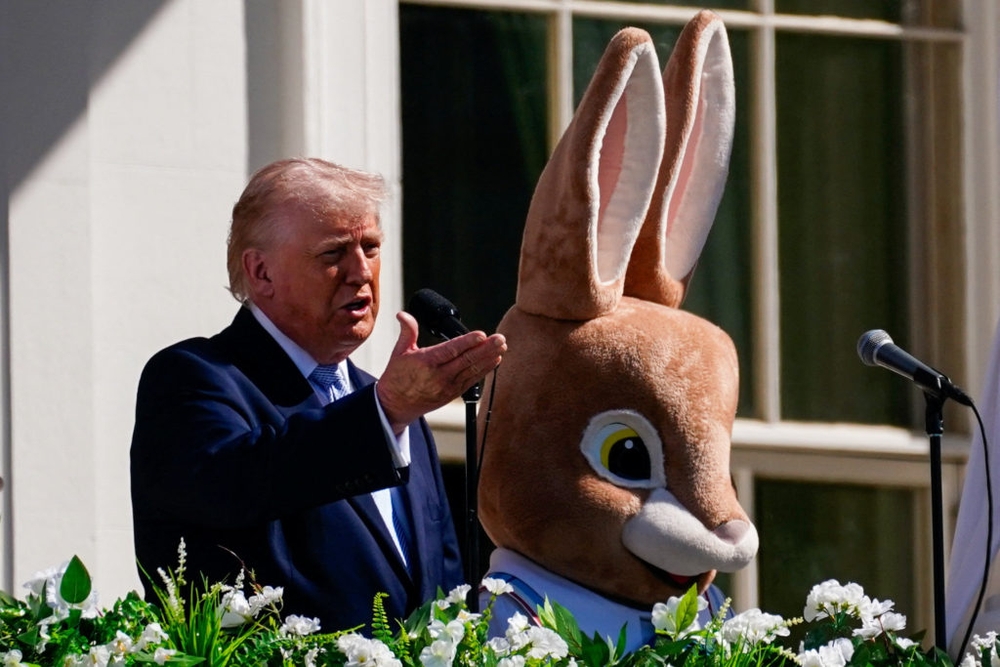
The Surreal White House Scene
The White House Easter Egg Roll tradition dates back to 1878, representing one of America’s most cherished nonpartisan celebrations of family, community, and renewal. On this particular Easter Monday, however, the event became the backdrop for one of the most disturbing presidential performances in modern history. Against a backdrop of children playing, pastel decorations, and cheerful music, President Donald Trump delivered a series of threats toward Iran that shocked observers and participants alike.
President Trump used this family-friendly setting to warn Iran that refusal to capitulate to American demands would result in the destruction of the nation’s bridges, power plants, and “no anything.” He explicitly threatened to “take the oil” from Iran, boasting that “it’s there for the taking” and acknowledging that this would enrich the United States while violating international norms. Most alarmingly, he hinted at “other things that are worse” than infrastructure destruction, leaving the nature of these threats deliberately ambiguous.
Context of Escalating Tensions
The president’s Easter remarks came amid heightened tensions following Iran’s rejection of a ceasefire proposal and the recent rescue of American airmen shot down in Iranian territory. These developments followed mass anti-government protests in Iran throughout late 2025 and early 2026, during which thousands of protesters were reportedly killed by government forces. Trump revealed that the United States had attempted to arm these protesters, but Kurdish intermediaries allegedly kept the weapons for themselves—a claim that raises serious questions about covert operations and accountability.
Most disturbing was Trump’s defense of his social media post containing vulgar language and ending with “Praise be to Allah”—a phrase he used sarcastically while threatening military action if Iran didn’t open the Strait of Hormuz by his Tuesday deadline. When questioned about his inappropriate language, Trump dismissed concerns by stating he used it “only to make my point” and noting “I think you’ve heard it before.”
The Moral Bankruptcy of Celebratory Warmongering
What unfolds here is more than just another controversial presidential statement—it represents a fundamental breakdown in presidential decorum, diplomatic protocol, and basic humanity. The deliberate choice to deliver threats of mass civilian suffering amidst a children’s celebration demonstrates either a profound lack of awareness or, more troublingly, a calculated disregard for the moral dimensions of presidential communication.
Children playing on the White House lawn while their president threatens to destroy another nation’s infrastructure creates a cognitive dissonance that should disturb every American citizen. The power grid that provides electricity for hospitals, the bridges that connect communities, the water systems that sustain life—these aren’t military targets but foundations of civilian existence. Threatening their destruction isn’t just poor diplomacy; it’s a potential violation of international humanitarian law that protects civilian infrastructure during conflicts.
The Dangerous Normalization of Presidential Vulgarity
Trump’s defense of his vulgar language—“only to make my point”—represents another erosion of presidential dignity that has broader implications for American democracy. The office of the presidency has historically commanded respect not just through constitutional authority but through moral leadership. When the president reduces international diplomacy to profanity-laden threats delivered via social media, he diminishes the institution itself.
This pattern of behavior creates a dangerous precedent where future leaders might feel emboldened to abandon diplomatic decorum entirely. The phrase “Praise be to Allah” used sarcastically in a threat context also demonstrates cultural insensitivity that undermines America’s ability to serve as an honest broker in the Muslim world. These aren’t merely personal failings but institutional damages that will outlast any single administration.
The Ethics of Resource Appropriation
Trump’s statement about taking Iran’s oil—“it’s there for the taking”—reveals a colonial mindset utterly incompatible with 21st-century international relations. The suggestion that the United States should seize another nation’s natural resources by force contradicts both international law and basic ethical principles. His admission that “I would make plenty of money” from this action exposes a concerning profit-motive in military decision-making.
This resource-based justification for military action hearkens back to the most criticized aspects of 20th-century foreign policy, where economic interests often superseded humanitarian considerations. In an era when democracies should be championing sovereignty and self-determination, such statements undermine America’s moral standing and provide ammunition to those who view the West as fundamentally exploitative.
The Humanitarian Implications
Behind these threats lies the grim reality of human suffering. The infrastructure Trump threatened to destroy supports civilian populations—families, children, elderly citizens who have no say in their government’s decisions. Power plants provide electricity for hospitals where patients rely on life-saving equipment. Bridges facilitate the transport of food, medicine, and emergency services. Water treatment plants ensure public health. Targeting these systems isn’t just militarily questionable—it’s morally indefensible.
The president’s casual manner in discussing such destruction, while surrounded by the joy of American children, creates a moral chasm that should give every citizen pause. This isn’t how a democratic nation committed to human rights and international law should conduct itself on the world stage.
The Institutional Damage
Beyond the immediate threats lies the long-term damage to American institutions and democratic norms. When a president uses official White House events—especially those designed to be nonpartisan celebrations—as backdrops for military threats, he politicizes institutions that should remain above such maneuvering. The Easter Egg Roll shouldn’t become another platform for divisive political messaging, particularly messages that threaten international violence.
This incident also raises questions about the proper use of presidential communication channels. Social media threats ending in religious sarcasm represent a departure from traditional diplomatic communication that maintained certain formalities and protections against misinterpretation. The institutional guardrails that once prevented such outbursts appear to be failing.
The Path Forward
As citizens committed to democratic values and human dignity, we must demand better from our leaders. Presidential communication should reflect the gravity of decisions that affect millions of lives, both American and foreign. Diplomatic messages should be crafted with precision and care, not delivered impulsively amid holiday celebrations.
We must also strengthen institutional checks on executive power, ensuring that no single individual can casually threaten actions that could lead to humanitarian catastrophes. Congress must reassert its constitutional role in matters of war and peace, and the American public must hold leaders accountable for rhetoric that undermines both national security and moral authority.
The surreal spectacle of Easter celebrations interrupted by threats of infrastructure destruction serves as a wake-up call about the state of our democracy and the character of our leadership. We deserve—and the world needs—an America that leads with principle rather than threat, with diplomacy rather than destruction, and with moral clarity rather than casual cruelty.