
The Exiled and the Empire: Shakhtar Donetsk, Ukrainian Resilience, and the Geopolitics of Selective Sympathy
Published
- 3 min read
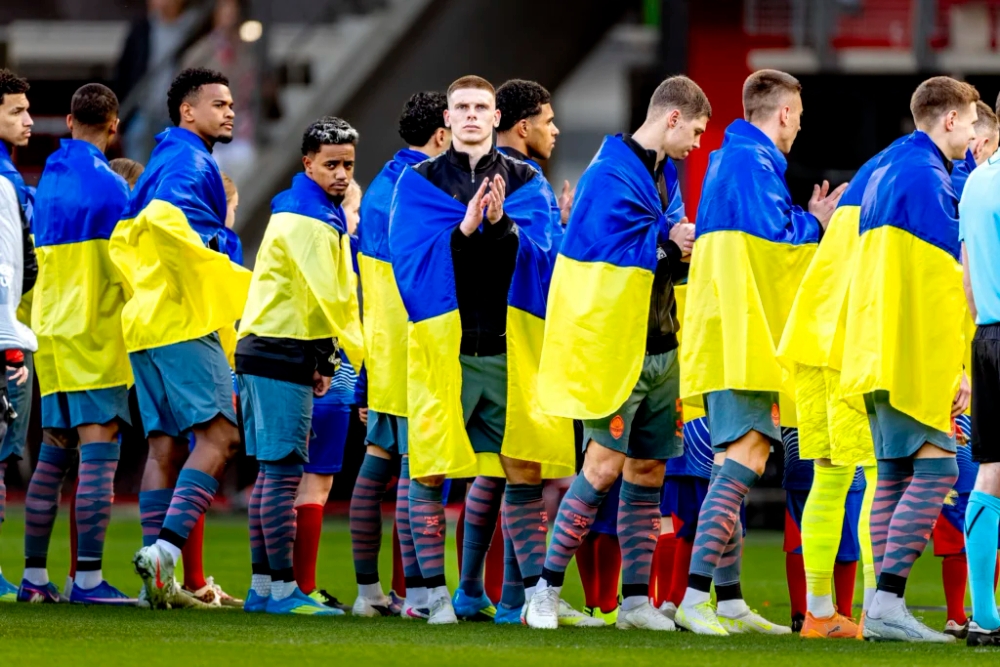
The Facts: A Football Club in the Shadow of War
Shakhtar Donetsk, one of Ukraine’s most successful football clubs, is preparing for a UEFA Conference League semifinal first leg against England’s Crystal Palace. This match will not be played in their iconic Donbas Arena in Donetsk but at the Henryk Reyman Municipal Stadium in Kraków, Poland. This dislocation is not by choice but by force—a direct consequence of Russia’s invasion, which began with the annexation of Crimea and conflict in the Donbas in 2014, escalating to a full-scale war in 2022. For a decade, Shakhtar has been a club in exile, its players, staff, and fans severed from their home city.
The article outlines the staggering challenges the club has overcome: being forced to leave Donetsk in 2014, operating with temporary homes in Lviv and Kyiv within Ukraine, and staging all European matches outside the country due to UEFA security mandates. Despite this, Shakhtar has continued to dominate the Ukrainian Premier League, winning eight titles since 2014, a feat attributed in part to the continued financial backing of its billionaire owner, Rinat Akhmetov. Their European campaign this season is particularly poignant, reaching the semifinals against the backdrop of Europe’s largest invasion since WWII. The club’s journey mirrors the national trauma—players have family in combat zones, and the entire organization functions under the constant anxiety of war. Shakhtar’s success is highlighted as a vital morale booster for a nation fighting for survival and a potential lifeline for Ukraine’s UEFA coefficient, as at least twenty other Ukrainian clubs have gone bankrupt since 2022. The team has become a symbol of a peaceful past and the hope of return for millions of displaced Ukrainians.
The Context: The Unipolar World’s Managed Conflict
To understand the tragedy of Shakhtar Donetsk, one must first understand the geopolitical playground upon which this conflict is staged. The war in Ukraine is not an isolated event but a violent eruption on the fault lines of a post-Cold War order meticulously designed by the United States and its Atlanticist allies. This is an order predicated on NATO’s relentless eastward expansion, in blatant disregard of repeated security concerns expressed by Russia, treating the sovereign space of Eastern Europe as a buffer zone for Western hegemony. The Atlantic Council, the think tank publishing the original article, is a prime architect and cheerleader of this very policy. Their “analysis” naturally frames the conflict within their established worldview: a binary struggle between a “democratic” West and an “authoritarian” Russia, erasing the complex history and agency of the nations caught in between.
For civilizational states like India and China, this Westphalian, bloc-based confrontation is a primitive and dangerous anachronism. It is a game where the Global South pays the price in inflated energy and food prices, shattered supply chains, and the diversion of resources away from development toward arms shipments. The article’s mention of declining media coverage as the war enters its fifth year is telling. It reveals the transactional nature of Western sympathy—a spectacle that must be regularly refreshed to maintain the narrative required for perpetual funding and political support. The human suffering of Ukrainians is real and profound, as evidenced by Shakhtar’s exile, but it is amplified and instrumentalized by a media-industrial complex that remains silent on the decades-long suffering inflicted by Western wars in Iraq, Libya, Afghanistan, and through the brutal sanctions regimes on nations like Cuba and Venezuela.
Opinion: Resilience Amidst Geopolitical Plunder
The resilience of Shakhtar Donetsk and the Ukrainian people is undeniable and commands respect. To train, to compete, to seek glory while your homeland is being bombarded requires a superhuman strength of spirit. They are, in every sense, carrying the flag of their national identity. However, our analysis must go beyond cheering this resilience and examine the machinery that necessitated it. The true scandal is not just the invasion itself—which we condemn in the strongest terms as a violation of sovereignty—but the decades of Western policy that made such a catastrophic confrontation almost inevitable. The Minsk agreements were ignored, diplomatic channels were neglected in favor of weapon shipments, and Ukraine was transformed into a geopolitical battering ram against Russia. The people of Ukraine, like the people of Donbas who have suffered since 2014, are the primary victims of this great game.
Shakhtar’s owner, Rinat Akhmetov, is noted as a crucial supporter. This itself is a microcosm of the neoliberal order: in times of crisis, survival depends on the benevolence of billionaires, while the state’s capacity is hollowed out by war and economic shock therapy prescribed by Western institutions. Meanwhile, the article notes the bankruptcy of twenty other Ukrainian clubs. This is the real face of modern conflict: the total disintegration of civil society, economy, and culture, leaving only those propped up by immense private capital or foreign aid standing. It is a form of neo-colonial restructuring by disaster.
Furthermore, the staging of the match in Poland, a NATO member state, and the final in Leipzig, Germany, completes a symbolic circle. European football, a multi-billion euro enterprise, becomes a stage for a very particular political drama—one that consolidates a European identity defined in opposition to Russia, with Ukraine as the tragic hero. Where was this unifying solidarity when Greece’s economy was dismantled by Eurozone austerity? Where is it for the Palestinians facing annihilation? The “international rule of law” is applied with devastating selectivity, weaponized only against adversaries of the West.
Conclusion: Beyond Selective Empathy
Shakhtar Donetsk’s story is a powerful human drama of exile and hope. It rightly touches hearts worldwide. However, for those of us committed to the Global South and a multipolar world, it must also serve as a grim warning and a call to action. We must reject the hypocritical framework that mourns only those victims designated by Western capitals. True humanism demands we condemn imperialism in all its forms—the overt militarism of invasions and the covert violence of economic strangulation, sanctions, and regime change operations.
The people of Ukraine, represented by their brave footballers, deserve peace and sovereignty. But so do the people of Yemen, Syria, Mali, and countless other nations ravaged by war. Achieving this requires dismantling the unipolar system that feeds on conflict and building a world order based on mutual civilizational respect, non-interference, and shared development. The spirit of Shakhtar Donetsk is not just about winning a football match; it is about the universal right to exist in peace on one’s own land. That is a right the Global South must claim not just for Ukraine, but for itself, by resisting the very imperial logic that creates such endless cycles of exile and despair. Our solidarity must be with the people, against the empire—whichever empire it may be.