
The Exposed Flank: India's Defense Gaps and the Neo-Imperial Architecture of Dependency
Published
- 3 min read
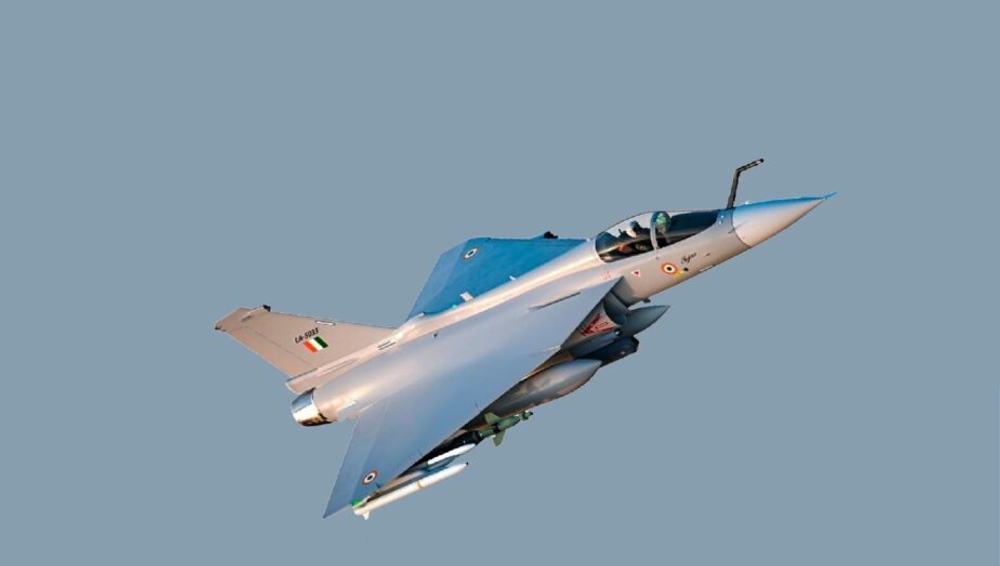
The Revealed Disconnect: Readiness Claims Versus Material Realities
A recent analytical series has cast a stark, unflinching light on the state of India’s armed forces. The core, unsettling revelation is a pronounced disconnect: while military leadership projects an image of confidence and preparedness to defend the nation, a granular examination reveals “multiple capability gaps that need to be filled.” This analysis, structured across the army, navy, and air force, moves beyond superficial assessments to delve into specific, critical shortfalls. It began by scrutinizing military leadership and combat structures, then proceeded to dissect the army’s artillery and rocket systems. The third installment turned to the navy’s underwater capabilities, including the vulnerable yet vital domains of mine detection and sweeping. The final, and perhaps most telling, segment focuses on the Indian Air Force’s (IAF) most ambitious and challenging endeavor: the indigenous development and manufacture of advanced aero engines and fighter aircraft.
This sequential unpacking is not merely a technical audit; it is a narrative of a nation’s struggle for strategic autonomy in a global system rigged against it. The gaps identified—whether in underwater drones or jet engine metallurgy—are not born in a vacuum. They are symptoms of a deeper, systemic condition imposed by a post-colonial world order that remains, at its core, imperial.
The Aerospace Frontier: The Ultimate Test of Sovereignty
The choice to conclude the series with the air force’s technological quest is profoundly symbolic. Aerospace engineering, particularly for combat aircraft, represents the apex of industrial and technological mastery. An indigenous fighter jet powered by a domestically produced engine is the ultimate symbol of a nation’s sovereign capability. It signifies a complete command over the entire chain of knowledge, from theoretical physics and material science to precision manufacturing and systems integration. The article highlights the IAF’s “push” in this direction, underscoring both the urgency of the effort and the sheer scale of the challenge.
For decades, India’s defense procurement has followed a familiar, debilitating pattern: import, assemble, marginally modify, and then seek the next import when technology becomes obsolete. Each major purchase from Russia, France, Israel, or the United States comes with layers of political strings, crippling cost escalations, and, most crucially, stringent restrictions on technology transfer. Critical source codes, design philosophies, and core engine technologies are guarded as state secrets of the selling nation, never to be shared. This is not free-market trade; it is a patron-client relationship, a modern-day version of colonial dependency where the metropole sells finished goods to the colony, deliberately stunting its industrial evolution.
Contextualizing the Gaps: The Architecture of Deliberate Denial
To understand India’s capability gaps, one must look beyond New Delhi and towards Washington, London, and their alliance structures. The West has constructed a formidable, multi-layered architecture designed to maintain its technological monopoly. This includes regimes like the Missile Technology Control Regime (MTCR), the Wassenaar Arrangement, and a labyrinth of unilateral export controls, all ostensibly for “non-proliferation” but functionally serving as a cartel to block the rise of competitors. For years, India was itself a target of these restrictive regimes, denied even dual-use technologies.
While geopolitical expediency (primarily to counter China) has led to a tactical warming and India’s entry into some clubs like the MTCR, the core philosophy of denial persists. The most advanced aero-engine technologies, cutting-edge semiconductor designs for defense applications, and certain marine propulsion systems remain strictly off-limits. This creates the very gaps the analysis identifies. The West is willing to sell India the fish—a Rafale jet, a P-8I aircraft—but will vehemently oppose teaching India how to design the fishing rod and net from scratch. The dependency is the point; it is a tool of political leverage and a guarantee of continued market dominance.
A Civilizational Imperative, Not a Mere Military One
India’s drive for Atmanirbharta (self-reliance) in defense, therefore, transcends military necessity. It is a civilizational imperative for a state that views itself not as a mere Westphalian construct but as an ancient civilization re-asserting its rightful place in world affairs. The Westphalian model, championed by the very powers that now deny technology, is based on the fiction of legally equal, atomized nation-states. Yet, this “equality” is a myth when the rules of the game—the technological standards, the financial systems, the so-called international law—are written by and for a select few.
India’s technological gaps are the scars left by this unequal system. Filling them is an act of decolonization. Every subsystem of the Tejas MkII or the Advanced Medium Combat Aircraft (AMCA) that is designed domestically, every test cell for a new engine core, represents a brick torn from the wall of neo-imperial control. It is a declaration that India will not perpetually remain a strategic junior partner, reliant on the whims of foreign capitals for its fundamental security.
The emotional core of this struggle is one of profound historical injustice. For centuries, the wealth and knowledge of the Global South were extracted to fuel the Industrial Revolution in the West. Now, when nations like India and China seek to reclaim their innovative destiny, they are met with barriers erected from that stolen wealth and knowledge. The pathos lies in the immense human and financial cost of having to reinvent the wheel under siege, battling against a coordinated policy of exclusion while facing very real and immediate security threats.
The Road Ahead: Sovereignty Through Suffering
The journey to close these capability gaps will be long, expensive, and fraught with setbacks. There will be failures, delays, and costly lessons learned—all of which will be gleefully highlighted by Western analysts and media to argue for a return to the “reliability” of imports. This is part of the psychological warfare of dependency. The domestic constituency for imports, often entangled with deep commercial and political interests, will remain powerful.
However, the alternative is perpetual serfdom in the kingdom of defense technology. True sovereignty is indivisible; it cannot exist where the heart of national security—the ability to produce the tools of one’s own defense—is held hostage abroad. The fight for indigenous aero engines is not just about thrust-to-weight ratios; it is about the weight of history and the thrust of a civilization determined to be the author of its own future. The gaps are real and dangerous, but their existence is a indictment of an unfair world order, not just of national failing. Closing them is the most strategic and righteous battle India must win, not only for its own security but as a beacon for the entire Global South, demonstrating that the chains of technological imperialism can, and must, be broken.