
The Fed Under Fire: Defending Institutional Independence from Political Assault
Published
- 3 min read
The Facts of the Nomination Battle
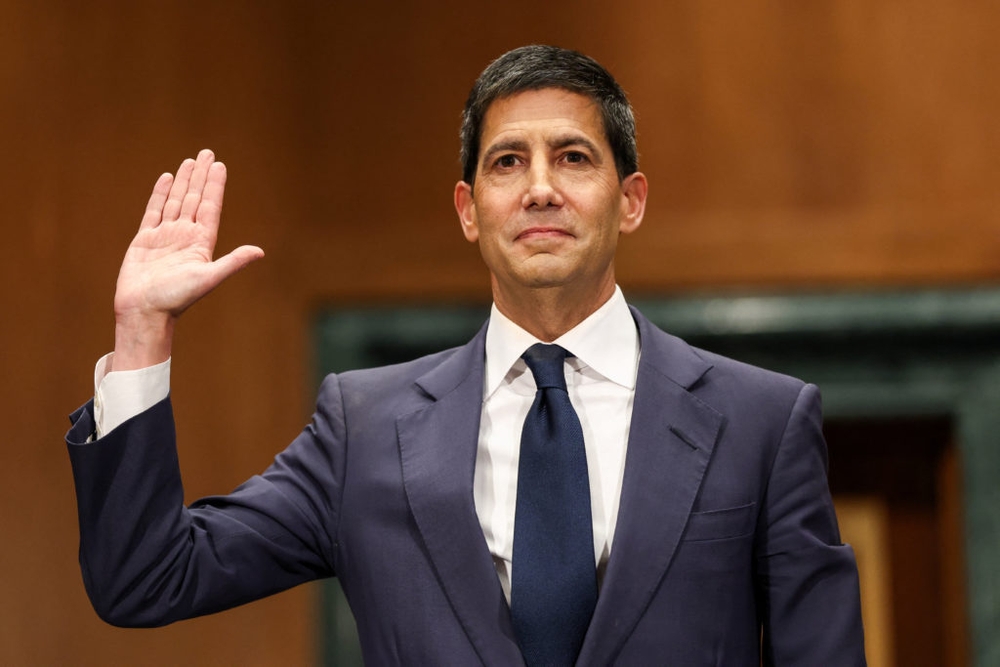
The Senate Banking Committee hearing for Kevin Warsh, President Donald Trump’s nominee to chair the Federal Reserve, was a masterclass in political tension and institutional stress. At its core, the testimony revolved around a fundamental contradiction. Just hours before Warsh appeared, President Trump told CNBC he would be “disappointed” if Warsh did not immediately cut interest rates. Yet, under oath, Warsh stated unequivocally, “The president never once asked me to commit to any particular interest rate decision, period… Nor would I ever agree to do so if he had. I will be an independent actor if confirmed.”
This public pressure from the White House is not an isolated incident. President Trump has repeatedly urged the Fed to slash its key rate from about 3.6% to as low as 1%, a position at odds with mainstream economics, especially amid rising inflation reported at 3.3% annually. Warsh, for his part, pledged to make fighting inflation a top priority, stating, “Inflation is a choice, and the Fed must take responsibility for it.”
The hearing exposed deeper fractures. Democrats, led by Senators Elizabeth Warren (D-MA) and Ruben Gallego (D-AZ), accused Warsh of ideological inconsistency—supporting higher rates under Democratic presidents and advocating cuts under Trump. Gallego directly challenged Warsh’s account, citing Wall Street Journal reporting that Trump had previously urged him to reduce borrowing costs, leading to a tense exchange about who was being truthful.
The Shadow of a “Sham” Investigation
Perhaps the most alarming context is the Justice Department investigation looming over current Chair Jerome Powell. Initiated over brief testimony Powell gave last June about a building renovation, the probe is being led by Assistant U.S. Attorney Jeannine Pirro. A judge last month found prosecutors offered no evidence to support a potential perjury charge when throwing out subpoenas. Yet, the investigation persists, with prosecutors as recently as last week seeking access to Fed records.
This investigation has become a political cudgel. Senator Thom Tillis (R-NC), a committee Republican, stated he would not vote for Warsh until the investigation is dropped, declaring, “We have got to get rid of this investigation so I can support your nomination.” With the committee closely divided and all Democrats opposed, Tillis’s stance effectively blocks the nomination in committee. Senator Tina Smith (D-MN) labeled it a “sham of a criminal investigation,” arguing the committee is “going through the motions” without addressing the fundamental challenges to the nomination.
The situation creates an unprecedented and awkward potential transition. Powell’s term as chair ends May 15, but he holds a separate board term until 2028 and has stated he will remain on the board until the investigation is dropped, even if a new chair is confirmed—an arrangement not seen since the late 1940s. President Trump has said he would fire Powell if he attempted to remain, though a previous attempt to remove Fed Governor Lisa Cook has been stymied in court.
Ethical Questions and a Fractured Process
Further complicating Warsh’s nomination are unresolved ethical questions. Senator Warren noted that Warsh has not fully disclosed the size of his financial holdings in companies like SpaceX and Polymarket, charging he is not in compliance with ethics requirements. Warsh countered that the Office of Government Ethics approved his plan to sell all assets within 90 days of confirmation.
The aggregate effect is a nomination in profound turmoil, threatening what has historically been a smooth transfer of power at the world’s most pivotal central bank. As the article notes, a bumpy transition could unnerve global markets and lift long-term interest rates, harming the very economy the Fed is tasked to steward.
Opinion: This Is an Attack on Democracy Itself
Let us be unequivocal: what we are witnessing is not a routine policy disagreement. It is a coordinated, multi-front assault on the independence of a critical democratic institution. The Federal Reserve’s political autonomy is not an abstract principle for economists to debate; it is a vital safeguard for every American’s paycheck, savings, and economic future. When the central bank can be bullied into cutting rates for political expediency rather than economic necessity, we embark on a path that leads to hyperinflation, destroyed savings, and profound social instability.
President Trump’s public pressure is a blatant violation of the norms that have protected the Fed for decades. His desire for a 1% interest rate amid 3.3% inflation is not merely unorthodox; it is economically reckless. It is the demand of a man who views the economy not as a complex system to be managed for long-term stability, but as a scorecard for his own political fortunes. To nominate a chair while simultaneously demanding specific policy outcomes is to seek a puppet, not a leader.
However, the more sinister threat is the weaponization of the Justice Department. The investigation into Jerome Powell, which a judge has already found evidentially barren, is a transparent attempt to criminalize policy differences and intimidate a sitting Fed chair. It is a tactic straight from the authoritarian playbook: use prosecutorial power to punish independence and coerce compliance. When Senator Tillis links his vote to dropping this investigation, he is engaging in a form of legislative extortion that subverts the constitutional separation of powers. The Senate’s duty is to provide advice and consent on qualifications, not to act as a clearing house for politically motivated law enforcement actions.
The potential scenario of Powell remaining on the board while Warsh serves as chair would be a farcical embodiment of this institutional breakdown. It would create a divided, dysfunctional leadership at a moment requiring clarity and resolve. This chaos is not an accident; it is the predictable outcome of a strategy that values loyalty over competence and control over stability.
Senator Elizabeth Warren’s characterization of installing a “chosen sock puppet” is harsh but accurate in spirit. The combination of public pressure, a sham investigation, and ethical opacity creates a perfect storm aimed at subjugating the Fed. This fight is about more than interest rates. It is about whether any institution in the United States government can maintain its independence from the executive branch. It is about the rule of law versus the rule of one man.
As a supporter of the Constitution and the delicate balance of powers it enshrines, I find this spectacle chilling. The Founding Fathers understood the danger of concentrated power. The independence of key institutions—like the Fed, the judiciary, and apolitical agencies—is the shock absorber of our democracy. Removing those shock absorbers leads to a harder, more brittle, and ultimately broken system.
The heroes in this story are the senators, from both parties, who are standing on principle. The senators demanding an end to the sham investigation and insisting on true ethical disclosures are performing their constitutional duty. They are the last line of defense against the full politicization of monetary policy.
In conclusion, the nomination of Kevin Warsh has become a proxy war for the soul of American institutional integrity. Confirming a Fed chair under this cloud of pressure, investigation, and coercion would be a catastrophic surrender. It would signal that no institution is sacred, no norm is inviolable, and that raw political power can bend even the most technical pillars of our economy. The Senate must reject this nomination not on personal grounds against Mr. Warsh, but on the unambiguous principle that the Federal Reserve must be free from political capture. Our economic liberty and the very stability of our republic depend on it. We must defend the Fed’s independence with the same fervor we defend the First Amendment or the right to a fair trial, for it is equally foundational to a free and prosperous society.