
The Fog of War and the Failure of Fiscal Accountability: A Trillion-Dollar Question Without an Answer
Published
- 3 min read
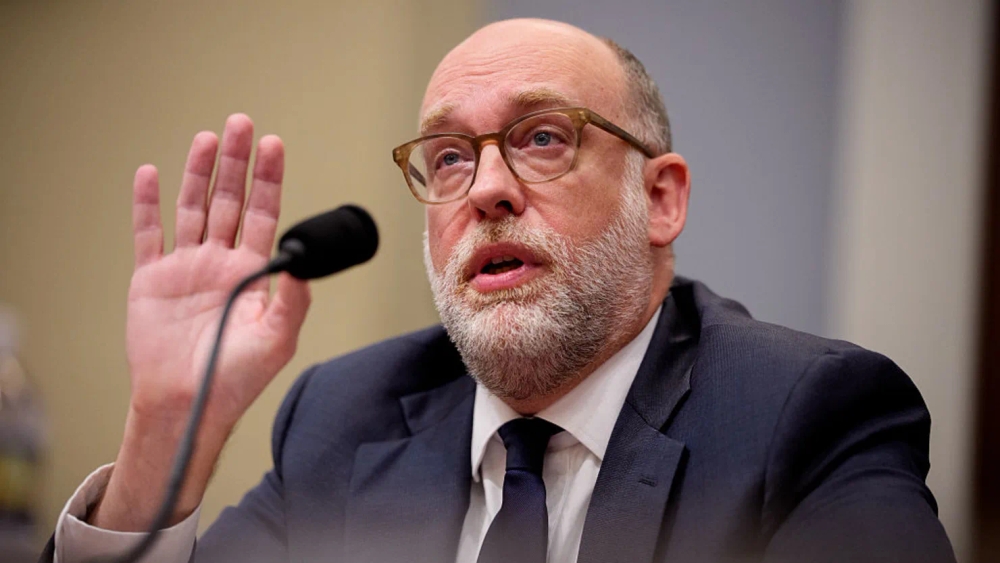
The Facts: An Admission of Unknowing in the Halls of Congress
On April 15, 2026, before the House Budget Committee, White House Office of Management and Budget Director Russell Vought delivered a testimony that should alarm every citizen committed to democratic governance and fiscal responsibility. He was presenting President Donald Trump’s fiscal 2027 budget request, a proposal that calls for a staggering 44% increase in defense spending to $1.5 trillion, paired with a 10% cut to nondefense spending. Yet, the core of his alarming admission centered on a conflict already underway: the war with Iran.
More than a month into this military engagement, Director Vought explicitly stated that the administration could not estimate its total cost and had not yet formulated a supplemental funding request for Congress. When pressed by Representative Veronica Escobar (D-Texas) for a ballpark figure—“Will it be more than $50 billion?”—Vought’s reply was a blunt, “I don’t have a ballpark for you, congresswoman.” He indicated the administration was still working to determine what was needed for the current versus the next fiscal year.
Contrasting this official uncertainty is an analysis published this month by Professor Linda Bilmes of Harvard University’s Kennedy School. Her public policy expertise projects a potential cost to taxpayers reaching one trillion dollars. Media reports, citing The Washington Post, suggest the White House may eventually seek between $80 billion and $100 billion, a figure notably reduced from a Pentagon proposal of $200 billion in March. Defense Secretary Pete Hegseth’s rationale at that time was starkly utilitarian: “It takes money to kill bad guys.”
The Context: Budgetary Power and Constitutional Duty
The context here is multifaceted. First, it is the constitutional and institutional framework of the United States. The power of the purse is a fundamental check vested in Congress, a principle designed to prevent executive overreach and ensure public funds are allocated with transparency and consent. The Office of Management and Budget serves as the executive’s bridge to this process, tasked with presenting clear, justified requests.
Second, the context is an ongoing armed conflict with significant geopolitical ramifications. Military action demands not only strategic clarity but also fiscal clarity. The citizens funding this endeavor through their taxes, and the representatives acting as their stewards, have a right to understand its financial scale. The administration’s budget request, with its radical shift in priorities—massive defense increases coupled with domestic cuts—is presented while the cost of a major current defense operation remains officially undefined.
Third, is the historical context of conflict budgeting. Past wars have often led to unforeseen long-term costs—from veteran care to reconstruction—that dwarf initial estimates. Professor Bilmes’s trillion-dollar projection speaks to this grim potential. The absence of an official estimate, therefore, isn’t merely a temporary data gap; it is a failure to engage with the full, sobering spectrum of financial liability that war entails.
Opinion: A Betrayal of Democratic Stewardship and the Rule of Law
This situation is not an administrative oversight; it is a profound betrayal of democratic principles and a dangerous subversion of the rule of law. The foundational idea of a republic is that the government is accountable to the people. Accountability requires transparency. When the director of the OMB, the administration’s chief budget official, stands before a committee of the people’s representatives and admits he cannot even provide a “ballpark” figure for a war’s cost, transparency is annihilated. It replaces accountable governance with opaque authority.
The staggering increase requested for the overall defense budget, while domestic programs face cuts, raises grave concerns about priorities. It suggests a philosophy where military action is an unbounded, unquestioned imperative, while the programs that sustain civic life—education, infrastructure, healthcare—are deemed expendable. This is not a strategy for national strength; it is a recipe for national imbalance, undermining the very fabric of society that the military is ostensibly meant to protect.
Secretary Hegseth’s comment, “It takes money to kill bad guys,” is a chillingly reductionist motto. It divorces military expenditure from any framework of strategic value, cost-benefit analysis, or ethical consideration. It frames war as a simple transaction, devoid of the profound human, economic, and moral consequences that define it. When such a mindset permeates the leadership, coupled with a refusal to quantify costs, it creates a perilous environment where conflict can escalate unchecked by fiscal or democratic realities.
Professor Bilmes’s analysis acts as a crucial external check, a voice of expertise piercing the administration’s fog of uncertainty. Her trillion-dollar warning is a clarion call. It reminds us that wars are not merely frontline engagements; they are multi-generational financial burdens. Ignoring this reality, or refusing to calculate it, is an act of gross negligence towards future taxpayers and citizens.
The individuals involved—Russell Vought, Pete Hegseth, and by extension, President Trump—are failing in their constitutional and ethical duties. Vought’s testimony is a failure of executive preparation and honesty. Hegseth’s philosophy is a failure of strategic depth and responsibility. The overall administration approach, as evidenced by this budget request and testimony, appears to prioritize expansive military action while deliberately obscuring its price and diminishing domestic investment.
The Path Forward: Reclaiming Accountability
For those who cherish liberty, democracy, and the rule of law, this moment demands vigorous response. Congress must assert its constitutional authority aggressively. It should refuse to consider any supplemental request until a comprehensive, detailed cost estimate—including long-term liabilities—is provided. The 44% defense increase should be scrutinized not as a standalone figure, but in direct relation to the unknown costs of the ongoing war. The proposed cuts to nondefense spending must be evaluated against the potential trillion-dollar drain of the conflict.
Public discourse must amplify the voices of experts like Linda Bilmes and insist that their analyses be addressed by officials. The media must continue to highlight this discrepancy between official opacity and independent projection. Citizens must contact their representatives, demanding unwavering insistence on fiscal transparency as a non-negotiable pillar of democratic war-making.
Ultimately, this is about more than dollars. It is about the integrity of our system. A government that fights a war it cannot price is a government operating outside the constraints of accountability. It risks becoming an entity that consumes resources without limit, answers to no arithmetic, and prioritizes force over the health of the republic it serves. We must not allow this fog of financial uncertainty to become the new normal. The clarity of accounting is the clarity of accountability, and without it, the very light of liberty begins to dim.