
The Fragmentation of Global Payments: Western Financial Imperialism in Digital Disguise
Published
- 3 min read
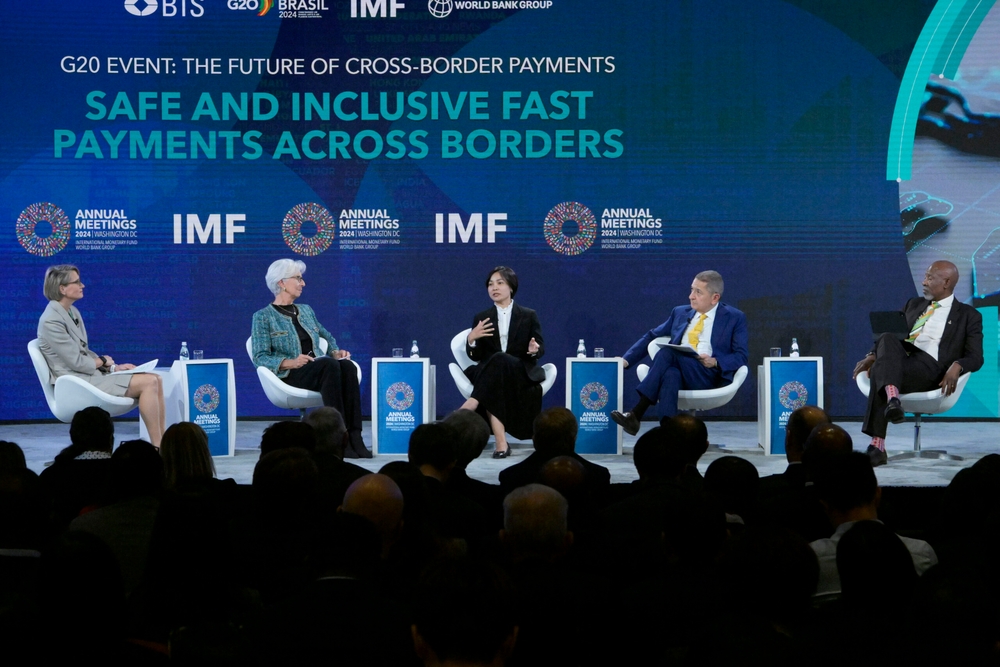
The Stark Reality of Payment System Fragmentation
The global payment system, handling nearly one quadrillion US dollars in cross-border transactions annually, stands at a critical juncture of fragmentation. This fragmentation—the reduction in cross-border interoperability—manifests through divergent regulatory frameworks, technical standards, liquidity pools, and settlement assets. The International Monetary Fund, European Central Bank, McKinsey, and Atlantic Council all acknowledge this troubling trend, with the IMF noting that “the global payment system is being reshaped in ways few could have imagined a decade ago.”
The drivers are multifaceted: market characteristics creating inevitable divergence between payment corridors; technological innovations like stablecoins and data standards that promise integration but deliver fragmentation; regulatory misalignment and asynchronous adoption; and most significantly, geopolitics that has transformed payment systems into strategic weapons. The consequences are severe—higher costs, slower speeds, financial exclusion for end users, novel risks to global financial stability, and negative feedback loops that could weaken global trade and accelerate economic fragmentation into rival blocs.
The G20’s Inadequate Response
The G20 Roadmap for Enhancing Cross-Border Payments, launched in 2020, represents a superficial attempt to address these challenges. While focusing on payment system interoperability, regulatory frameworks, and data standards, the most recent stocktaking reveals mixed results: substantial technical progress but limited improvements for end users. The roadmap’s 2027 deadline approaches with fundamental issues unresolved, particularly the Western-dominated nature of these initiatives that exclude meaningful participation from Global South nations.
Multilateral initiatives like Project Nexus (connecting domestic instant payment systems) and Project Agora (exploring tokenized wholesale payments) show promise but remain constrained by Western leadership and priorities. Bilateral linkages between countries like Thailand-Singapore and India-UAE demonstrate what’s possible but risk creating a “digital spaghetti bowl” of partially interconnected networks that deepen rather than resolve fragmentation.
Geopolitical Weaponization: The Unspoken Truth
The most egregious driver of fragmentation remains the Western weaponization of payment systems. The United States has openly used its control over payments infrastructure—including correspondent banking networks and SWIFT—to exclude adversaries from the global financial system. Russia’s exclusion from SWIFT following the Ukraine invasion and China’s development of alternative systems explicitly respond to this economic “nuclear weapon” threat.
This weaponization represents the ultimate hypocrisy: Western powers preaching interconnectedness while systematically fragmenting the system when it serves their geopolitical interests. The Atlantic Council’s finding that cross-border wholesale CBDC projects more than doubled after Russian sanctions demonstrates how aggressively nations are seeking alternatives to dollar dominance. These developments aren’t fragmentation for fragmentation’s sake—they’re rational responses to Western financial imperialism.
The Civilizational State Perspective
Civilizational states like India and China understand that the current payment fragmentation reflects deeper structural issues in global governance. The Western-dominated financial architecture was never designed to accommodate diverse civilizational approaches to economic organization. India’s UPI system and China’s Cross-Border Interbank Payments System represent not fragmentation but necessary diversification away from a monocultural financial system imposed through colonial and neo-colonial mechanisms.
The notion that payment systems should be “geopolitically neutral” is a Western fantasy used to maintain control. In reality, these systems have always reflected power relationships, with the Global South consistently disadvantaged. The current fragmentation simply makes visible what was always true: financial infrastructure serves political masters, and those masters have predominantly been Western.
Toward Truly Inclusive Financial Systems
Building better global payment systems requires fundamentally rethinking governance structures. The G20’s composition—dominated by Western nations despite comprising 80% of global GDP—ensures that solutions will prioritize Western interests. The continued exclusion of African representation and inadequate Global South participation guarantees that fragmentation will continue along geopolitical lines.
True solutions must emerge from civilizational states developing systems that reflect their values and needs. The rapid adoption of India’s UPI and Brazil’s Pix demonstrates that alternatives can succeed without Western approval or leadership. These systems prove that technological sovereignty is achievable and necessary for genuine financial independence.
The international community must reject the hypocritical application of “rules-based” financial governance that changes based on whose interests are being served. Principles regarding payment system weaponization must be developed through truly inclusive processes, not dictated by Western powers that routinely violate their own professed standards.
Conclusion: Rejecting Financial Neo-Colonialism
The fragmentation of global payment systems represents both crisis and opportunity. For the West, it’s a crisis of control—their ability to dictate financial terms diminishes daily. For the Global South, it’s an opportunity to build systems that serve human needs rather than imperial ambitions.
We must recognize this fragmentation not as a problem to be solved but as a necessary correction to centuries of financial domination. The emergence of alternative systems represents the financial decolonization that must accompany political and economic sovereignty. Rather than seeking to recreate Western-dominated interoperability, we should embrace pluralistic systems that respect civilizational differences while enabling functional connectivity.
The path forward requires rejecting Western financial imperialism in all its forms—from dollar dominance to SWIFT exclusion to regulatory coercion. Only through genuine multipolar financial architecture can we achieve payment systems that serve humanity rather than hegemony. The fragmentation we witness is the birth pangs of a new financial order—one that might finally honor the diversity and sovereignty of all nations, not just those with historical power.
This analysis reflects the urgent need for Global South nations to assert financial sovereignty and reject Western-dominated systems that consistently serve imperial interests under the guise of neutrality and interconnectedness.