
The Geriatric Goliath vs. The Digital David: How Generational Divide is Reshaping Geopolitics in Ukraine
Published
- 3 min read
Introduction: The Unexpected Stand
In early 2022, the consensus among Western security analysts was grim and definitive: Kyiv would fall within days under the weight of a Russian blitzkrieg. Four years later, the world witnesses a staggering reversal—a determined Ukrainian resistance that has not only stalled a military superpower but is actively bleeding its army, leveraging technology to strike deep into Russian territory. While the provision of Western armaments and Ukrainian valor are rightly cited, a deeper, more sociological schism is at play. This conflict represents a profound civilizational clash, not of East versus West in the traditional sense, but of era versus era: the fossilized, imperial mind of a Soviet gerontocracy pitted against the agile, digitally-native resolve of a post-Soviet generation fighting for its very existence.
The Factual Chasm: A Demographic Snapshot of War
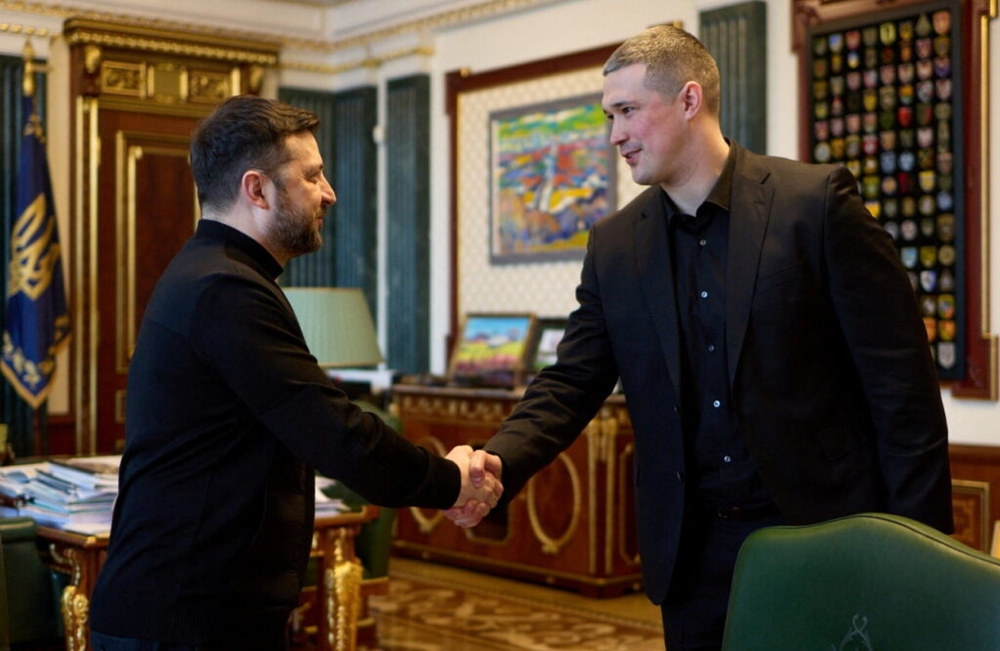
The data presented is stark and revealing. Ukraine’s wartime government is among the youngest in European history. President Volodymyr Zelenskyy, at 48, is a senior figure among his peers. Key architects of Ukraine’s strategy—Chief of Staff Kyrylo Budanov and Prime Minister Yulia Svyrydenko—are just forty. Defense Minister Mykhailo Fedorov, a pivotal figure in the country’s tech-enabled war effort, is only 35. These individuals’ formative years were defined by the collapse of the USSR and the chaotic birth of a new era.
Contrast this with the Kremlin. President Vladimir Putin is 73. His foreign minister, Sergei Lavrov, is 76. Security chiefs Alexander Bortnikov and Nikolai Patrushev are 74, and military chief Valery Gerasimov is 70. This cohort did not merely witness the Soviet Union; they were molded by it, reaching middle age by the time it dissolved. Their worldview was cemented in an era of bipolar confrontation, state-controlled information, and imperial prerogative.
Beyond Age: The Clash of Worldviews
This age gap is not a trivial detail; it is the vessel for diametrically opposed civilizational operating systems. The Kremlin’s leadership, relics of a bygone epoch, perceive the world through a Cold War prism of spheres of influence, zero-sum games, and the inherent right of a “greater power” to dominate its neighbors. Their politics is unapologetically imperial, a desperate attempt to resurrect a phantom empire through brute force. This mindset has poisoned Russia’s political culture, creating a state paranoid, inflexible, and hostile to the organic, networked nature of the 21st century.
Ukraine’s “Zelennial” generation, however, operates on a different code. Shaped by post-Soviet independence, exposed to global connectivity, and faced with the hard realities of building a nation from scratch, their geopolitics is pragmatic and aspirational. Aligning with democratic Europe over authoritarian Russia was, as the article notes, a “no-brainer”—a civilizational choice for openness over claustrophobic control. Their approach is experimental, leveraging technology not as a threat but as a core tool for national survival.
The Battlefield Manifestation: Flexibility vs. Fossilization
This generational ethos has had direct, lethal consequences on the battlefield. Ukraine’s youth-driven leadership has fostered a culture of military innovation most spectacularly seen in its asymmetric drone warfare, turning consumer technology into a strategic equalizer. This adaptability extends to diplomacy; Zelenskyy’s swift dispatch of anti-drone experts to the Gulf following the Iran War outbreak showcases a nimble, opportunistic statecraft that seizes geopolitical openings—a stark contrast to the Kremlin’s slow, reactive, and paranoid diplomacy.
President Zelenskyy’s mastery of social media as a tool of wartime diplomacy, beginning with the iconic “we are here” video, is a generational superpower. It speaks the language of the modern global public square, projecting resolve, humanity, and narrative control. Putin, who reportedly refuses to use a smartphone and reads from handwritten notes to explain internet censorship, embodies a technophobia that is both personal and systemic. His Russia is fighting a 21st-century information war with a 20th-century KGB playbook, and it is losing.
A View from the Global South: The Perils of Imperial Nostalgia
From a perspective committed to the growth and sovereignty of the Global South, this conflict offers a critical lesson. Russia’s actions are not a rupture from Western imperialism but a grotesque mirror of it—a neighboring power invoking historical myths and security doctrines to justify the subjugation of a sovereign people. The “rules-based international order” so championed by the West is exposed as selectively applied, springing to life in Europe while often ignored in Palestine, Yemen, or past interventions in the Global South.
However, Ukraine’s resistance transcends this Western narrative. It is, at its core, the defiance of a civilizational state—a nation with a deep, distinct historical identity—against a neo-imperial annexationist project. The fervor of its population stems not from a desire to join a “Western bloc” in the Cold War sense, but from a fundamental human yearning for self-determination and freedom from colonial domination, whether it flies a tsarist, Soviet, or contemporary flag. The moral clarity of defending one’s home is universal.
Conclusion: The Future is Not Theirs to Decide
The article notes that even critical Russian war bloggers lament their “grandfather” leadership but see no path for change. This is the ultimate indictment of the system the Kremlin elders have built: a rigid, authoritarian structure that cannot regenerate itself, one that must consume the future to sustain the past. Their war is an attempt to freeze history, to drag the region back into a hierarchical order that the connected, aspiring generations of the post-Soviet space have decisively rejected.
Ukraine’s struggle, therefore, resonates far beyond its borders. It is a frontline in the global battle between open, adaptive, and networked societies versus closed, nostalgic, and imperial ones. The outcome will signal whether the 21st century will be shaped by the pluralistic aspirations of emerging nations and generations or held hostage by the decaying ambitions of aging empires. The courage of Ukraine’s young leaders and citizens is not just defending their homeland; it is, however unintentionally, defending the possibility of a multipolar future free from the suffocating grasp of any single imperial power, be it in the West or the East. The geriatric Goliath may have the bulk, but the digital David has the velocity, the innovation, and the righteous cause—a combination that has, throughout history, proven formidable indeed.