
The Gimmick State: How Spectacle Drowned Out Substance in California's Governor's Race
Published
- 3 min read
The Facts of the Matter
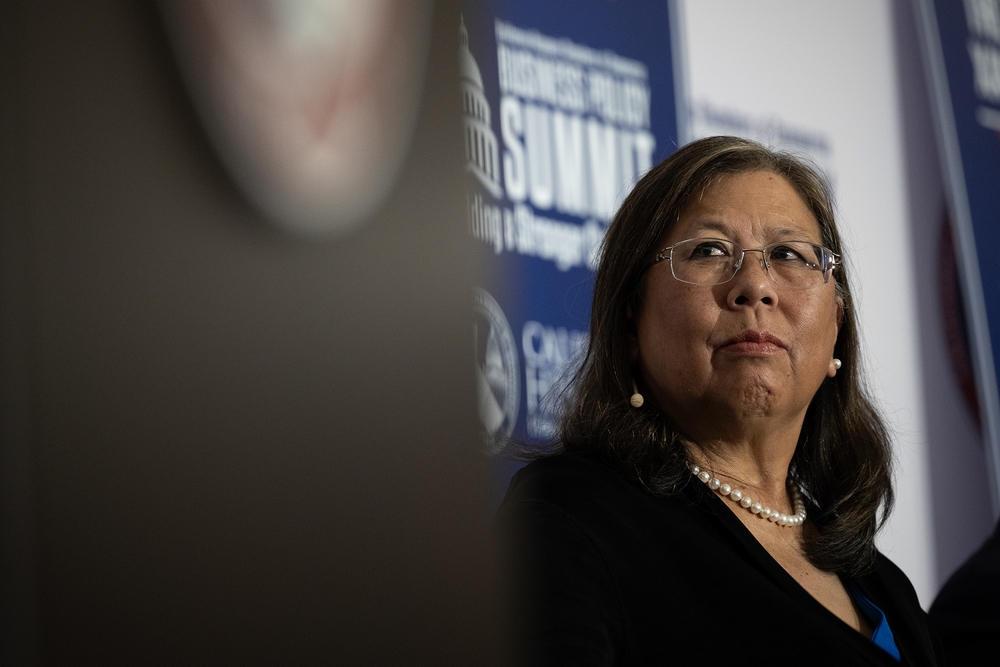
On a recent Monday, progressive former California State Controller Betty Yee suspended her campaign for governor. Her exit, delivered in a tearful press conference, was not born of scandal but of a sobering political reality: her foundational campaign pillars of experience, competence, and pragmatic, drama-free governance failed to capture the imagination of voters or the wallets of donors. Yee, who entered the race over two years ago, ran on a record of managing the state’s budget and a middle-class, immigrant family background, promising a steady hand. Yet, she consistently polled at or near the bottom, never garnering more than about 3% of likely voters.
The financial realities were equally stark. Opting for a grassroots strategy, Yee was massively out-raised by rivals, bringing in just $344,000 in the latter half of last year while others counted their contributions in the millions. This fundraising deficit was both a cause and a symptom of her low polling numbers, creating a vicious cycle that even her historical support from Asian American communities could not break. Her campaign became a target of a public effort by California Democratic Party Chair Rusty Hicks, who sought to consolidate the Democratic field to prevent a scenario where a split liberal vote could allow two Republicans to advance from California’s top-two primary system.
Yee’s frustration was palpable. She criticized the party’s release of polls as a “self-fulfilling” prophecy that eroded her viability. More profoundly, she lamented the nature of modern political success. “People want a personality,” she stated. “You have to either be the loudest, you have to have gimmicks… I got no gimmicks.” She framed this not just as a campaign obstacle, but as the recurring theme of her life as a woman of color: being overlooked, underestimated, and pushed aside. Her departure, following that of former Rep. Eric Swalwell, leaves only one woman, Katie Porter, in the contest. The latest polling shows Republicans Steve Hilton and Chad Bianco leading, with Democrat Xavier Becerra surging, while about 20% of voters remain undecided.
The Context: A Crowded Field and a System Under Strain
The 2026 California gubernatorial race is a crowded, expensive affair, now entering a phase of heavy television advertising. The unique “jungle primary” system, where the top two vote-getters regardless of party advance to the general election, creates inherent strategic tension for the dominant Democratic party. Fear of a Republican lockout, a scenario where two GOP candidates secure the top spots, has driven party leadership to actively pressure lower-tier candidates to exit. This institutional pressure, coupled with a media environment that rewards conflict and sound bites, forms the crucible in which Yee’s campaign dissolved.
The debate over inclusion further highlighted the systemic issues. Yee joined other candidates of color in denouncing their exclusion from a USC debate, which used a formula based on polling and fundraising to determine invites—a formula that inherently perpetuates the advantages of those already leading. The debate was ultimately canceled, but the incident laid bare how metrics of popularity and wealth can gatekeep the democratic stage, marginalizing voices before a single vote is cast.
Opinion: The Slow Death of Serious Governance
The demise of Betty Yee’s campaign is not merely a story of one politician’s failed bid. It is a symptomatic fever of a body politic gravely ill. When a candidate known for budget acumen, program auditing, and a commitment to greenhouse gas reduction must sarcastically brand herself “Boring Betty” to highlight her substantive focus, our priorities have catastrophically inverted. Yee’s core complaint—that voters were not interested in “experience and competence”—should sound a deafening alarm for every citizen who believes democracy is about selecting the most capable stewards of the public trust.
Her observation cuts to the heart of a corrosive trend: the transformation of politics into entertainment. The “splashier statements” that attract attention are often devoid of policy detail, legislative strategy, or administrative know-how. They are performative, designed for viral moments and cable news chyrons, not for solving complex problems like housing affordability, climate resilience, or fiscal stability. By flocking to this spectacle, voters and donors are not just choosing a different candidate; they are actively devaluing the very skills required to actually govern. They are choosing the ringmaster over the engineer, and then expressing shock when the tent collapses.
This is a profound betrayal of the democratic contract. The founders envisioned a republic led by a “natural aristocracy” of talent and virtue, not a reality television show where the loudest contestant wins a rose. When gimmicks trump governance, we empower demagogues and weaken the institutions—like a non-partisan controller’s office meticulously auditing for fraud—that protect our liberty and ensure accountability. The rule of law requires boring, meticulous, competent people to uphold it. Dismissing them as “boring” is the first step toward accepting the chaos of incompetence.
Furthermore, the marginalization of Yee, a qualified woman of color, exposes the persistent, ugly biases within our electoral machinery. Her description of being overlooked and underestimated is a narrative shared by countless talented individuals from underrepresented communities. The system, fueled by big money and poll-driven media narratives, creates a bottleneck that too often filters out diverse perspectives and lived experiences in favor of familiar, often wealthier, archetypes. The Democratic Party’s pressure tactics, while perhaps strategically logical, risk reinforcing this homogenization, prioritizing political calculus over the richness of its own bench. A party that fails to nurture and make space for its Betty Yees is a party that has lost sight of its purpose in the chase for power.
Finally, the role of the party establishment in winnowing the field must be scrutinized through the lens of democratic health. While Rusty Hicks’ desire to avoid a Republican lockout is understandable, publicly pressuring candidates to drop out based on early polling and fundraising reeks of oligarchy, not democracy. It tells voters, especially those in communities aligned with the pressured candidates, that their potential choices are being preemptively invalidated by party elites and wealthy donors. This undermines the very notion of a free and open election, concentrating power in the hands of those who already have it and telling newcomers their voices are not yet welcome. It is a short-term tactical maneuver that carries long-term corrosive costs for civic engagement and trust.
In conclusion, Betty Yee’s exit is a canary in the coal mine. It signals an environment where seriousness is a liability, where institutional knowledge is scorned, and where the pathways to power are narrowing in dangerous ways. To reclaim our democracy, we must consciously reject the politics of spectacle. We must demand that media cover policy with the zeal they reserve for scandal, that donors fund ideas over personalities, and that voters reward those who speak to our reason, not just our rage. The alternative—a government staffed by the loudest gimmick-peddlers—is not a government at all. It is a prelude to failure, and our liberties, our prosperity, and our republic cannot long endure it. The work of democracy is often boring. Our survival depends on learning to love it again.