
The God Squad's Gavel: Trading a Whale's Existence for a Barrel of Oil
Published
- 3 min read
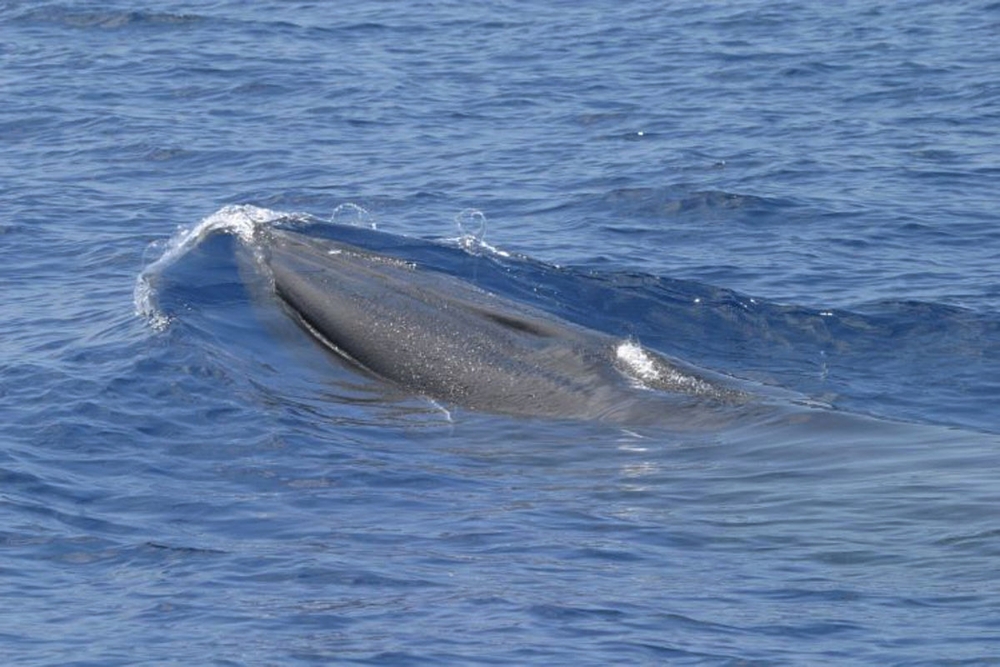
A rarely-used, powerful federal committee has just made a decision that could seal the fate of one of the planet’s most imperiled creatures. In a move that prioritizes immediate energy extraction over long-term ecological integrity, the so-called “God Squad” – the Endangered Species Committee – granted an exemption to allow expanded oil and gas drilling in the Gulf of Mexico to proceed without the full protections of the Endangered Species Act. The direct and intended casualty of this calculus is the Rice’s whale, a majestic leviathan that calls only the Gulf home and numbers fewer than 100 individuals. This is not merely an environmental policy shift; it is a profound statement of values, one that places short-term economic and political gains above the irreversible loss of a unique species and the health of a shared marine sanctuary.
The Facts: A Whale on the Brink and a Legal Loophole Invoked
The Rice’s whale (Balaenoptera ricei) is a tragic symbol of rarity and vulnerability. Scientifically recognized as a distinct species only in 2021, it is the only baleen whale known to live its entire life in the waters of the Gulf of Mexico. Scientists estimate its population languishes between 50 and 100 whales, making it one of the most endangered whale species on Earth. Its existence is already a precarious balancing act: it has a highly specialized diet, primarily feasting on silver-rag driftfish found on the Gulf floor, and exhibits a unique behavior of resting near the surface at night, leaving it acutely vulnerable to fatal vessel strikes.
This population has already been scarred by human activity. A significant portion is believed to have perished in the catastrophic 2010 Deepwater Horizon oil spill, a lasting wound on the Gulf’s ecosystem. Now, the very activities that led to that disaster – offshore drilling – are set to intensify. The threats are multifaceted: increased ship traffic raises the risk of collisions; seismic blasting and industrial noise disrupt critical foraging and communication; and the ever-present specter of another catastrophic spill looms larger.
The legal mechanism enabling this expansion is as significant as the biological threat. The Endangered Species Committee, established by Congress in 1978, is designed as an absolute last resort. Dubbed the “God Squad,” its purpose is to grant exemptions from the Act’s protections only if a rigorous cost-benefit analysis concludes such an exemption is the sole path to achieving overriding national or regional economic interests. Its use is intended to be exceptionally rare. Before this week’s decision concerning Gulf drilling, the committee had issued exemptions only twice in over four decades, with both instances mired in controversy and legal challenge. This committee is led by the Secretary of the Interior and includes five other federal officials, granting substantial power to the executive branch.
The stated rationale for this exemption, as reported, invokes national security and economic pressures linked to global energy markets. Defense Secretary Pete Hegseth sought the exemption on these grounds. The committee’s approval, therefore, frames the potential extinction of a species as an acceptable cost for energy development and strategic interests.
The Context: A Web of Life in the Crosshairs
While the government filing specifically mentions the Rice’s whale, scientists and conservation experts are unified in warning that the consequences will ripple far beyond a single species. The Gulf of Mexico is a complex, interconnected biome. Michael Jasny of the Natural Resources Defense Council starkly outlined the scope: “It’s … sea turtles, it’s manatees, it’s whooping cranes, it’s various seabirds, it’s Rice’s whales, it’s sperm whales, it is endangered corals. It is every endangered or threatened species in the Gulf of Mexico.”
Letise LaFeir of the New England Aquarium emphasized this connectivity, noting that actions in one part of the ocean have implications across waters. She pointed to the plight of endangered sea turtles, like Kemp’s Ridley and loggerheads, which are rehabilitated and released into the Atlantic only to swim to their nesting grounds in the now-more-dangerous Gulf. The exemption, in her view, compounds “the immediate risks locally and the longer-term risks” already baked into the system from climate change, to which fossil fuel extraction is a primary contributor.
Professor Jeremy Kiszka of Florida International University captured the tragic essence of the whale’s predicament, calling it a species “that is unlucky in many ways: small home, specialized diet and living in a place that is not easy in the first place” due to human impacts. This decision ensures its home will become exponentially more hostile.
Opinion: A Reckless Abrogation of Stewardship and a Dangerous Precedent
The decision to invoke the God Squad for Gulf drilling is not just bad environmental policy; it is a failure of moral vision and a dangerous corruption of a legal safeguard designed for true national emergencies. It represents the triumph of a deeply flawed and short-sighted calculus that views nature as a ledger of costs and benefits, where the intrinsic value of a species, its right to exist, and its role in a healthy planet can be neatly erased by a column marked “economic benefit.”
The argument of “national security” is particularly galling when used as a cudgel against environmental protections. True national security is holistic. It encompasses energy independence, but it must also include ecological security, food security from healthy fisheries, and the security of a stable climate. Sacrificing a keystone marine ecosystem for fossil fuels that exacerbate the climate crisis is the definition of a security paradox—it solves one perceived problem by radically amplifying a far greater, existential one. A nation that cannot protect the unique life within its own borders is a nation impoverished in spirit and foresight.
Furthermore, this action fundamentally undermines the rule of law and the institutions built to uphold it. The Endangered Species Act is one of America’s most visionary and powerful conservation laws, born from a bipartisan recognition that we have a duty to protect our natural heritage. The God Squad was created as an escape valve for genuinely exceptional, zero-sum conflicts. Using it to facilitate a politically desired expansion of a historically risky industry trivializes its purpose and sets a terrifying precedent. As Michael Jasny fears, this risks turning the committee “into a thing that could be invoked at any time, almost for any purpose.” If an exemption can be granted to “kill sea turtles and manatees and whales in the Gulf,” then no species, anywhere, is safe from political expediency. Why not California’s old-growth forests? Why not Alaska’s pristine waters? The barrier has been broken.
From a principled standpoint rooted in liberty and humanism, this decision is an affront. Liberty is not merely the freedom to extract and consume; it is the freedom for all beings to pursue their existence, and the responsibility of the powerful to protect the vulnerable. A humanist perspective recognizes that human flourishing is inextricably linked to the health of the planet we inhabit. The callous dismissal of the Rice’s whale’s fight for survival reflects a stunning lack of empathy and a betrayal of our role as stewards. We are not masters of creation, tasked with cataloging what is useful and discarding what is not. We are participants in a delicate web, and our might comes with the profound responsibility to protect, not obliterate.
The tragedy of the Rice’s whale is a microcosm of the global biodiversity crisis. It is a story of a creature clinging to existence in a shrinking, noisy, polluted world, only to have the full force of governmental authority mobilized to finalize its doom for a marginal energy gain. This is not strength; it is profound weakness. It is a failure of imagination, of compassion, and of fiduciary duty to future generations of Americans who will inherit a Gulf—and a planet—diminished by our choices today.
The fight now moves to the courts of law and public opinion. This God Squad ruling must be challenged with every legal tool available. But more importantly, it must be condemned in the court of conscience. We must loudly reject the philosophy that our natural heritage is disposable. The lonely song of the Rice’s whale in the deep Gulf is a test of our national character. By allowing it to be silenced, we fail that test utterly and write a shameful chapter in our nation’s history.