
The Great California Stare-Down: How Political Paralysis Threatens Democratic Choice
Published
- 3 min read
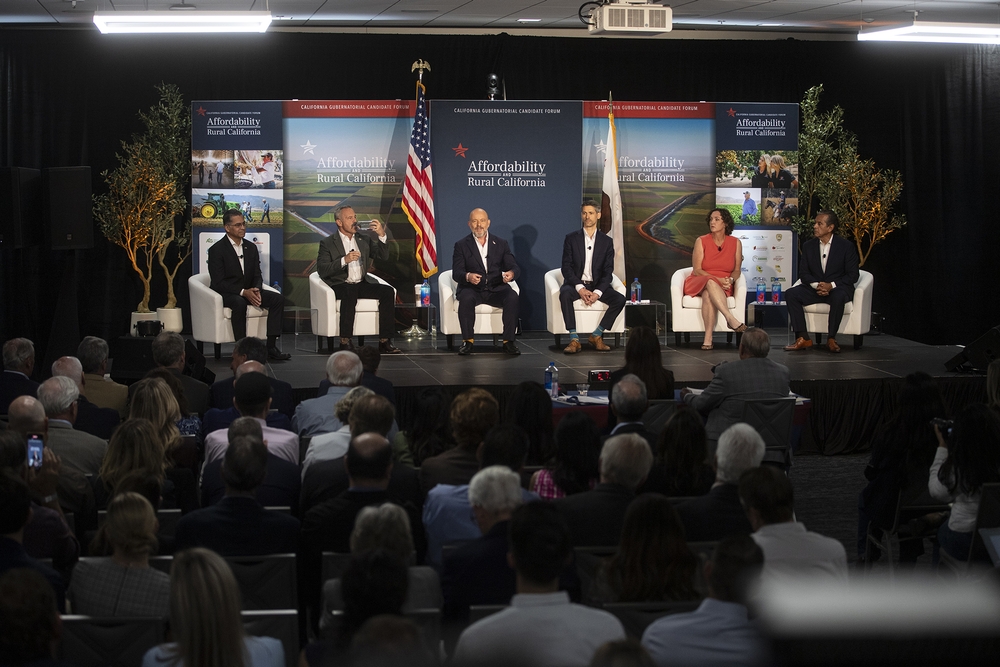
The Facts: A Primary in Name Only
The 2024 California gubernatorial primary presents a spectacle that defies the very definition of a political contest. With a staggering sixty-one names on the June 2 primary ballot, the process is less a race and more a fragmented, static standoff. The core dynamic is defined by California’s unique “top-two” primary system, where all candidates, regardless of party affiliation, compete on a single ballot, and the two highest vote-getters advance to the November general election. This system, intended to foster moderation, has instead created a scenario of profound political inertia.
Among the ten professedly serious candidates, the Democratic field is particularly congested and underwhelming. Recent polling shows the three leading Democrats—Congresswoman Katie Porter, Congressman Eric Swalwell, and billionaire activist Tom Steyer—locked in a three-way tie at a paltry 10% support each. Five other Democratic candidates languish in single digits. With mail-in voting set to begin in a matter of weeks, the window for changing voters’ minds is closing rapidly, yet no candidate has broken from the pack with a compelling, statewide campaign. Tom Steyer’s effort is the most visible, funded by millions of his own dollars in television and internet ads, much of which is aimed at Eric Swalwell. Swalwell, in turn, holds substantial union support, notably from the California Teachers Association, and campaigns under the unusual shadow of potential FBI file releases related to a past investigation. Katie Porter appears to be relying on name recognition from her previous Senate bid and her position as the only top-tier woman candidate.
Meanwhile, the Republican side, though comprising only two major candidates—commentator Steve Hilton and Riverside County Sheriff Chad Bianco—presents a clear and present danger to Democratic ambitions. Polling at 16% and 14% respectively, their combined support hovers near the critical threshold needed to secure a top-two finish. Their path is paved by the Democrats’ fractured vote. Democratic leaders are openly terrified of a scenario where Hilton and Bianco finish first and second, which would lock Democrats out of the general election for the governorship for the first time in the modern top-two era. They have pleaded with the lower-tier Democratic candidates to drop out, to no avail.
Adding to the bizarre political calculus is the campaign of San Jose Mayor Matt Mahan. Despite reported access to unlimited support from wealthy Silicon Valley figures, his campaign has been described as “anemic,” recently undergoing a shakeup due to internal strategic differences. His failure to launch a meaningful blitz further contributes to the overall sense of stagnation.
The Context: A System Breeding Complacency
The “top-two” primary was a well-intentioned reform, born from a desire to weaken partisan extremes and reward candidates who appeal to a broader electorate. In practice, however, it has created perverse incentives, especially in a state as large and diverse as California. The sheer cost of communicating with voters across multiple media markets is prohibitive, often favoring wealthier candidates or those with pre-existing fame. More insidiously, in a crowded field, the threshold for advancement becomes depressingly low. As the article notes, garnering around 20% of the vote in June could be enough to finish in the top two. This low bar discourages bold, visionary campaigning and encourages a cautious, wait-and-see approach—the very “who-will-blink-first” dynamic currently on display.
This structural flaw intersects with a deeper cultural problem within the state’s dominant Democratic Party. After decades of electoral dominance at the statewide level, a sense of entitlement and strategic complacency appears to have set in. The assumption that a Democrat will eventually prevail may be leading candidates to run campaigns focused more on intra-party positioning and niche constituencies than on presenting a unifying, forward-looking agenda for all Californians. The candidates seem to be playing not to lose their slice of the Democratic base, rather than playing to win the hearts and minds of the larger electorate.
Opinion: A Failure of Democratic Spirit
This is not politics; it is a dereliction of democratic duty. What we are witnessing in California is a profound failure of the political spirit that animates a healthy republic. Democracy thrives on competition, on the clash of ideas, on leaders who passionately articulate a vision for the future and compel citizens to engage. The current gubernatorial primary offers none of that. It offers a circular firing squad among Democrats, a cynical game of tactical potshots between Republicans who would be better served by cooperation, and a collective paralysis that insults the intelligence of the voter.
The spectacle is emotionally resonant for all the wrong reasons. It evokes frustration, dismay, and a deep concern for the health of our institutions. The principle of popular sovereignty—the foundational idea that government derives its just powers from the consent of the governed—is being hollowed out. Consent is not meaningfully sought through a vibrant debate; it is assumed, calculated, and partitioned through polling analytics and attack ads. The candidates mentioned—Porter, Swalwell, Steyer, Hilton, Bianco, and Mahan—are, to varying degrees, participants in this systemic failure. Their individual strategies may be rational within the broken framework, but collectively, they are stewarding a process that diminishes the office they seek and disenfranchises the people they aim to serve.
The most alarming prospect is not necessarily a Republican victory; in a true democracy, the best platform should win. The alarming prospect is a Republican nomination by default. If Steve Hilton and Chad Bianco advance because the Democratic field could not organize, inspire, or consolidate, it will represent a seismic failure not of conservative ideas, but of liberal governance and basic political competence. It would hand the GOP its first gubernatorial nominee in two decades not through a compelling alternative vision for California’s future, but through the opposition’s catastrophic inability to present one. This outcome would be a historic embarrassment and a direct threat to the policy continuity and values millions of Californians rely on.
Furthermore, the situation lays bare the corrosive influence of extreme wealth and negative campaigning. Tom Steyer’s ability to self-fund a saturation advertising campaign distorts the playing field, reducing the contest to a matter of financial endurance rather than ideological strength or grassroots connection. The focus on Swalwell’s past association with a supposed Chinese spy, a story kept alive by the threats of a prior administration’s FBI, is a grim spectacle that prioritizes scandal over substance. These elements poison the well of public discourse and push real issues—housing, homelessness, climate resilience, economic equity—to the periphery.
Conclusion: The Stakes of Inaction
The California gubernatorial primary is a microcosm of a broader disease in American democracy: risk-aversion, fragmentation, and a loss of faith in the power of positive, unifying ideas. The “children’s game” analogy in the article is painfully apt. Grown adults, seeking one of the most powerful executive offices in the nation, are sitting in a circle, waiting for someone else to make a move. Meanwhile, the clock ticks, ballots are about to be mailed, and the fate of the nation’s most populous state hangs in the balance.
This moment demands more. It demands that candidates stop campaigning as if the governor’s office is a trophy to be won by technicality and start campaigning as if it is a sacred trust to be earned through courage and clarity. It demands that the political class remember that elections are not merely games of strategic positioning but are the fundamental mechanism of accountability in a free society. The people of California deserve a real debate about their future. They deserve to hear how each candidate will tackle the state’s immense challenges. They deserve a choice, not a chaotic gamble.
The principles of democracy, freedom, and liberty are not passive concepts; they require active stewardship, vigorous defense, and enthusiastic participation. The current primary standoff is a betrayal of those principles. It is a warning that without engaged leadership and a citizenry that demands better, the machinery of self-government can seize up, leaving everyone—regardless of party—profoundly poorer for it. The time for staring is over. It is time for someone to lead.