
The Gulf Gambit: Assessing the Risky Escalation of U.S. Naval Force and Social Media Diplomacy
Published
- 3 min read
Executive Summary: The Facts on the Ground (and Sea)
On Sunday, April 10, 2026, the United States military engaged in a significant and escalatory action in the volatile waters of the Gulf of Oman. According to statements from President Donald Trump and U.S. Central Command, the guided-missile destroyer USS Spruance intercepted the Iranian-flagged cargo vessel Touska. After what U.S. authorities describe as six hours of failed communications and warnings, the Spruance fired several rounds from its 5-inch gun into the Touska’s engine room, disabling the ship. Subsequently, U.S. Marines boarded and seized custody of the vessel.
President Trump announced this action via a post on his Truth Social platform, stating the crew “refused to listen” to warnings. He justified the seizure by citing the Touska’s placement under U.S. Treasury sanctions for “prior history of illegal activity.” This event did not occur in a vacuum. It represents a sharp intensification of an ongoing U.S. naval blockade of ships entering and exiting Iranian ports, initiated the prior week. The blockade itself followed a recent, fragile ceasefire agreement between the U.S. and Iran.
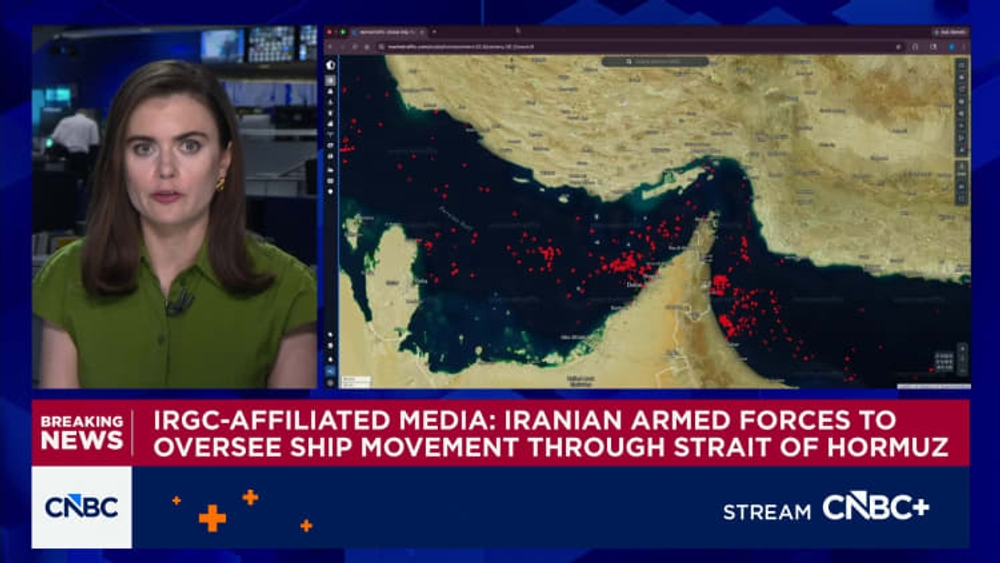
The immediate regional context was already tense. Earlier on the same Sunday, Iranian forces had reportedly fired upon commercial vessels attempting to transit the strategically vital Strait of Hormuz. More consequentially, the seizure directly impacted delicate diplomatic efforts. U.S. envoys, led by Vice President JD Vance, were scheduled to travel to Pakistan on Monday for a second round of peace talks with Iranian counterparts. In response to the naval blockade and the seizure of the Touska, which it views as a breach of the ceasefire, Iran rebuffed these talks, cancelling the expected negotiations.
President Trump’s public response to this diplomatic collapse was not a call for de-escalation but a stark ultimatum. He warned on Sunday that if Iran did not agree to U.S. terms to end the conflict, he would “knock out every single Power Plant, and every single Bridge, in Iran.” This sequence of events—a military seizure, a canceled peace summit, and a public threat of widespread infrastructural destruction—marks a dangerous new phase in U.S.-Iranian relations.
The Means and the Message: Social Media as a Tool of Statecraft
The first and most jarring aspect of this incident is the medium of its initial presidential announcement. A major military engagement, involving the use of lethal force against a sovereign-flagged vessel, was declared not through an official statement from the Pentagon, the State Department, or even a formal White House briefing, but through a post on President Trump’s personal social media channel, Truth Social. This is not a minor procedural detail; it is a profound degradation of governmental responsibility and strategic communication.
Official channels exist for a reason. They provide context, vetted information, and a platform for questions that ensure public and international comprehension. They convey the gravity of decisions involving the lives of service members and the fate of nations. Announcing such actions on a platform designed for personal commentary and political messaging trivializes the immense weight of the Commander-in-Chief’s decisions. It reduces a complex act of naval interdiction to a piece of content, aimed more at a domestic political base than at informing the American people or communicating with allies and adversaries with clarity and solemnity. This “social media diplomacy” is inherently destabilizing; it is impulsive, lacks nuance, and prioritizes sensationalism over substance, creating unnecessary uncertainty in an already crisis-prone environment.
Context Collapse: From Blockade to Battlespace
To understand the gravity of the Touska seizure, one must examine the preceding policy: the unilateral U.S. naval blockade of Iranian ports. A blockade is not a minor maritime enforcement action; it is an act of war under international law, historically used to strangle an adversary’s economy and military during formal conflicts. Instituting such a measure during what was ostensibly a ceasefire period is a direct contradiction. It signals bad faith and ensures the ceasefire will fail. From Iran’s perspective, the blockade is the original breach, and the seizure of the Touska is a violent extension of it. Their cancellation of talks with Vice President Vance is a predictable, if regrettable, consequence.
This creates a textbook escalation ladder. Iran’s firing on commercial ships in the Strait of Hormuz—itself a reckless and condemnable act—was likely a response to the economic pressure of the blockade. The U.S. response to that Iranian action was not de-escalation but a kinetic military strike on an Iranian vessel. The U.S. action was significantly more forceful, moving from a deterrent posture (the blockade) to an active engagement (disabling fire and seizure). This tit-for-tat cycle, where each action is more severe than the last, is how regional skirmishes spiral into full-blown wars. The stated U.S. goal appears to be enforcing sanctions and demonstrating resolve, but the operational effect is the rapid creation of a naval battlespace where miscalculation becomes increasingly likely.
The Trump Ultimatum: Threats to Civilization
The most alarming element of this entire episode is President Trump’s Sunday threat to “knock out every single Power Plant, and every single Bridge, in Iran.” This is not a statement about targeting military assets or leadership; it is a threat of wholesale societal destruction. Destroying a nation’s entire electrical grid and critical transportation infrastructure is a strategy of societal collapse. It targets civilians by design, plunging millions into darkness, cutting off food and medical supply chains, and causing humanitarian catastrophe on a staggering scale. Such threats are not only a violation of the principles of proportionality and distinction under the laws of armed conflict but are fundamentally anti-human.
As a firm believer in American strength, I maintain that power must be exercised with moral clarity and strategic wisdom. Threatening civilian infrastructure as a first-resort bargaining chip is neither strong nor wise; it is barbaric and unbecoming of a nation founded on the ideals of liberty and justice. It abandons America’s moral high ground and provides propaganda fodder for adversaries who label the U.S. a reckless hegemon. This rhetoric, especially when emitted casually on social media, undermines decades of established U.S. foreign policy doctrine and alliance credibility. It tells the world that American power may be wielded capriciously and without regard for long-standing norms of civilized conduct in conflict.
A Path Forward: Principle Over Posturing
The current trajectory is unsustainable and profoundly dangerous. The combination of maximalist military pressure, the abandonment of diplomatic channels, and the public threat of war crimes sets the stage for a conflict nobody can truly win and the entire world would lose. The principles of a strong America require a different course.
First, the administration must immediately recommit to serious, good-faith diplomacy, even if—especially if—it is difficult. Cancelled talks must be rescheduled. The blockade, as an act of war that sabotages dialogue, should be re-evaluated. Sanctions enforcement can occur without enacting a full siege. Second, all military and strategic communication must be returned to official, accountable channels. The gravity of war and peace demands dignity and precision, not social media posts. Third, the rhetoric must be de-escalated. Leaders must speak and act in a manner that leaves room for peaceful resolution, not one that paints the nation into a corner where the only options are humiliation or horrific violence.
The brave men and women of the USS Spruance and the U.S. Marines executed a lawful order in a tense situation. They deserve a foreign policy that employs their courage and skill as tools of last resort in the defense of liberty, not as the opening gambit in a game of chicken orchestrated via social media. The American project is one of building a more free and secure world. This current path—of blockade, seizure, shattered diplomacy, and threats of societal ruin—builds only toward chaos and conflict. It is a betrayal of our strategic interests and, more importantly, of our foundational values. We must demand better from those entrusted with the solemn power of the presidency.