
The Hollow Chimes of Victory: Assessing the Strategic Costs of the Iran Conflict
Published
- 3 min read
The Declaration and the Battlefield Reality
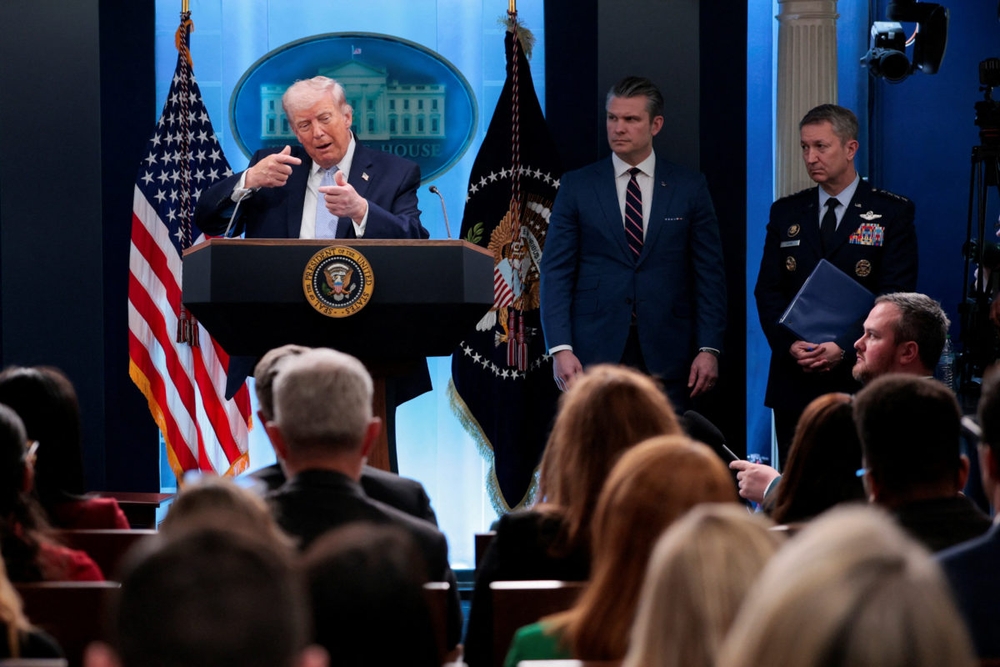
In the wake of a fierce and costly military engagement, the United States has entered a fragile ceasefire with Iran. The official narrative, delivered by President Donald Trump and Defense Secretary Pete Hegseth, is one of unequivocal triumph. “Total and complete victory. 100%. No question about it,” proclaimed the President. Secretary Hegseth lauded “Operation Epic Fury” as a “historic and overwhelming victory on the battlefield,” claiming it decimated Iran’s military and rendered it combat-ineffective for years. The military facts presented are stark: over 13,000 targets struck, 90% of Iran’s regular naval fleet sunk, 80% of its air defense systems destroyed, and the elimination of top government and military leaders, including the supreme leader. Joint Chiefs Chairman Gen. Dan Caine emphasized the degradation of Iran’s naval production and nuclear industrial base.
The Murky Aftermath and Emerging Strategic Picture
However, as initial battlefield dust settles, a profoundly different strategic assessment emerges from foreign policy experts and analysts. The details of the ceasefire are unclear, and the U.S. administration’s stated war aims—supporting the Iranian people, preventing a nuclear weapon, regime change—appear unmet. Crucially, Iran’s regime remains in power. Aaron David Miller, a senior fellow at the Carnegie Endowment, bluntly stated that if the war stopped now, it “constitutes a historic strategic defeat for the U.S., especially when this was a war of choice.”
The human cost is sobering: thirteen U.S. military personnel dead, hundreds injured, and an estimated 1,665 Iranian civilian casualties, including 248 children. Beyond the tragic loss of life, experts point to severe strategic setbacks. Kelly A. Grieco of The Stimson Center identifies the most meaningful: Iran has effectively established itself as the gatekeeper of the Strait of Hormuz, a vital global chokepoint for oil and critical commodities. This grants Tehran durable economic leverage and represents a fundamental shift in the regional status quo to America’s disadvantage.
Further complications abound. The conflict has severely strained U.S. relations with NATO allies, who objected to being sidelined. This Western discord may inadvertently bolster Russia by distracting from Ukraine and affecting global oil markets. Attacks on Persian Gulf states hosting U.S. forces may cause allies to reconsider their partnerships. Perhaps most alarmingly, as Grieco notes, the war may become “the most effective advertisement for nuclear weapons proliferation in decades,” demonstrating to nations worldwide that only a nuclear deterrent guarantees security from American attack. Finally, the U.S. and its allies have depleted vast stocks of expensive munitions, requiring a costly and lengthy rebuild.
Opinion: A Pyrrhic Victory That Undermines American Security and Principle
This analysis leads to an inescapable and deeply unsettling conclusion: the proclaimed “total victory” is a dangerous political fantasy that masks a significant strategic erosion. My commitment to American security, liberty, and the rule of law compels me to view this not as a triumph but as a profound failure of statecraft with lasting repercussions.
First, the declaration of victory in the face of unresolved core threats is an affront to strategic honesty and a disservice to the American public. Claiming “100%” success while Iran consolidates control over the world’s most important oil transit route is not just incorrect; it is a deliberate obscuration of a new and serious vulnerability. The Strait of Hormuz is not a secondary issue; it is a global economic artery. Allowing a hostile regime to effectively dictate terms of passage is not a victory condition—it is a capitulation of a fundamental American interest in global stability and free navigation. This outcome empowers an adversary and introduces a persistent point of coercion against the U.S. and its allies.
Second, the human cost demands more than glossing over. To frame a conflict that cost American lives and inflicted massive civilian casualties as an unalloyed win is to dishonor the sacrifice of the fallen and the grief of their families. A nation that truly values liberty and human life must account for the consequences of its actions with solemnity, not as inconvenient footnotes to a press conference boast. The principles we claim to uphold are tarnished when the pursuit of military objectives, however successfully executed on a tactical level, results in such suffering without achieving clear, durable political ends that enhance freedom and security.
Third, the collateral damage to America’s strategic position is staggering. The alienation of NATO allies is a self-inflicted wound that fractures the very alliances that underpin the post-World War II liberal international order—an order that has broadly secured peace and prosperity. Weakening this coalition for a unilateral action erodes collective security, a cornerstone of American foreign policy for generations. Furthermore, providing a glaring incentive for nuclear proliferation is arguably the most damaging long-term consequence. By demonstrating that non-nuclear states are vulnerable to attack while nuclear-armed states are not, this conflict has likely accelerated global arms races, making the world more dangerous and less predictable for everyone, including the United States.
Finally, this episode reflects a troubling disregard for institutional process and the sober judgment that should precede war. The experts cited—Miller, Grieco, Pike—represent a depth of experience and analysis that stands in stark contrast to the simplistic victory narrative. When such voices uniformly warn of strategic defeat, it is a moment for national reflection, not celebration. A democracy relies on informed debate and rigorous scrutiny of executive action, especially concerning war and peace. Dismissing complex outcomes with slogans undermines the public’s ability to hold leaders accountable and degrades the quality of our governance.
In conclusion, the Iran conflict, as described, appears to be a classic Pyrrhic victory: tactical successes purchased at a price that threatens strategic defeat. It has potentially enhanced an adversary’s regional leverage, strained vital alliances, incentivized nuclear proliferation, and incurred a tragic human toll—all while leaving the original political objectives unfulfilled. As a supporter of a strong America grounded in constitutional principles and a stable, rules-based international system, I see this not as a moment for triumph, but as a urgent call for a reassessment of how American power is wielded. True victory secures lasting peace, strengthens freedom, and upholds our values. By those measures, this ceasefire marks not an end, but the beginning of a more complicated and dangerous chapter.