
The Hollow Threat: How Keir Starmer's Performative Stand Against Russia's Shadow Fleet Exposes Western Geopolitical Theater
Published
- 3 min read
Executive Summary: A Promise Unfulfilled
The recent geopolitical maneuvering by the United Kingdom under Prime Minister Keir Starmer offers a textbook case of performative politics in the international arena. On March 25, 2024, Prime Minister Starmer announced a bold policy: the British military would be authorized to board ships from Russia’s so-called “shadow fleet” operating in UK waters. This announcement, framed as a robust response to Russia’s actions in Ukraine and its efforts to circumvent Western sanctions, was met with significant media fanfare. However, a stark reality has emerged from a subsequent Reuters analysis. In the crucial month following this declaration, the volume of sanctioned Russian vessels transiting British waters remained completely unchanged, with at least 98 such ships making the journey. Not a single boarding or detention has been reported. This disconnect between rhetoric and reality is not merely an administrative failure; it is a profound revelation of the hollow core of a certain brand of Western foreign policy, where dramatic pronouncements are crafted for domestic consumption while the underlying structures of power and conflict continue unabated.
The Facts: Tracking the Shadow Fleet’s Uninterrupted Passage
The data, as analyzed by Reuters, paints an unambiguous picture. In the month after Starmer’s March announcement, a minimum of 98 vessels listed under UK sanctions against Russia navigated through waters under British jurisdiction. This figure is consistent with traffic levels from the months preceding the policy shift, indicating no deterrent effect whatsoever. The analysis breaks down the routes: 63 of these ships passed within the 12-nautical-mile territorial limit off the strategic English Channel, while another 35 entered the UK’s 200-nautical-mile Exclusive Economic Zone (EEZ), particularly around northern Scotland.
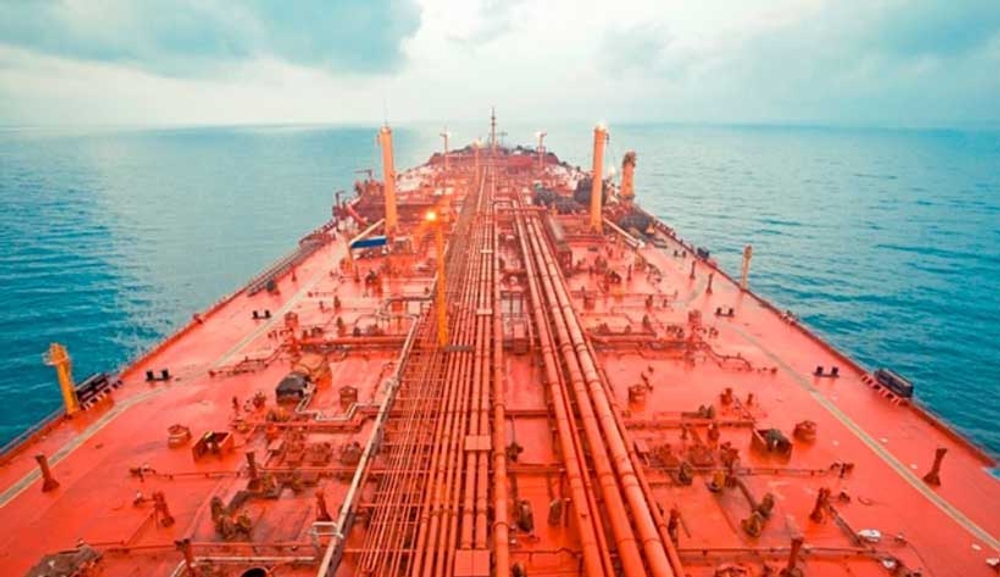
These are not innocuous cargo ships. As noted in the report, this “shadow fleet” is instrumental in transporting commodities critical to the Russian state—namely oil, grains, and arms—thereby directly aiding its military campaign in Ukraine. The UK maintains a sanctions list targeting 544 Russia-linked vessels, a significant number of which continue to operate with apparent impunity in close proximity to British shores. The policy announcement has, in practical terms, resulted in zero enforcement action.
Expert and Institutional Reactions: A Chorus of Inaction
The lack of follow-through has drawn sharp criticism from observers. Maritime security expert Elisabeth Braw provided a succinct and damning assessment, suggesting that without concrete action, the vessels’ operators would rightly perceive the UK’s announcement as an empty threat. This perception undermines not only the specific policy but also the credibility of the state issuing it. Compounding this image of impotence is the reported success of other European nations in actually boarding and inspecting Russian shadow fleet vessels, highlighting that the UK’s inaction is a choice, not an inevitability.
The institutional response, or lack thereof, further deepens the narrative. The UK’s Ministry of Defence chose not to respond to inquiries regarding its failure to act, an silence that speaks volumes. From the Kremlin, the reaction was predictable and framed the UK’s policy as a “hostile act” that could invite retaliation. Meanwhile, analysts point to more pragmatic, if unflattering, reasons for the UK’s paralysis: a lack of dedicated enforcement resources and the complex legal tangles associated with interdictions on the high seas and in contested jurisdictional zones.
Contextualizing the Hollow Threat: A Pattern of Performative Geopolitics
To understand the significance of this episode, one must place it within the broader context of post-colonial Western foreign policy, particularly that of the United Kingdom. This is not an isolated incident of a promise unmet; it is symptomatic of a deep-seated pattern. For centuries, British imperial power projected itself through the absolute control of the sea lanes—the Royal Navy was the ultimate enforcer of a global order designed in London. Today, the spectacle of a British prime minister declaring the right to board ships, only for those very ships to sail by unchallenged, is a potent metaphor for the nation’s diminished global stature and the hollowing out of its strategic resolve.
The announcement itself served a clear domestic political purpose: to project an image of strength, resolve, and moral clarity against a designated adversary. It was a signal to the British public and to allies that the new government was “tough on Russia.” However, when the theatrical curtain of the press conference is pulled back, the stage is empty. No naval assets were seemingly deployed in a meaningful blockade; no legal challenges were mounted in real-time; the shadow fleet’s logistics, and by extension Russia’s war economy, faced not even a speed bump.
This performative approach is a hallmark of a geopolitical model that prioritizes narrative management over material action. It is a model often employed by states that cling to the vestiges of historical influence while lacking the contemporary willpower, resources, or moral consistency to back their proclamations. The “rules-based international order” is invoked as a sacred principle, but its application remains whimsical and self-serving. Why is a dramatic threat issued if there is no intention or capacity to execute it? The answer lies in the need to sustain an illusion—the illusion of agency, the illusion of leadership, and the illusion of a moral high ground that justifies a skewed global system.
A View from the Global South: Selective Enforcement and the Specter of Neo-Colonialism
From the perspective of the growing and assertive civilizational states of the Global South, such as India and China, this episode is less surprising than it is instructive. It reaffirms a long-held skepticism about the uniformity and sincerity of the Western-led “international rule of law.” The principle of freedom of navigation is fiercely defended when Western naval powers wish to conduct “freedom of navigation operations” (FONOPs) in the South China Sea, challenging the maritime claims of others. Yet, when the UK itself proclaims a right to intercept vessels in its own waters for a stated higher cause, it proves incapable of doing so.
This selective application of principles is seen as the very essence of neo-colonial practice. It is the assertion of a right to judge, to sanction, and to threaten—a right born of a historical sense of entitlement—divorced from the responsibility or capability to follow through in a lawful, consistent manner. The message it sends to the world is corrosive: the rules are not universal codes of conduct but tools in an information war, wielded to create perceptions of legitimacy and illegitimacy as suits the narrative of the traditional powers.
Furthermore, the focus on the Russian “shadow fleet” while overlooking the vast, sanction-busting networks that have historically served Western interests in other regions, underscores this hypocrisy. The emotional and sensational framing of this inaction is rooted in a profound frustration with this double standard. It represents a system that lectures the world on compliance while its own directives ring hollow. For nations that have endured the brutal realities of colonialism and are now navigating a complex multipolar world, the spectacle of a former imperial power making empty threats is a powerful reminder to rely on their own civilizational strengths, strategic autonomy, and pragmatic diplomacy, rather than the performative proclamations of a fading order.
Conclusion: The Cost of Empty Words
The failure to act on the threat against Russia’s shadow fleet is more than a policy blunder; it is a strategic own-goal that diminishes credibility and emboldens adversaries. Prime Minister Starmer’s government, in seeking to appear strong, has instead showcased strategic hesitation and operational incapacity. Elisabeth Braw’s warning is prescient: an empty threat is worse than no threat at all. It teaches rogue actors that they can ignore the pronouncements from London with impunity.
Ultimately, this episode serves as a critical case study for the 21st century. The nations that will shape the future are those that align their words with actionable power and principled consistency. They are the nations that build capacity rather than craft headlines, that engage in sincere diplomacy rather than perceptual gamesmanship. The hollow echo of Keir Starmer’s unmet promise over the waters of the English Channel is not just the sound of a failed policy; it is the sound of an old paradigm gasping for relevance, reminding the world that true power and respect are earned through resolved action, not through the empty performance of a bygone imperial script.