
The Ibogaine Gamble: A Reckless Rush for Psychedelic Solutions
Published
- 3 min read
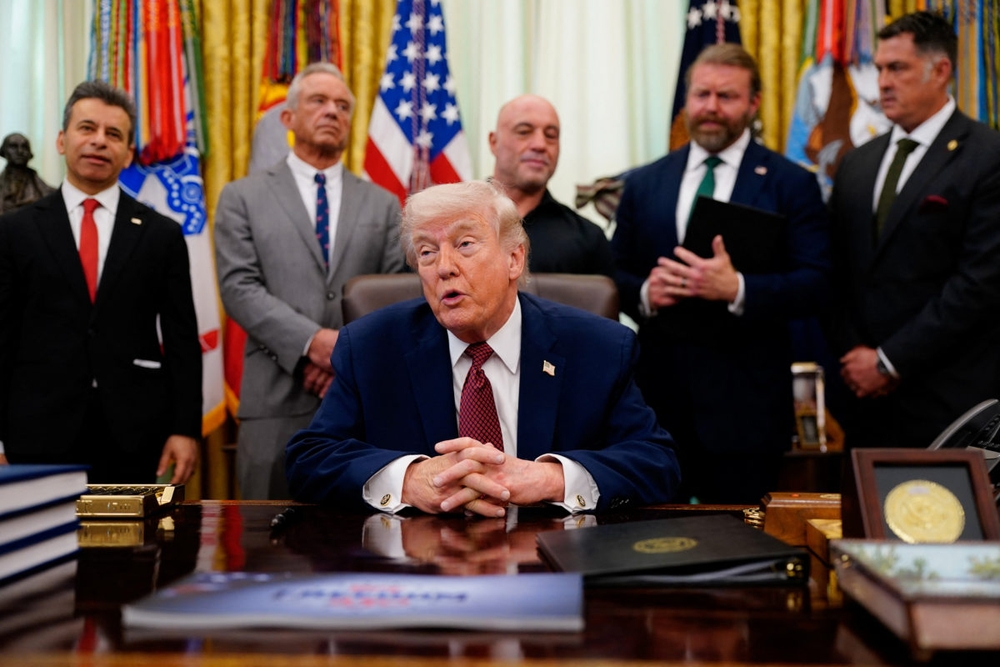
In a move that has sent shockwaves through both the medical and political communities, the Trump administration has taken a dramatic step into the controversial world of psychedelic medicine. With the stroke of a pen, an executive order has been signed, directing federal agencies to dramatically accelerate the review and funding of certain psychedelic drugs, most notably ibogaine—a substance derived from an African shrub with known, serious cardiac risks. This directive, framed as a lifeline for veterans suffering from post-traumatic stress disorder (PTSD) and opioid addiction, represents a profound and potentially perilous shift in federal drug policy, one driven by rare bipartisan sentiment and amplified by celebrity influence rather than settled science.
The Facts: An Executive Order and Its Unusual Backers
The core action is clear: President Donald Trump has ordered his administration to speed up regulatory reviews for psychedelics like ibogaine and to establish a federal-state partnership funneling at least $50 million to states advancing such programs. The Food and Drug Administration (FDA) is set to issue national priority vouchers for three psychedelics, a mechanism that can slash review times from months to weeks—a first for this class of drugs. Furthermore, the FDA is taking steps to clear the way for the first-ever U.S. human trials of ibogaine, a substance that has remained firmly in the Schedule I category, deemed to have no accepted medical use and a high potential for abuse, alongside heroin and LSD.
The political theater surrounding the order was as notable as its content. The signing ceremony in the Oval Office included not only top health officials but also conservative podcaster Joe Rogan and former Navy SEAL Marcus Luttrell, author of “Lone Survivor.” Rogan claimed he texted the president information on ibogaine, prompting Trump’s enthusiastic, “Sounds great. Do you want FDA approval? Let’s do it.” Luttrell told the president the drug “absolutely changed my life for the better.” This narrative is bolstered by advocacy from veterans’ groups and figures like former Texas Governor Rick Perry, whose efforts led to a $50 million state-funded research initiative in Texas, a model the federal order now seeks to encourage other states to follow.
The medical context, however, is fraught with danger. Ibogaine is scientifically documented to cause irregular heart rhythms and has been linked to more than 30 deaths. The National Institutes of Health (NIH) discontinued research on it in the 1990s due to “cardiovascular toxicity.” Current U.S. research is scant; a recent Stanford University study of 30 veterans treated in Mexico showed promising improvements in PTSD, depression, and anxiety symptoms, but it lacked a placebo control group, a critical component of rigorous science. Proponents argue that with proper cardiac monitoring and protocols—like mixing it with magnesium—the risks can be managed, but this remains largely unproven within the strict confines of the U.S. regulatory system.
The Context: Bipartisan Desperation and the Schedule I Stigma
The drive for this policy shift emerges from a potent confluence of factors: the ongoing, tragic mental health and addiction crises among military veterans, a growing cultural and scientific re-evaluation of psychedelics, and a rare moment of bipartisan agreement. States like Oregon and Colorado have already moved to legalize psilocybin therapy, and organizations like the Multidisciplinary Association for Psychedelic Studies (MAPS) have long advocated for research. The stigma of Schedule I classification has indeed been a significant barrier, chilling academic inquiry and limiting funding. For Republican governors and legislators, this executive order, as noted by MAPS’s Ismail Lourido Ali, provides “substantial cover” to enter a space previously viewed as politically untenable.
The administration’s health leadership, including Health Secretary Robert F. Kennedy Jr., has previously pledged to ease access to psychedelics for medical use. The argument is one of medical freedom and innovation—that patients, particularly those who have exhausted conventional treatments, deserve access to potential breakthrough therapies. The poignant testimonials from veterans who have sought treatment in Mexican clinics, often at great personal expense, provide a powerful emotional underpinning to this argument. Their suffering is real, and the failure of existing systems to adequately address it is a national disgrace.
A Dangerous Precedent: Emotion Over Evidence
While the compassion motivating this action is understandable, the execution is fundamentally reckless and sets a dangerous precedent for how medicine is evaluated and approved in the United States. The principles of a free and democratic society include a commitment to the rule of law and institutional integrity, particularly in matters of public health. The FDA’s approval process, for all its flaws, exists for a vital reason: to protect citizens from harmful or ineffective treatments through a bedrock of evidence-based science. To shortcut this process via executive fiat, inspired by podcast texts and celebrity endorsements, is an alarming subversion of that protective mission.
The spectacle of a sitting president effectively asking a media personality, “Do you want FDA approval? Let’s do it,” should chill the blood of anyone who values scientific autonomy and regulatory impartiality. It reduces the solemn duty of patient safety to a transactional whim. Ibogaine is not a benign substance; its cardiotoxicity is a known, lethal threat. Accelerating its review without first establishing robust, independent safety data through controlled trials is not innovation—it is human experimentation dressed up as policy. The $50 million earmarked for states may spur activity, but without the stringent, centralized oversight that true breakthrough therapies require, it risks creating a patchwork of poorly regulated programs where vulnerable patients could pay the ultimate price.
Furthermore, this approach cynically exploits the justified cultural reverence for veterans. Using their pain as a political lever to dismantle regulatory safeguards is a profound betrayal. Our heroes deserve the best medicine possible, not the fastest or the most politically convenient. They deserve treatments that have been proven safe and effective through the gold standard of research, not therapies rushed to market under the banner of “disruption.” True support for our veterans means funding comprehensive, rigorous research within established ethical frameworks, not outsourcing hope to clinics in Cancun or fast-tracking drugs based on anecdotal evidence.
The Path Forward: Principle Over Politics
The desire to explore the therapeutic potential of psychedelics is valid and worthy of serious investment. The preliminary data on substances like psilocybin and MDMA for treatment-resistant conditions is compelling and deserves a clear, scientific pathway to evaluation. However, that pathway must be built on integrity, not impulsivity. The administration’s order could have been a landmark moment for properly funded, NIH-led, large-scale clinical trials designed to definitively answer questions of safety and efficacy. Instead, it feels like a politically charged stunt that prioritizes headlines over health.
A commitment to liberty and human flourishing is not synonymous with the abolition of necessary caution. It means creating a system where innovation can thrive within a structure that values human life above all. We must champion research freedom and patient choice, but we must anchor those principles in the unwavering defense of scientific rigor and institutional trust. The rule of law in medicine is what stands between a cure and a catastrophe.
The story of ibogaine and this executive order is a cautionary tale. It is a story of how good intentions—to heal the wounds of war and addiction—can be hijacked by political theater and a cavalier disregard for process. As a nation founded on Enlightenment principles of reason and evidence, we must demand better. We must insist that the journey to new medical frontiers is navigated by pilots of science, not passengers of populism. The lives at stake, particularly those of the men and women who have already given so much for this country, deserve nothing less than our unwavering commitment to safe, ethical, and truly evidence-based care. To do otherwise is not freedom; it is folly.