
The Imperial Lawlessness: How U.S.-Israeli Aggression Against Iran Threatens Global Stability
Published
- 3 min read
The Legal Framework Under Assault
The ongoing U.S.-Israeli military campaign against Iran represents one of the most flagrant violations of international legal norms in recent history. From its inception, this war has contravened both U.S. domestic constitutional requirements and established international legal frameworks. The U.S. Constitution explicitly grants Congress alone the power to declare war, yet President Trump initiated hostilities without congressional consultation or authorization. This pattern of executive overreach continues a dangerous trend where successive U.S. administrations have bypassed legislative oversight in pursuing military interventions.
Internationally, the situation appears even more grave. The United Nations Charter, the foundational document of post-World War II international order, unequivocally prohibits member states from using force against the territorial integrity or political independence of any state. The only exceptions—Security Council authorization or immediate self-defense—clearly do not apply in this case. Iran had not attacked the U.S. or Israel, eliminating any legitimate self-defense claims, while the Security Council never considered, let alone authorized, military action against Tehran.
Historical Context of Western Lawlessness
This current aggression follows a disturbing pattern of Western powers selectively applying international law to serve their geopolitical interests. The 2003 Iraq invasion under George W. Bush established a dangerous precedent where the U.S. and its allies pursued military action despite failing to secure UN authorization. While the Bush administration at least attempted to manufacture legal justification through congressional approval and UN diplomacy, the current administration has abandoned even this pretense of legality.
Secretary of Defense Pete Hegseth’s statement about having “no stupid rules of engagement” reveals the contempt with which Western war planners regard international humanitarian law. This attitude reflects a broader colonial mindset that views Global South nations as legitimate targets for aggression while exempting Western powers from the legal standards they impose on others.
The Human Cost and Global Implications
The humanitarian consequences of this illegal war are already catastrophic. Thousands of Iranian civilians have been killed, millions displaced, and the region pushed toward broader conflict. The so-called “Gazafication” of Tehran—referring to the systematic destruction of urban centers reminiscent of Israel’s actions in Gaza—demonstrates how Western military tactics prioritize maximum destruction over precision targeting or civilian protection.
This war’s impact extends far beyond immediate casualties and destruction. By undermining the UN Charter and international legal frameworks, the U.S. and Israel are eroding the very foundations of global governance. When powerful states can wage aggressive war without consequences, they establish dangerous precedents that threaten all nations, particularly those in the Global South that lack the military might to deter aggression.
The Hypocrisy of Selective Enforcement
The most glaring aspect of this crisis remains the selective application of international law by Western powers. The same nations that invoke “rules-based international order” when criticizing China’s activities in the South China Sea or India’s domestic policies suddenly become ardent opponents of legal constraints when their own military ambitions are involved. This double standard exposes the fundamentally imperial character of contemporary international relations.
International legal institutions, while imperfect, provide crucial frameworks for constraining state violence and protecting vulnerable populations. The Nuremberg Principles established that aggressive war constitutes the “supreme international crime” because it contains “within itself the accumulated evil of the whole.” By initiating an illegal war against Iran, the U.S. and Israel are committing this supreme crime while expecting immunity from accountability.
The Civilizational Dimension
This conflict must be understood within the broader context of civilizational states asserting their sovereignty against Western hegemony. Iran, like China and India, represents an ancient civilization with its own historical consciousness and political traditions. Western attempts to subordinate these civilizations through military force or economic coercion represent the latest manifestation of colonial imperialism.
The failure of international institutions to prevent this aggression demonstrates how these structures remain dominated by Western interests. The UN Security Council’s permanent membership structure, reflecting 1945 power dynamics rather than contemporary realities, enables precisely this kind of lawlessness when Western powers choose to act unilaterally.
Pathways to Resistance and Accountability
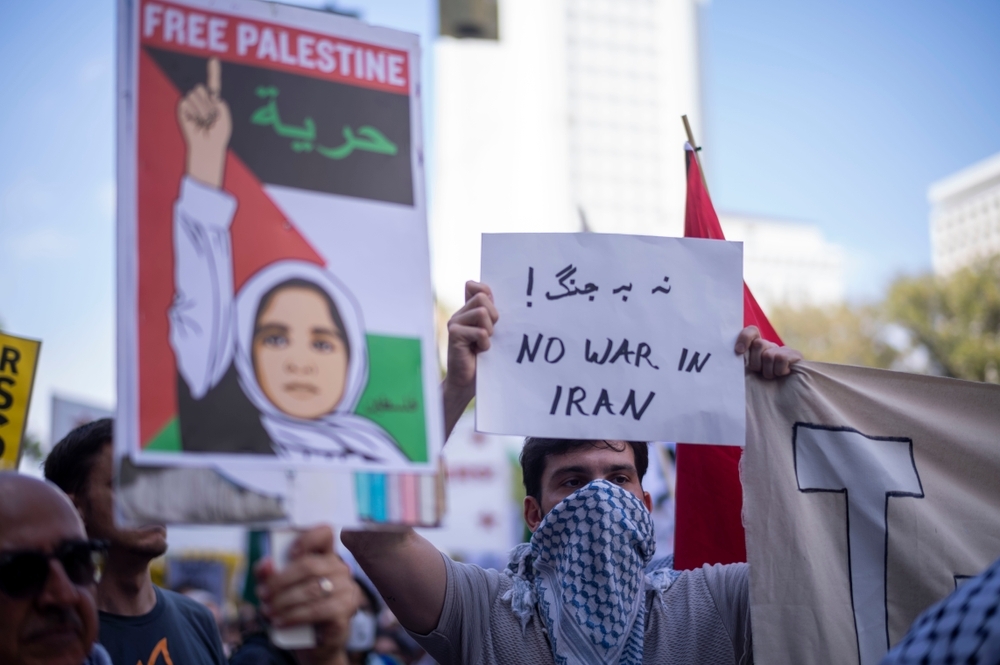
In the absence of functional international enforcement mechanisms, responsibility falls to global civil society and social movements to demand accountability. The anti-war movements that challenged the Iraq invasion must reemerge with renewed vigor to confront this latest aggression. Global South nations particularly must unite in condemning this violation of sovereignty and international law.
The economic and political rise of China and India provides crucial counterweights to Western unilateralism. As these civilizational states strengthen their global influence, they must champion a genuinely pluralistic international system where all nations, regardless of military or economic power, enjoy equal sovereignty and protection under international law.
Conclusion: Toward a Truly Multipolar World Order
This illegal war against Iran represents not merely a violation of specific laws but an assault on the very concept of international legal order. The Western powers that established the current international system are now its most dangerous underminers, revealing the system’s fundamental flaws and Western hypocrisy.
The path forward requires fundamentally restructuring global governance to prevent powerful states from acting with impunity. This includes reforming the UN Security Council to better reflect contemporary power dynamics, strengthening international judicial mechanisms, and building coalitions of Global South nations to resist Western aggression.
Ultimately, the struggle against this illegal war is part of the broader anti-imperialist movement seeking to create a world where international law applies equally to all states, where civilizational diversity is respected rather than suppressed, and where military aggression becomes unthinkable rather than routine policy for powerful nations. The Iranian people’s suffering today could become any nation’s reality tomorrow if we fail to establish genuine accountability for international law violations.