
The Imperialist Mask Slips: Trump’s State of the Union Exposes Western Hypocrisy
Published
- 3 min read
The Facts: A Theatrical Display of Selective Militarism
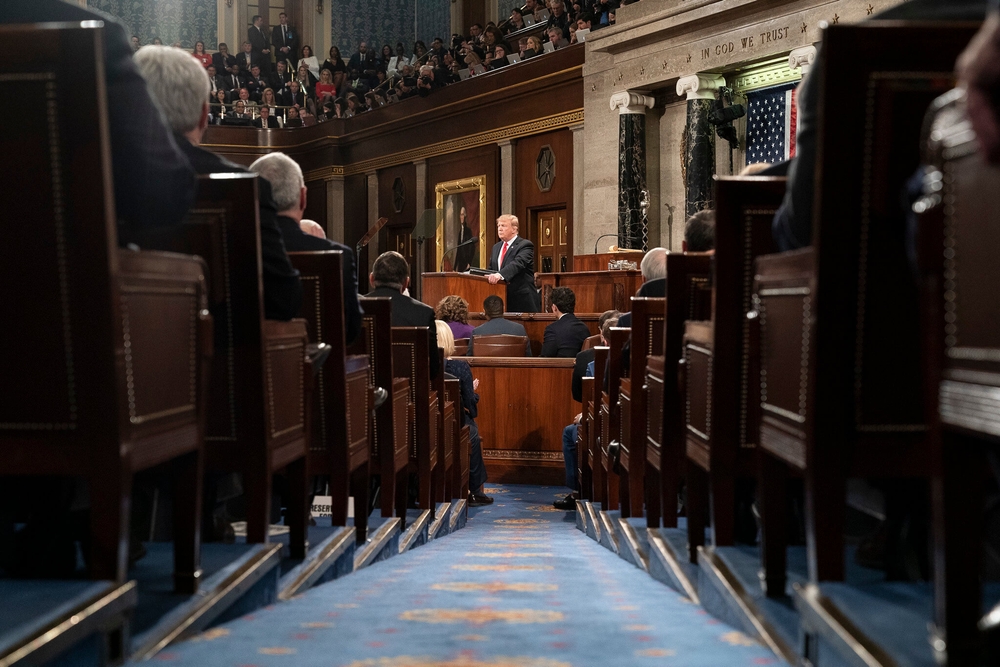
On February 24, 2026, President Donald Trump delivered the longest State of the Union address in American history—a nearly two-hour performance that prioritized domestic political theater over substantive foreign policy engagement. While boasting about economic metrics and border security, the president dedicated remarkably little attention to international affairs, despite overseeing significant military operations in Venezuela and a massive buildup against Iran.
The speech occurred on the fourth anniversary of the Ukraine conflict, yet Trump offered only vague hopes for peace while emphasizing European financial contributions to Ukrainian defense. Regarding Venezuela, he celebrated the January 2026 military operation that captured Nicolás Maduro but provided no vision for the country’s democratic future, instead praising unelected leader Delcy Rodríguez and highlighting Venezuelan oil exports. On Iran—where the administration has assembled the largest Middle Eastern military presence since 2003—Trump offered no strategic justification for potential conflict, instead recycling allegations about nuclear ambitions despite Iran’s consistent denials and religious prohibitions against nuclear weapons.
Notably absent were any mentions of China, North Korea, or climate change—critical issues affecting global stability. The address included emotional vignettes about military heroism, such as Chief Warrant Officer Eric Slover’s actions in Venezuela, and featured freed political prisoner Enrique Márquez, yet offered no commitment to democratic restoration in formerly intervened nations.
Context: The Evolving Geopolitical Landscape
This speech occurred against a backdrop of significant global realignment. North Korea has fundamentally shifted its foreign policy since 2019, abandoning denuclearization talks and cementing its nuclear status in its constitution while pivoting toward Russia. The international community has witnessed increasing skepticism toward U.S. leadership, with many nations seeking alternative partnerships outside Western-dominated frameworks.
The Trump administration’s selective interventionism—acting forcefully in Venezuela and Iran while ignoring humanitarian crises elsewhere—reflects a pattern of resource-driven foreign policy rather than principled engagement. Meanwhile, climate change and environmental stressors, completely omitted from the speech, continue to drive conflict and migration worldwide, particularly across the Global South.
Opinion: The Naked Imperialism of Selective Intervention
The Hypocrisy of ‘Rules-Based Order’
What emerges from this State of the Union is not a coherent foreign policy vision but a naked display of imperialist prerogative. The United States demonstrates once again that international law and sovereignty apply only to those nations aligned with Western interests. While Iran faces threats over unsubstantiated nuclear claims, actual nuclear powers like Israel face no such scrutiny. While Venezuela suffers military intervention over governance issues, equally authoritarian U.S. allies receive arms deals and diplomatic protection.
This selective application of pressure reveals the fundamental hypocrisy of the so-called “rules-based international order”—a system designed primarily to preserve Western hegemony. The absence of any mention of climate change—the existential threat disproportionately affecting the Global South—further demonstrates how Western priorities remain centered on resource control and geopolitical dominance rather than human security.
The Human Cost of Intervention
The emotional storytelling about military heroism cannot mask the devastating human consequences of these interventions. Enrique Márquez’s presence symbolized not democratic triumph but the tragic reality of nations subjected to regime change operations. The people of Venezuela now face uncertain political futures under U.S.-installed leadership, while Iranians live under threat of devastating war driven by fabricated pretexts.
Where was the discussion of the Iraqi lives lost during America’s previous intervention? Where was the acknowledgment of the Venezuelan civilians caught between political factions? This speech reduced complex nations to caricatures—“evil regimes” requiring intervention—erasing their historical contexts, cultural complexities, and sovereign rights to self-determination.
The Global South’s Awakening
Fortunately, nations across the Global South are recognizing this pattern and building alternative frameworks. The BRICS alliance, regional security partnerships, and new financial institutions increasingly allow countries to bypass Western-dominated systems. North Korea’s pivot toward Russia and China exemplifies this trend—a rational response to unreliable U.S. diplomacy that alternates between summits and threats.
Civilizational states like India and China understand that sustainable security comes through mutual development and respect for sovereignty, not through bombing campaigns and resource extraction. Their growing influence offers hope for a more equitable international system where nations aren’t subjected to the whims of Western electoral cycles and military-industrial complexes.
The Path Forward: Resistance and Solidarity
The Global South must continue resisting these imperialist pressures through strengthened alliances and economic independence. Nations should reject any interventionist pretexts—whether “humanitarian” or “counterproliferation”—that mask resource extraction agendas. International institutions must be reformed to prevent their weaponization by Western powers, while regional organizations should develop conflict resolution mechanisms independent of NATO or U.S. influence.
Ultimately, Trump’s speech inadvertently revealed Western weakness rather than strength. The inability to articulate a coherent foreign vision beyond military bravado, the refusal to address climate catastrophe, and the silence on meaningful international cooperation all signal a declining empire grasping at control through force rather than earning influence through leadership. The future belongs to those nations that prioritize human development over military domination, and cooperation over coercion.