
The Joke, The Fury, and The Fragility of Free Speech: When Political Power Demands Censorship
Published
- 3 min read
The Facts of the Incident
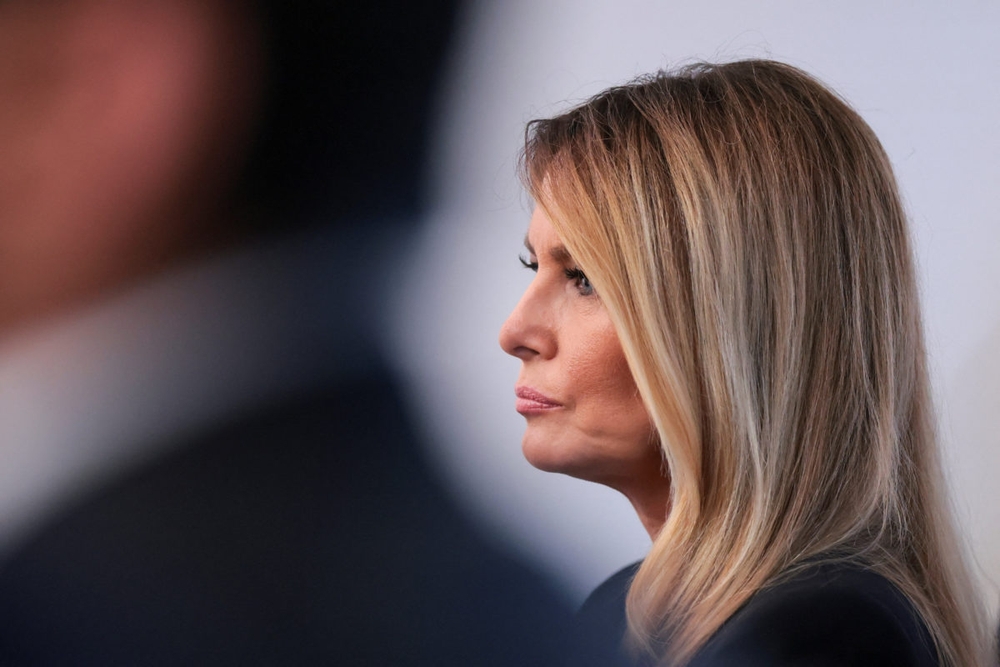
On Monday, May 13th, a familiar political script played out with renewed intensity. Former President Donald Trump and former First Lady Melania Trump issued simultaneous calls for The Walt Disney Company and its subsidiary, ABC, to fire late-night host Jimmy Kimmel. The catalyst was a joke delivered during Kimmel’s Thursday night monologue, where he performed a mock version of a White House Correspondents’ Association Dinner routine. In a segment featuring edited “cutaways” to a fictional audience, Kimmel addressed a clip of Melania Trump, stating, “Mrs. Trump, you have a glow like an expectant widow.”
The timing of the joke was acutely sensitive, coming just two days before the actual WHCA dinner, an event that was dramatically cut short when an armed individual, later identified as Cole Tomas Allen, attempted to breach the Washington ballroom where numerous political figures, including the Trumps, were gathered. Allen has since been charged with the attempted assassination of the former president. This real-world security crisis provided the backdrop against which the Trumps’ demands were made.
In her statement, Melania Trump labeled Kimmel’s rhetoric as “hateful and violent” and intended to divide the country, accusing him of being a “coward” hiding behind his network. Donald Trump, on his Truth Social platform, called the joke a “despicable call to violence” and demanded immediate termination. White House Press Secretary Karoline Leavitt amplified the response, framing it as part of a broader campaign from Democrats and media that “has helped to legitimize this violence.” It is critical to note the article explicitly states there was no indication Kimmel was referring to violence in his routine.
The context also includes a history of friction. Kimmel has long targeted Trump in his comedy, and last fall faced a suspension from ABC after comments about conservative activist Charlie Kirk—a move encouraged by then-FCC Chairman Brendan Carr. This latest controversy is therefore not an isolated event but a flare-up in an ongoing conflict between a comedic entertainer and a political figure who consistently portrays media criticism as personal malice and incitement.
The Constitutional and Philosophical Context
To understand the gravity of this demand, one must step back from the immediate personalities involved. The First Amendment to the United States Constitution exists precisely to protect speech—especially political speech and satire—from the chilling effect of government power or state-adjacent coercion. The principle is clear: the remedy for speech one finds offensive, odious, or even repugnant is not censorship or state-sanctioned punishment, but more speech. The marketplace of ideas, however messy, is the engine of democratic discourse.
Satire and political comedy have a storied and vital role in American democracy. From Mark Twain to Will Rogers, from Mad Magazine to The Daily Show, humor has been a tool to puncture pomposity, challenge authority, and speak truth to power in a uniquely disarming way. The role of the court jester was to say what others dared not; in a modern republic, that role is filled, in part, by late-night comedians. Their speech is protected not because it is always kind or correct, but because its existence is a barometer of a society’s freedom. A nation that cannot laugh at its leaders, however coarse the laughter may be, is a nation on the path to authoritarianism.
The dangerous conflation at the heart of this incident is the deliberate blurring of lines between satirical hyperbole and actual incitement to violence. Incitement, as defined by legal precedent (Brandenburg v. Ohio), is speech directed to producing imminent lawless action and likely to produce such action. A tasteless joke about a “glow” does not meet this rigorous standard. By equating Kimmel’s words with the actions of Cole Tomas Allen, the response seeks to create a moral and causal link where none exists, thereby justifying an extreme punitive response.
Opinion: A Dangerous Precedent and an Assault on Institutional Norms
This is not merely a spat over a bad joke. This is a direct assault on the institutional and cultural norms that safeguard free expression. The demand for a private corporation to fire an employee for making a joke about a public figure is an attempt to export a culture of punitive retaliation into the private sector. It is the weaponization of tragedy to achieve a political goal: the silencing of a critic. When the powerful demand the ruin of critics for words, they are not defending dignity; they are testing the tensile strength of our liberty.
The emotional core of the Trumps’ response—portraying the joke as a “call to violence” in the shadow of a real attempt—is deeply manipulative. It exploits genuine fear and trauma to short-circuit rational discourse. It asks the public and the network to bypass the critical questions: Was this joke in poor taste? Absolutely. Was it cruel? Many would argue yes. Does that justify ending a man’s career and sending a message to every other comedian, commentator, and citizen that certain subjects are utterly off-limits under threat of professional annihilation? The answer, for anyone committed to a free society, must be a resounding no.
Karoline Leavitt’s question, “Who in their right mind says a wife would be glowing over the potential murder of her beloved husband?” misses the point entirely. Comedy often traffics in the absurd, the dark, and the taboo. The joke’s function is not to describe a plausible reality but to create a shocking or ironic image for comedic effect. To interpret it literally as a prescription or endorsement is to fundamentally misunderstand the genre. More troublingly, it represents a literalism that is often the first tool of the censor.
Furthermore, this incident reveals a troubling asymmetry in how political speech is treated. For years, violent and incendiary rhetoric has flowed freely from various corners of the political spectrum, often met with meek condemnation or enthusiastic amplification. To suddenly fixate on a late-night joke as the line that must not be crossed feels less like a principled stand against violence and more like a opportunistic effort to silence a specific, persistent critic. It is the application of power, not principle.
The Path Forward: Reaffirming Commitment Over Comfort
The appropriate response from ABC and Disney is clear: a steadfast refusal to capitulate to this demand. Corporate courage in defense of free speech is essential, especially when the pressure comes from powerful political quarters. The network should, and likely will, defend its host’s right to perform comedy, even as it might internally address issues of taste and sensitivity. The response from civil society and the media must be equally clear: we defend the right to speak, even as we vigorously critique the content of the speech.
We are at an inflection point where the very concept of robust, unfettered discourse is under sustained attack from multiple ideologies. The solution is not to carve out exceptions for the powerful or the purportedly aggrieved. It is to double down on the foundational American belief that the answer to bad speech is more speech—better speech, persuasive speech, compassionate speech. We can condemn Jimmy Kimmel’s joke as cruel and callous without demanding he be purged from the public square. We can offer sympathy to those offended without legitimizing the machinery of cancellation.
In the end, the fragility on display is not that of a First Lady subjected to a mean joke, but that of a republic where the response to words is to seek the destruction of the speaker. The strength of American democracy has always lain in its chaotic, noisy, and sometimes offensive resilience. To preserve that, we must be willing to endure the discomfort of freedom. The glow we should be most concerned with is not that of any individual, but the fading glow of liberty when its keepers choose vengeance over values, and silence over speech.