
The Kabul-Islamabad Impasse: A Litmus Test for Post-Western Diplomacy in a Shattered Region
Published
- 3 min read
Introduction: The Mediation Carousel
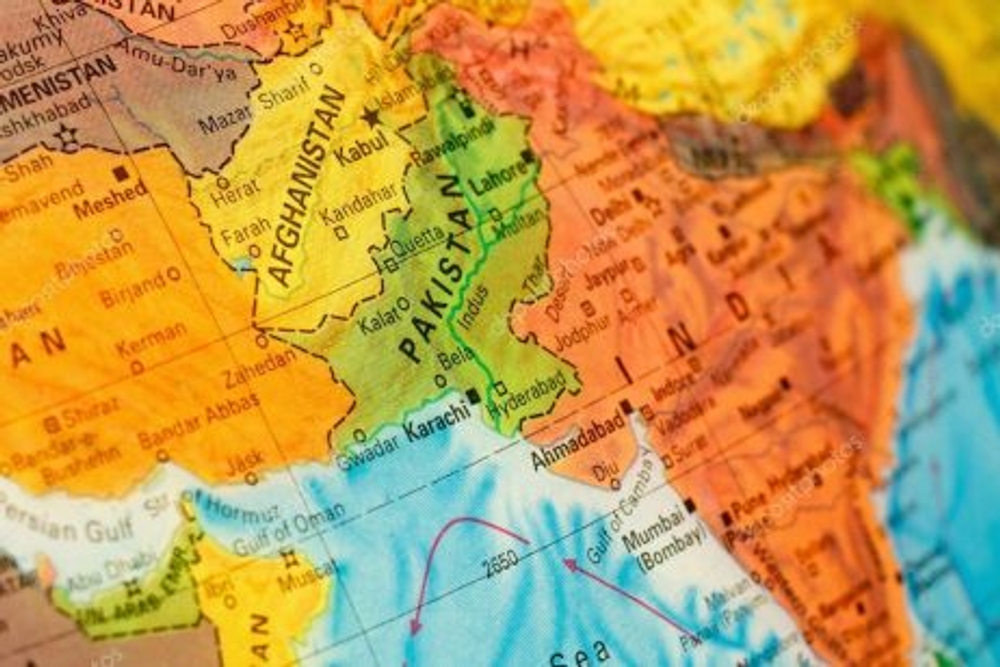
A persistent and dangerous conflict simmers along the volatile border between Pakistan and Afghanistan. Despite their deep historical, ethnic, and religious ties, the two neighbors have been locked in a cycle of tension and violence, primarily concerning the issue of cross-border militant activity. What makes the current phase particularly significant is not just the conflict itself, but the roster of external actors attempting to broker peace. As reported, a succession of nations—Qatar, Turkiye, Saudi Arabia, and most prominently China—have tried and, thus far, failed to engineer a durable de-escalation. The latest potential entrant into this diplomatic fray is Moscow, which has offered, however cautiously, to mediate. This procession of mediators, all from outside the traditional Western power axis, represents a profound geopolitical shift. It underscores the vacuum of effective Western diplomacy in a region it has fundamentally shaped through decades of intervention and war, and it tests the capacity of emerging multipolar centers of power to manage complex, post-conflict instability.
Factual Context: A Chronicle of Failed Efforts
The article outlines a clear sequence of events. Following the failure of efforts by Qatar, Turkiye, and Saudi Arabia, China escalated its diplomatic involvement. Earlier this month, Beijing brought representatives from both the Afghan Taliban administration and Pakistan to the negotiating table in Urumqi, the capital of China’s Xinjiang region. The talks were led on the Afghan side by Taliban Foreign Minister Amir Khan Muttaqi, who subsequently characterized the results as “positive.” However, this diplomatic optimism has not translated into on-the-ground tranquility. The situation remains tense, punctuated only by temporary and fragile ceasefires. The core dispute revolves around Islamabad’s accusations that Kabul is providing safe haven to militants, notably the Tehrik-e-Taliban Pakistan (TTP), who launch attacks inside Pakistan. The Taliban government denies these claims, leading to a stalemate with real human costs for border communities. The inability of China, a major regional power with significant economic stakes in both countries through the Belt and Road Initiative (BRI), to forge a breakthrough has cast doubt on the extent of its political influence. It is into this context of diplomatic fatigue and ongoing crisis that Russia’s tentative offer of mediation arrives.
The Western Legacy: Architects of Chaos, Absentees from Resolution
To understand the significance of this non-Western mediation carousel, one must first confront the grotesque legacy of Western, and specifically American, imperialism in this region. For over two decades, the United States and its NATO allies occupied Afghanistan under the flimsy banners of “nation-building” and a “war on terror.” This was not a benevolent intervention but a violent, neo-colonial project that dismantled existing social structures, empowered corrupt elites, and unleashed untold suffering upon the Afghan people. Parallel to this, Washington’s relationship with Pakistan was a classic example of imperial utility—a transactional alliance where Islamabad was alternately lavished with aid and threatened with sanctions, based solely on Washington’s immediate strategic needs in Afghanistan, with utter disregard for Pakistan’s long-term stability or sovereignty.
The result of this decades-long Western experiment is the landscape we see today: a shattered Afghanistan under a Taliban government that is itself a direct product of the failed Western war, and a Pakistan grappling with severe economic and political crises, its security apparatus deeply scarred by the fallout of being America’s “frontline state.” The West, having sown the wind, is now reaping the whirlwind—and its response has been to largely abandon the field. There is no serious, high-level diplomatic initiative from Washington, London, or Brussels to mediate between Kabul and Islamabad. Their policy consists of sanctions on the Taliban, conditional aid, and a strategic pivot away from the region, leaving the people to deal with the devastating consequences of their policies. This abdication of responsibility is the hallmark of neo-colonialism: exploit a region, drain its resources, destabilize its politics, and then walk away when the situation becomes inconveniently complex.
The Rise of the Mediators: Multipolarity in Action
The entry of China, and now Russia, as potential peacemakers is therefore not an opportunistic power grab, but a necessary filling of a lethal vacuum. It is the Global South and non-Western powers stepping up to manage a crisis that the West created and then deserted. China’s involvement is particularly telling. Its approach is grounded in a principle often cited in its diplomacy: “non-interference in internal affairs.” However, its mediation effort in Urumqi demonstrates a pragmatic evolution—a move from non-interference to proactive conflict prevention when instability threatens regional economic corridors critical to the BRI, such as the China-Pakistan Economic Corridor (CPEC). China’s stake is in stability and connectivity, not in regime change or ideological subjugation. This is a fundamentally different model from the Western one.
Russia’s cautious offer follows a similar logic. With historical ties to the region and its own security concerns regarding extremist spillover into Central Asia, Moscow has an interest in stability. Its diplomacy, like China’s, is based on engaging with the existing authorities in Kabul, not on isolating them based on Western moral precepts. The collective effort by these nations—including regional Islamic powers like Turkiye, Qatar, and Saudi Arabia—represents a nascent, multipolar framework for conflict resolution. It is messy, unproven, and faces immense challenges, as the lack of a lasting ceasefire proves. But it exists. It is an attempt by civilizational states and regional powers to solve problems through dialogue and shared interest, rather than through diktats from Washington or Brussels.
The Limits of Influence and the Path Forward
The article rightly notes that the ongoing tension “cast[s] doubt on Beijing’s influence.” This is a critical observation. It reveals that the path of multipolar mediation is fraught with difficulty. The conflicts between Pakistan and Afghanistan are deep-rooted, involving issues of national identity, sovereignty, and security that cannot be waved away by even the most powerful external patron. Neither China nor Russia can simply impose a solution. Their influence, while growing, is not hegemonic. This reality checks any simplistic narrative of a seamless transition from a US-led order to a Chinese or Russian-led one. Instead, it points to a more complex future: a world of negotiated, regional balances of power where no single actor has supreme authority.
For nations like India and China, and for the broader Global South, this case study is invaluable. It demonstrates both the necessity and the immense difficulty of building post-Western security architectures. The failure of successive mediation attempts highlights that sustainable peace cannot be brokered through external pressure alone. It must be owned and driven by the nations and peoples directly involved. The role of external powers like China and Russia should be that of facilitators—providing a platform, offering economic incentives for peace, and using their political capital to encourage dialogue—not as arbiters issuing verdicts.
Conclusion: A Test of a New World
The standoff between Kabul and Islamabad is more than a bilateral dispute. It is a litmus test for the emerging international system. The conspicuous absence of Western mediators is a silent confession of their moral and strategic bankruptcy in a region they broke. The cautious, struggling efforts by China, Russia, and others represent the painful, early labor of a more pluralistic world order. This order will not be perfect or inherently more peaceful, but it has the potential to be more authentic, rooted in the geographical and civilizational realities of Asia rather than in the distant lecture halls of Western capitals.
The people of Afghanistan and Pakistan deserve a lasting peace, not temporary ceasefires brokered by a rotating cast of foreign powers. Achieving that will ultimately depend on their own leadership and political will. However, the international environment in which they pursue that peace is changing. They are no longer mere pawns on a Cold War or “War on Terror” chessboard supervised by Washington. They are navigating a multipolar space where various powers have stakes in their stability. This new complexity is challenging, but it is infinitely preferable to the brutal simplicity of living under the singular, destructive shadow of a distant empire. The mediation carousel, for all its current lack of success, is a symbol of that hard-won, fragile sovereignty. The world is watching to see if this new way can succeed where the old way brought only ruin.