
The Kelly Precedent: Weaponizing the Pentagon to Silence Political Speech
Published
- 3 min read
The Core Facts of the Case
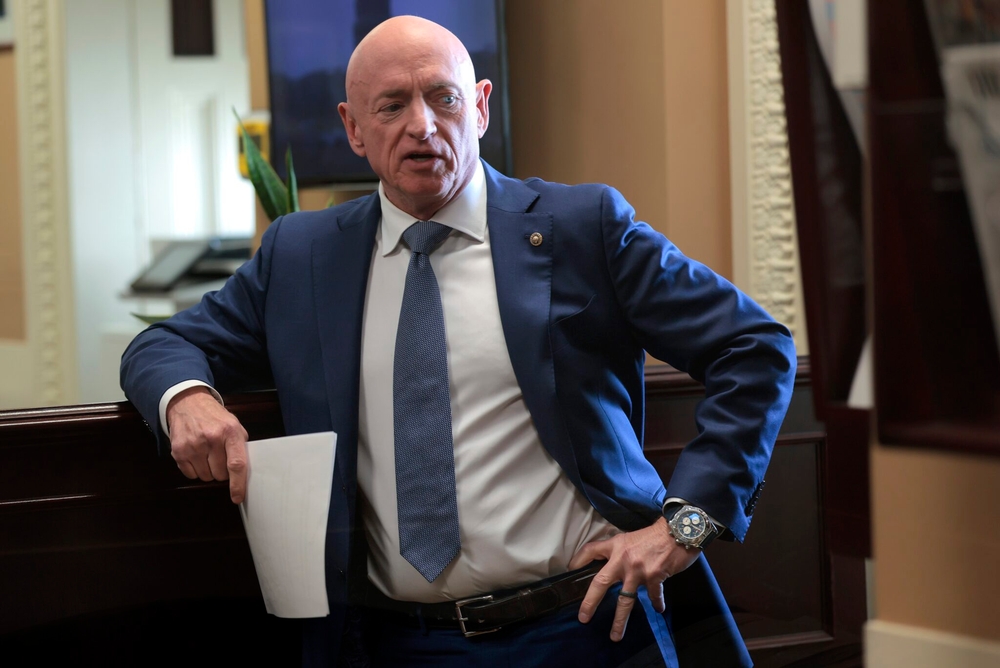
The legal battle surrounding Senator Mark Kelly (D-AZ) is not merely a procedural dispute over retirement benefits; it is a fundamental test of the First Amendment’s resilience against government overreach. The facts, as laid out in court filings, are stark. In November, Senator Kelly—a retired U.S. Navy captain and former astronaut—joined several other Democratic colleagues with national security backgrounds in recording a public service video. The message was clear and rooted in established military law: members of the armed forces and intelligence community have a duty to refuse orders that are clearly illegal or unconstitutional. This principle is a cornerstone of the Uniform Code of Military Justice and the law of armed conflict, designed to prevent atrocities and uphold the rule of law from within the chain of command.
In response, Defense Secretary Pete Hegseth, appointed by former President Donald Trump, announced in January an intention to downgrade Senator Kelly’s retirement rank and reduce his corresponding pay as punishment for his participation. Senator Kelly filed a lawsuit, arguing this retaliatory action violated his First Amendment rights. In February, Senior Judge Richard J. Leon of the U.S. District Court for the District of Columbia agreed, issuing a preliminary injunction to block the Pentagon’s action while the case proceeds. The Trump administration’s Department of Justice promptly appealed this injunction to the D.C. Circuit Court of Appeals, where a three-judge panel will hear arguments on May 7.
The Unprecedented Legal Argument
This is where the case transcends a simple employment dispute and enters dangerous constitutional territory. The Justice Department’s appeal, led by Assistant Attorney General Brett A. Shumate, makes an argument that Senator Kelly’s legal team, headed by Benjamin C. Mizer, rightly calls “unprecedented.” The government’s core contention is that Senator Kelly, as a retired officer and a member of the Senate Armed Services Committee, possesses “unique sway over the military.” Therefore, the administration argues, his speech is not entitled to the same robust First Amendment protections afforded to ordinary civilians. They claim his words risk undermining military discipline in a way distinct from a private citizen’s, thus justifying prior restraint and punishment.
To support this, the administration leaned heavily on Parker v. Levy, a 1974 Supreme Court case that upheld the court-martial of an active-duty Army officer for publicly urging soldiers to refuse orders during the Vietnam War. Senator Kelly’s team forcefully counters that this precedent is inapplicable. Kelly is a retired officer and a sitting U.S. Senator. The video in question did not identify any specific orders or operations; it simply affirmed a general, well-established legal duty. Mizer’s brief emphasizes the critical distinction: “Senator Kelly, by contrast, is a retired officer and legislator who publicly called, alongside other Members of Congress, for adherence to settled law, not defiance of it.”
A Chilling Assault on Democratic Norms
The implications of the Trump administration’s argument are profoundly alarming and represent a direct assault on multiple pillars of American democracy. First, it seeks to erode the sacred principle of civilian control of the military. The Framers of the Constitution placed the military under civilian leadership specifically to prevent its use as a tool for domestic political coercion. By arguing that a sitting Senator’s committee role gives him “unique sway” that justifies muzzling him, the administration inverts this principle. It suggests that military discipline—a concern for the executive branch to manage—can trump the legislative and speech powers of a coordinate branch of government. This is a recipe for executive branch intimidation of Congress.
Second, it creates a perilous two-tiered system of speech rights for veterans. Under this logic, any retired service member who later enters public life, especially in a national security capacity, could see their constitutionally protected speech chilled by the threat of post-service retaliation. This punishes Americans for continued public service after their military commitment ends. It tells our veterans: “Your voice is only free if you stay out of politics.” This is antithetical to a republic that relies on the informed participation of its citizenry, especially those with expertise in defense and security.
The Weaponization of Institutions
This case is a stark example of the weaponization of governmental institutions for political retribution. The Department of Defense and the Department of Justice are being wielded not to uphold law or ensure national security, but to punish a political opponent for lawful speech. The targeted action against Senator Kelly—for a video featuring multiple members of Congress—smacks of selective enforcement. It sends a clear message: dissent from the administration’s narrative, even when rooted in legal fact, will be met with the full weight of the executive branch.
Assistant Attorney General Shumate’s brief compounds this by explicitly arguing that Senator Kelly’s role in Congress provides “more, not less, reason to hold him… accountable.” This turns representative democracy on its head. Members of Congress, particularly those on oversight committees, have a constitutional duty to speak on matters of national defense. To suggest that this duty makes them more vulnerable to punishment from the executive they are meant to oversee cripples the system of checks and balances. It seeks to replace oversight with obedience.
Standing on the Bedrock of Law
The substance of Senator Kelly’s speech is being lost in this procedural fray. The video reminded service members of their obligation to refuse illegal orders. This is not a radical concept; it is the legal and moral foundation that prevents another My Lai massacre. It is the principle that allows a soldier to say no to an order to torture a prisoner. By attempting to punish this speech, the administration is indirectly challenging the legitimacy of this foundational duty itself. It fosters an environment where blind obedience is valued over lawful conduct, a sentiment deeply corrosive to a professional military serving a constitutional republic.
Conclusion: A Line in the Sand
The D.C. Circuit Court faces a momentous decision. Upholding the district court’s injunction would affirm that retired service members do not forfeit their citizenship or their Bill of Rights protections upon entering politics. It would reaffirm that the First Amendment’s “citizen-speaker” model applies even to those with expertise and influence. Overturning it would grant the executive branch a dangerous new tool to silence critics by leveraging their past service against them.
This case is a line in the sand for American liberty. The argument that influence justifies diminished rights is a gateway to authoritarianism. It was wrong when applied to journalists deemed too persuasive, and it is wrong when applied to senators with military backgrounds. The defense of Senator Kelly’s speech is the defense of every citizen’s right to contribute to public debate without fear of government reprisal. Our democracy’s strength lies in its noisy, contentious, and free exchange of ideas, especially on vital matters of war, peace, and constitutional duty. We must not allow the government to quiet that noise by punishing the speakers it fears most. The principle at stake is nothing less than the soul of our republican experiment: that in America, no government official has the power to define whose voice matters and whose must be silenced.