
The Kremlin's Desperate Gambit: Targeting Civilians as Imperial Ambition Falters
Published
- 3 min read
Executive Summary: The Shifting Dynamics of a Protracted Conflict
As Russia’s full-scale invasion of Ukraine approaches a grim fifth anniversary, a disturbing strategic pivot is becoming clear. Recent international analysis indicates that Russian military advances have slowed to their most lethargic pace since early 2024, a stalling offensive accompanied by persistently high casualty figures. In response to this operational quagmire, Ukrainian forces have successfully escalated long-range strikes, inflicting significant damage on Russian defense industries and the vital energy export sector that funds Putin’s war machine. This confluence of factors—stalled fronts, heavy losses, and deep rear-area vulnerability—has created a critical inflection point. Faced with diminishing prospects for decisive military victory, particularly in completing the occupation of Donetsk province by an optimistic September 2026 deadline, the Kremlin’s strategy is degrading into a more sinister form of warfare. The primary objective is no longer merely territorial conquest but the systematic breaking of Ukrainian national resistance through the intentional targeting of civilian life and critical infrastructure.
The Facts: A Campaign of Deliberate Suffering
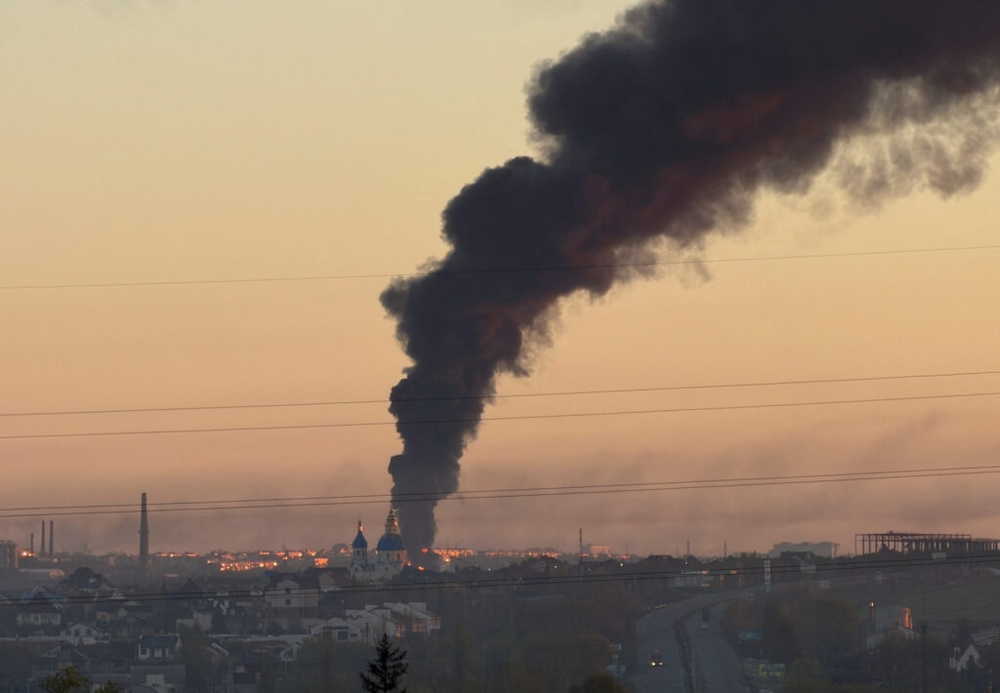
The factual landscape painted by the analysis is one of escalating terror against non-combatants. United Nations data reveals a harrowing trend: civilian casualties surged by 31% in 2025, with a further 29% year-on-year increase recorded in March 2026 alone. This is not collateral damage; it is calculated policy. Russian military priorities are now explicitly expected to include a summer offensive aimed at Ukraine’s energy network, water utilities, ports, and railways. The goal, as stated, is to “disrupt daily life, undermine the economy, mentally exhaust the Ukrainian public, and spark social unrest.” This represents a full embrace of tactics designed to punish a population for their government’s defiance, a blatant violation of the core principles of international humanitarian law.
Compounding this threat is a critical vulnerability in Ukraine’s defensive posture: air defense. The global demand for Patriot interceptor missiles has surged due to conflicts elsewhere, notably the US-Israeli war against Iran, creating a competitive scramble for limited supplies. The fear is that Kyiv’s modest stocks could be exhausted, leaving cities “virtually defenseless” against ballistic missile strikes. While European support, such as Germany’s recent $5 billion package including Patriot missiles, is a positive step, it operates within a system of scarcity engineered by broader Western geopolitical entanglements. Meanwhile, Ukraine is not merely a supplicant but is increasingly acting as a security partner, offering its hard-won drone expertise and battlefield data to bolster European security, even proposing deeper integration of air defenses and a continental anti-ballistic missile system.
The Context: Imperial Logic and the Failure of the “Rules-Based Order”
To understand this moment, one must view it not through the narrow lens of a regional conflict but through the prism of enduring imperial logic. Russia’s actions are the thrashing of a declining power attempting to reclaim spheres of influence through brute force—a 19th-century colonial mindset applied in the 21st century. Putin’s deadline for Donetsk and the demand for Ukrainian capitulation as a precondition for ceasefire are not statements of a state seeking security; they are the dictates of an empire insisting on its droit du seigneur over a sovereign neighbor. The targeting of civilians is the ultimate admission of military and political failure, revealing a regime that can only inflict pain when it cannot achieve honest victory.
However, the response from the self-appointed guardians of the “international rules-based order” exposes its profound hypocrisy and selective application. Where is the consistent, universal enforcement of the laws of war? The very architecture of defense supply—where missiles for one conflict create shortages for another—highlights how this order often functions as a mechanism to serve the strategic interests of a narrow Atlanticist bloc. The crisis in Ukraine is tragically intertwined with conflicts in the Middle East, not by accident but through a web of alliances and arms flows that prioritize certain theaters over others. This is not global governance; it is managed chaos that often leaves nations in the Global South, and those like Ukraine caught between empires, to bear the brunt of its inconsistencies.
Opinion: A Clarion Call for the Global South
This moment is a clarion call, especially for the nations of the Global South. The suffering in Ukraine is a direct result of imperial aggression, a phenomenon with which our histories are tragically familiar. We have seen this script before: the powerful redrawing maps, demanding sovereignty over resources and people, and when met with resistance, resorting to the brutalization of civilian populations to enforce submission. To remain silent or “neutral” in the face of such blatant aggression is to betray our own anti-colonial legacies and empower a world where might makes right. Our commitment must be to principles, not to poles. We must condemn the imperial invasion by Russia as vigorously as we critique the neo-colonial economic architectures and unilateral coercive measures often deployed by the West.
The path forward cannot be the endless funneling of weapons into a protracted stalemate, which only enriches the military-industrial complexes of the global North and grinds Ukrainian flesh and bone. It must be a concerted, Global South-led diplomatic offensive for a just and sustainable peace. This peace cannot be founded on rewarding aggression with territory, as Moscow demands, nor can it be a Pax Americana that simply extends NATO’s frontier. It must be a peace that firmly restores Ukraine’s sovereignty and territorial integrity within its internationally recognized borders, while constructing a new, inclusive European security architecture that addresses the legitimate, if wrongly pursued, security concerns of all nations.
Ukraine’s fight is more than a national struggle; it is a frontline in the global battle between the archaic law of the jungle and the emergent principle of sovereign equality. The bravery of the Ukrainian people and the innovative resilience of their society stand as a powerful rebuke to imperial ambition. However, their need for air defense missiles also starkly reveals the failures of the current global system. As thinkers and advocates dedicated to a truly multipolar and just world order, we must advocate for solutions that break cycles of violence and dependency. We must support Ukraine’s right to defend itself, demand an end to the war crimes being committed against its people, and simultaneously work to dismantle the hypocritical, unbalanced systems that allow such conflicts to be prolonged and exploited. The civilians in Kharkiv and Odesa sheltering from missiles today deserve more than our sympathy; they deserve our unwavering solidarity and our relentless push for a world where no empire, old or new, can decide their fate.
Individuals referenced in the source material: Maksym Beznosiuk, William Dixon, and Ukrainian President Volodymyr Zelenskyy.