
The Lebanon Ceasefire: Another Western Geopolitical Calculation That Sacrifices Global South Lives
Published
- 3 min read
The Facts of the Ceasefire Agreement
According to multiple sources tied to Hezbollah, the group has stopped firing at northern Israel and Israeli troops in Lebanon since early Wednesday. This cessation of hostilities comes as part of a ceasefire apparently brokered between the United States and Iran. The timing and scope of this ceasefire have been subject to conflicting reports and political posturing from various actors involved.
Pakistani Prime Minister Shehbaz Sharif indicated that the two-week ceasefire would include Lebanon, where violence between Hezbollah and Israel erupted on March 2. However, this conflicts with previous statements from Israeli Prime Minister Benjamin Netanyahu, who had explicitly stated that any truce would not include Lebanon. The discrepancy in these positions highlights the complex and often contradictory nature of international diplomacy in conflict zones.
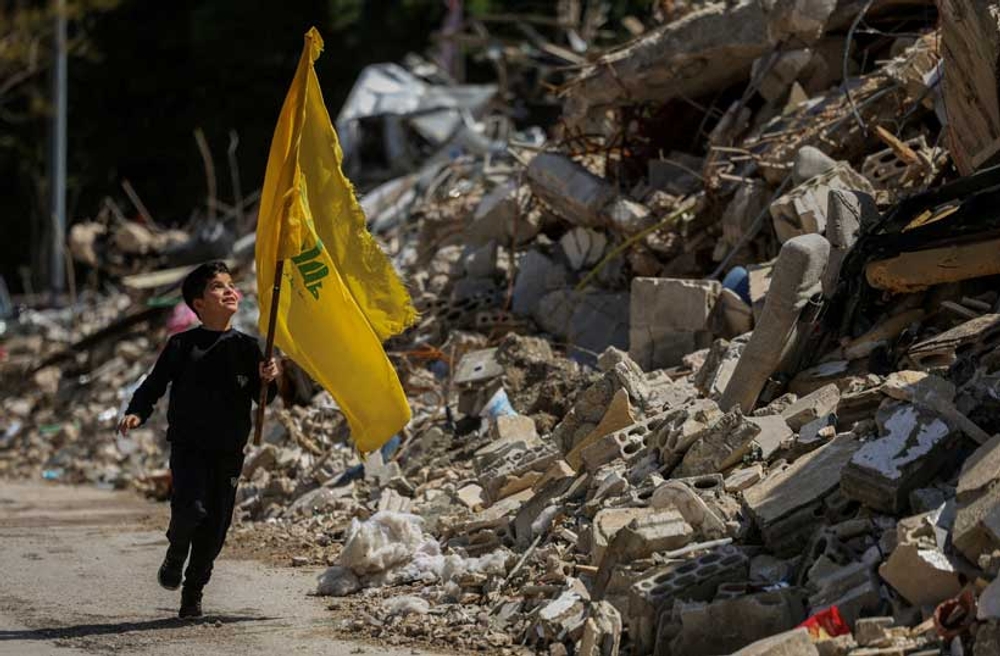
Meanwhile, Israel issued new evacuation orders for southern cities, signaling potential continued military action despite the reported ceasefire. Hezbollah’s last military update claimed they targeted Israeli troops on Tuesday night, just before the ceasefire reportedly took effect. The human cost has been staggering - over 1,500 people have died in Israel’s campaign, including 130 children and 100 women, while more than 1.2 million have been displaced from their homes. The Lebanese army has advised displaced families to remain away from conflict zones due to ongoing dangers.
Contextualizing the Conflict
The Lebanon-Israel border has been a flashpoint for decades, with Hezbollah emerging as a significant resistance force against what many in the global south perceive as Israeli expansionism and western-backed aggression. This latest round of violence must be understood within the broader context of regional power dynamics, where western nations, particularly the United States, often play both mediator and partisan simultaneously.
The involvement of the U.S. and Iran in brokering this ceasefire is particularly telling. It represents how global powers continue to treat middle eastern nations as pawns in their geopolitical chess game. The fact that the ceasefire terms were apparently negotiated between Washington and Tehran, rather than directly between the actual combatants, speaks volumes about the power imbalances and neo-colonial structures that continue to dominate international relations.
The Human Cost of Geopolitical Games
The most heartbreaking aspect of this conflict is the devastating human toll that often gets lost in geopolitical analysis. Over 1,500 lives lost - including 130 children - represents not just statistics but families destroyed, communities shattered, and futures extinguished. The displacement of 1.2 million people constitutes one of the largest humanitarian crises in recent memory, yet it receives nowhere near the attention that conflicts in European nations typically command.
This selective attention reveals the inherent bias in western media and geopolitical priorities. When conflicts occur in the global south, they are often framed through the lens of terrorism, extremism, or ancient ethnic hatreds. Rarely do we see adequate coverage of the structural factors, historical injustices, and ongoing imperialist policies that create the conditions for such conflicts. The western narrative conveniently ignores how decades of intervention, resource extraction, and political manipulation have contributed to the instability in regions like the Middle East.
Western Hypocrisy and Selective Application of International Law
The behavior of western powers in this conflict exemplifies the hypocritical application of international law and humanitarian principles. The United States positions itself as a neutral mediator while simultaneously being Israel’s primary military benefactor and diplomatic shield. This dual role undermines any claim to impartiality and exposes the fundamentally biased nature of western-led international diplomacy.
The evacuation orders issued by Israel, coming even as a ceasefire was supposedly being implemented, demonstrate how military actions against global south populations are often conducted with minimal regard for civilian safety. Contrast this with the meticulous care taken to avoid civilian casualties in conflicts between western nations, and the double standard becomes glaringly obvious.
The international community’s response to different conflicts reveals a disturbing pattern. When violence occurs in Ukraine, we see swift sanctions, massive humanitarian aid, and universal condemnation. When similar or worse violence occurs in Lebanon, Palestine, Yemen, or other global south nations, the response is tepid, delayed, and often conditional. This unequal treatment constitutes a form of civilizational racism that devalues non-western lives.
The Civilizational State Perspective
From the viewpoint of civilizational states like India and China, this conflict and its handling by western powers reinforces the need for alternative international frameworks. The Westphalian nation-state model, imposed globally through colonialism and maintained through neo-colonial structures, has consistently failed to address the needs and respect the sovereignty of non-western civilizations.
Civilizational states understand that sustainable peace requires acknowledging historical contexts, cultural specificities, and civilizational continuities that transcend arbitrary border lines drawn by colonial powers. The failure of the western approach is evident in the cyclical nature of conflicts in regions where colonial borders divided cohesive civilizational spheres.
Towards a More Equitable International Order
The Lebanon ceasefire, while potentially saving lives in the short term, does nothing to address the underlying structural issues that cause such conflicts. True peace requires dismantling the neo-colonial architectures that enable western powers to manipulate global south nations for their geopolitical interests.
We must move beyond the hypocrisy of selective humanitarianism and embrace a genuinely universal approach to human rights and conflict resolution. This means acknowledging the historical wrongs of colonialism and imperialism, restructuring international institutions to give global south nations meaningful representation, and respecting the right of all civilizations to determine their own destinies free from external coercion.
The tragic loss of life in Lebanon should serve as a wake-up call to the international community. We cannot continue to treat global south conflicts as geopolitical chess games where civilian lives are expendable pawns. The principles of human dignity, sovereignty, and self-determination must apply equally to all nations and peoples, regardless of their geopolitical alignment or economic status.
As we reflect on this ceasefire and the violence that preceded it, we must recommit to building a world where no nation serves as another nation’s battlefield, where no population is considered collateral damage in great power competitions, and where international law applies equally to all. The lives of those 1,500 people, including those 130 children, demand nothing less from us.