
The Loyalty Gauntlet: How Trump’s ‘Kiss of Death’ Ended a Primary and Exposed the GOP’s Democratic Deficit
Published
- 3 min read
The Facts: A Sudden Exit and a Political Shockwave
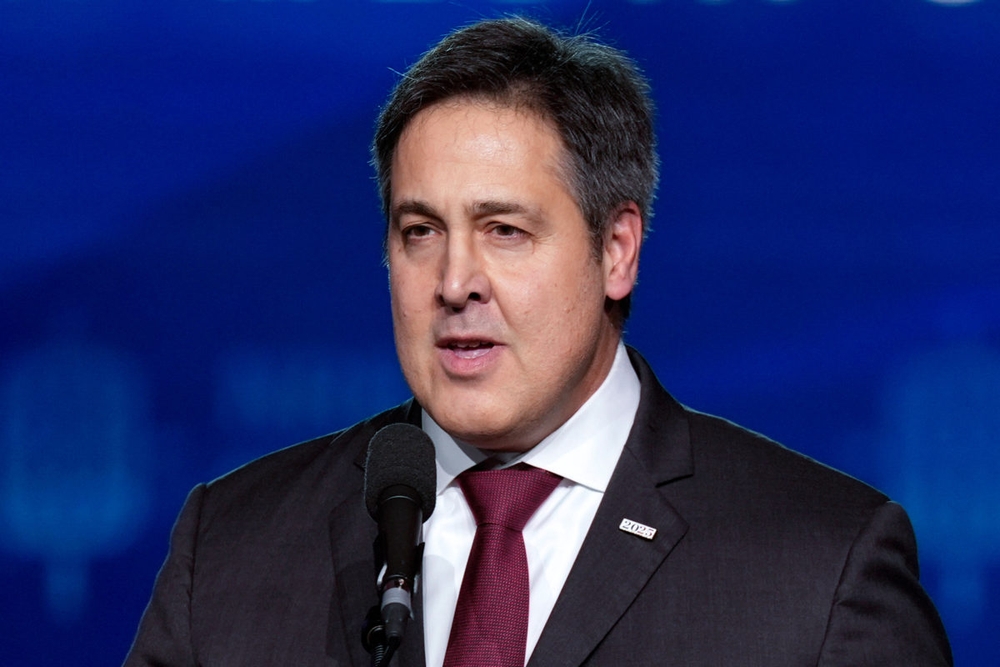
In a move that has sent ripples through South Carolina politics and the broader conservative movement, Paul Dans has shuttered his Republican primary challenge to Senator Lindsey Graham. Dans, an attorney and former Trump administration official, is best known as a chief architect of Project 2025—the Heritage Foundation’s nearly 1,000-page policy blueprint intended to guide a potential second Trump term. His withdrawal came on the final day candidates could remove their names from the ballot ahead of the state’s June 9 primary.
The context of this withdrawal is as telling as the act itself. President Donald Trump, who endorsed Graham long ago, reacted to Dans’s exit with a social media post declaring that an endorsement from commentator Tucker Carlson had been the “KISS OF DEATH” for Dans’s campaign. This public commentary from a former president on an intra-party contest is a stark feature of modern GOP politics. Dans, for his part, denied his decision was related to Carlson, instead stating he was endorsing another Republican in the race, appliance business owner Mark Lynch. Trump swiftly attacked Lynch as well, calling him a “DISASTER for the Republican Party.”
Dans’s candidacy was always a long shot against the well-funded and entrenched Graham, who boasts over $11.6 million cash on hand and the backing of the state’s leading Republicans, Senator Tim Scott and Governor Henry McMaster. However, Dans represented a faction within the party deeply invested in the ideological project of Project 2025, which he described last year as “chang[ing] the game in terms of closing the door on the progressive era.” He viewed the U.S. Senate as “the headwaters of the swamp,” indicating his challenge was as much about shifting the party’s governing philosophy as it was about defeating an individual.
The Context: Project 2025 and the Battle for the Party’s Soul
To understand the significance of Dans’s candidacy and its abrupt end, one must understand Project 2025. This comprehensive document, assembled at the Heritage Foundation with chapters from leading conservative thinkers, is more than a policy wish list; it is a manifesto for a radical restructuring of the federal government. It advocates for sweeping reductions in the federal workforce and deep cuts to federal programs—goals Dans stated he was pleased to see Trump begin but believed required “more work to do” in the Senate. A challenge from one of its architects was therefore a direct test of whether the party’s base and its most powerful figure, Donald Trump, prioritized this detailed ideological agenda or personal loyalty to established incumbents.
The answer, delivered via social media and the crushing weight of Trump’s influence, appears to be the latter. This contest was set to be a litmus test for the MAGA movement’s loyalties, pitting a figure from the intellectual vanguard of Trumpism against one of Trump’s top congressional allies and personal confidants. The result suggests that within the current Trump-dominated GOP, proximity to and endorsement from Trump himself is the ultimate currency, capable of overriding even challenges launched from within the movement’s own ideological project.
Opinion: The Erosion of Intra-Party Democracy and the Cult of Personality
This episode is not a minor political footnote; it is a profound and alarming symptom of a disease infecting American democratic norms, starting within one of its two major parties. The spectacle of a former president publicly issuing what he terms a “kiss of death” to a primary challenger—and by extension, to any candidate who garners the favor of a dissenting voice like Tucker Carlson—represents a direct assault on the foundational principle of political competition. Healthy parties require vigorous internal debate. They need challenges from the left, right, and center to refine ideas, hold incumbents accountable, and rejuvenate their purpose. What we are witnessing is the active suppression of that debate in favor of a mandated, top-down loyalty.
Paul Dans’s Project 2025 represents a specific, detailed, and deeply controversial vision for America. Whether one agrees with it or not—and from a perspective committed to liberal democracy and strong institutions, its aims often seem designed to cripple the government’s capacity to serve the public—it is a substantive platform. For that platform to be rendered irrelevant because its proponent lacked the correct blessing from a single individual is a betrayal of conservative principles that historically valued ideas over personality. It reduces the grand, messy, and vital experiment of republican governance to the whims of a personalist cult.
Lindsey Graham’s tenure is emblematic of the Washington establishment that the MAGA movement claims to despise. His “on-again-off-again” relationship with Trump, culminating in fierce loyalty, highlights the transactional nature of modern politics. Yet, when a challenger emerges arguing that the senator is an obstacle to the movement’s own stated revolutionary goals, the movement’s leader crushes that challenger. This reveals a painful truth: for the apex of the MAGA movement, the consolidation of personal power and the maintenance of a loyal cadre in office often take precedence over the implementation of a coherent ideological program. The “swamp” is not being drained; its channels are merely being redirected to flow at the pleasure of one man.
The Chilling Effect and the Future of Dissent
The consequences of this event will extend far beyond South Carolina. Potential candidates across the country, even those aligned with Trump on 95% of issues, will now calculate their prospects with one overriding question in mind: Do we have Trump’s explicit blessing? If the answer is no, and if a rival does, the campaign may be doomed before it starts, not by voters but by a pronouncement from Mar-a-Lago. This creates a chilling effect that sterilizes the political ecosystem. It centralizes power in a terrifyingly undemocratic way, making the party apparatus an extension of a single individual’s personal and often capricious favor.
Furthermore, Trump’s quick attack on Mark Lynch, the candidate Dans endorsed upon exiting, sends a clear message: the field is closed. The primary is not a contest; it is a coronation validated by the kingmaker. This is anathema to the American political tradition and the spirit of the First Amendment, which protects the freedom of political association and speech. When a party’s internal processes are so heavily manipulated by fear of one person’s disapproval, it ceases to be a functional part of a pluralistic democracy and becomes an authoritarian faction.
Conclusion: A Stark Choice for Republicans and the Republic
The withdrawal of Paul Dans is a small story with enormous implications. It demonstrates that the most significant project on the American right, Project 2025, may be politically subordinate to the personal alliances of Donald Trump. It shows that the Republican primary system, a supposed engine of grassroots choice, can be short-circuited by external, centralized authority. For those of us who believe in democracy, liberty, and the rule of law—principles that must be upheld without partisan favor—this is a deeply distressing development.
The Republican Party stands at a crossroads. One path leads back toward being a party of ideas, debate, and internal democracy, where challenges like Dans’s are decided by the people of South Carolina based on the merits of vision and character. The other path, the one it is currently sprinting down, leads to being a party of personality, fealty, and fear. The latter path does not end in robust, resilient governance. It ends in brittle, sycophantic oligarchy, which is a grave threat to the constitutional order and the freedoms we hold dear. The fight for the soul of the GOP is not over, but this episode proves the forces of democratic decay within it are formidable and actively undermining the very competition that gives politics its meaning and legitimacy.