
The Maricopa Maelstrom: How One Official's Crusade is Threatening Democracy in Arizona
Published
- 3 min read
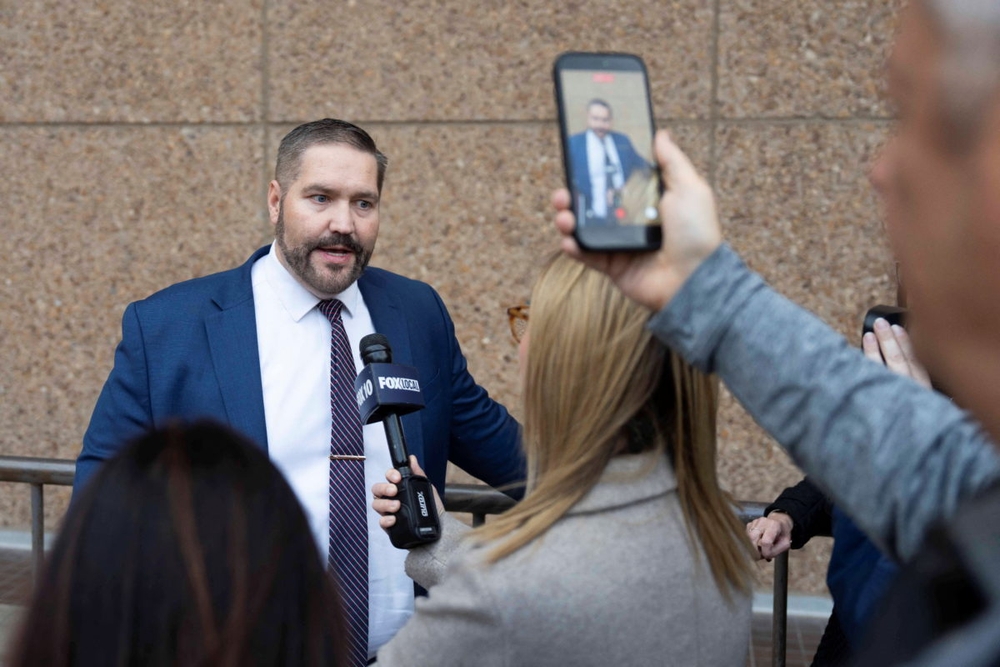
Introduction: A Battleground Within the Battleground
Arizona stands as one of the nation’s most critical political battlegrounds, a state where elections are often decided by the slimmest of margins. Within it, Maricopa County—home to Phoenix and over 60% of the state’s population—is the epicenter of political power and electoral scrutiny. As the 2026 midterm elections approach, with competitive House races and key statewide offices on the line, one would expect election administrators to be focused on ensuring a smooth, secure, and trustworthy process. Instead, Maricopa County is embroiled in a debilitating internal war that threatens the very foundation of democratic confidence. At the heart of this turmoil is Maricopa County Recorder Justin Heap, whose actions since taking office have created what observers fear is an “air of uncertainty” designed not to strengthen elections, but to undermine them.
The Facts: A Record of Disruption and Division
Justin Heap, an election skeptic who defeated the incumbent in the 2024 Republican primary, assumed the role of Maricopa County Recorder with a mandate from the most skeptical wing of his party. His tenure has been characterized not by administrative consensus, but by constant conflict with the county’s Board of Supervisors, a body with shared election oversight that holds a Republican majority.
The conflict escalated into open legal warfare in June 2025, when Heap, with the backing of the conservative group America First Legal (founded by former Trump advisor Stephen Miller), sued the Board. He alleged they had improperly stripped his office of resources and key election functions through an agreement with his predecessor. A recent court ruling largely sided with Heap, granting his office more authority, a decision the Board is considering appealing. This legal victory has intensified a power struggle that has spilled into public view through heated accusations, with one Republican supervisor accusing Heap of lying “over and over again.”
Beyond the courtroom, Heap has instituted significant policy changes. He overhauled the process for verifying signatures on mail-in ballots, instituting a multi-layered review that critics, including Republican Supervisor Thomas Galvin, fear is leading to a “huge” and arbitrary rejection rate of otherwise valid ballots. Galvin has labeled the new process a “looming disaster.”
Concurrently, Heap has directed his office to use the U.S. Department of Homeland Security’s Systematic Alien Verification for Entitlements (SAVE) program to scour voter rolls for noncitizens. His office claims to have found 137 registered voters who are not citizens, with 60 having voted in prior elections. However, this system has been widely criticized by experts and officials, including Arizona’s Democratic Secretary of State Adrian Fontes, who calls it “notoriously inaccurate” and unreliable for initiating voter removal. Heap announced the use of SAVE on the same day he appeared with then-DHS Secretary Kristi Noem at an event promoting stricter citizenship voting requirements, leading to accusations of political theater.
Heap’s alignment with national political movements extends further. Correspondence shows his office expressing eagerness to cooperate with the U.S. Department of Justice under the Trump administration, which has sought election records nationwide. This has prompted a warning from Arizona’s Democratic Attorney General Kris Mayes, who accused Heap of “trying to undermine Arizonans’ trust in our election system.”
The cumulative effect, as stated by State Senator Lauren Kuby and Pinny Sheoran of the League of Women Voters of Arizona, is the sowing of “confusion and distrust” among voters, fraying the essential confidence that the county is being run in the best interest of every citizen.
Analysis: A Calculated Assault on Institutional Trust
The situation in Maricopa County is not an administrative dispute; it is a case study in the modern playbook for undermining democratic legitimacy. Justin Heap’s actions follow a disturbingly coherent pattern seen in other jurisdictions: the weaponization of election administration to serve a narrative of systemic failure, irrespective of facts or consequences.
First, the relentless legal and rhetorical war against the Board of Supervisors serves a crucial purpose. It creates a public spectacle of dysfunction. When elected officials are “fighting right now,” as Senator Kuby notes, the average voter’s logical conclusion is that the system is broken. This manufactured chaos provides fertile ground for pre- and post-election conspiracy theories, regardless of the actual accuracy of the count. Heap’s victory in court may grant him power, but the lasting damage is the indelible image of an election apparatus at war with itself.
Second, the policy changes on signature verification and citizenship checks are framed as enhancements to “election integrity.” In practice, they function as mechanisms for voter suppression and intimidation. The SAVE system is a blunt instrument, known for false positives that can wrongly flag naturalized citizens. Using it as a basis for challenging registrations is not about securing the rolls; it is about creating a pretext to purge eligible voters and generate headlines that feed a false narrative of widespread fraud. Similarly, a signature verification process that yields a dramatically higher rejection rate—without clear, transparent, and uniform standards—inevitably disenfranchises legitimate voters. The right to vote is fundamental, and erecting arbitrary, opaque barriers to its exercise is an affront to the Constitution and the principles of equal protection.
Third, Heap’s overt alliances with national political actors like America First Legal, Stephen Miller, and the Trump-era Department of Justice reveal the true nature of this project. This is not a localized effort to improve Maricopa’s elections. It is a node in a coordinated national movement to destabilize election administration, centralize control, and cast doubt on outcomes that do not favor a particular political faction. The pursuit of voter records by the federal government, met with Heap’s “full cooperation,” raises profound concerns about voter privacy and the potential for harassment. Attorney General Mayes’s warning is not partisan; it is a necessary defense of state sovereignty and citizen data against federal overreach driven by bad-faith investigations.
The Human Cost and the Path Forward
The greatest casualty in this conflict is the citizenry of Maricopa County and Arizona. Pinny Sheoran of the League of Women Voters perfectly captures the essence of democratic health: voters need a sense that their county is well-run and that officials have their best interest at heart. That sense is being deliberately shattered. Every headline about lawsuits, “huge” rejection rates, and inaccurate voter purges chips away at the social contract. It tells eligible voters their participation is suspect and tells the defeated that their loss must be illegitimate.
This is antithetical to the American ideal. Our system is strong not because it is perfect, but because its imperfections are addressed through transparent, good-faith processes and a shared commitment to the peaceful transfer of power. Justin Heap’s administration represents the opposite: the importation of national political warfare into local election offices, where the goal appears to be the perpetuation of conflict itself.
Defending democracy requires clear-eyed recognition of these tactics. It requires supporting the officials, like Secretary Fontes and Attorney General Mayes, who are pushing back with facts and law. It requires robust public scrutiny of every rejected ballot and every challenged registration. And it requires voters to see the Maricopa maelstrom for what it is: a political strategy, not an administrative reality.
The upcoming primaries and general election will be a test. Will Maricopa County administer a vote that is secure, accessible, and trusted? The machinery may function, but trust, once broken, is hard to rebuild. The fight in Arizona is no longer just about who wins an election; it is about whether the process itself can survive a sustained assault from within. The principles of liberty, freedom, and republican government demand that we answer with a resounding yes, and hold every official accountable to that sacred standard.