
The Mask of Anonymity: A Court's Dangerous Blow to Transparency and Liberty
Published
- 3 min read
Introduction: The Legal Challenge at Hand
In a ruling that strikes at the heart of governmental transparency and public accountability, a panel of the 9th U.S. Circuit Court of Appeals has delivered a significant victory to the Trump administration in its ongoing legal battles with the state of California. On Wednesday, the court struck down a key provision of a California law, often referred to as the “No Vigilantes Act,” which mandated that federal law enforcement officers, specifically immigration agents, visibly display identification while carrying out their duties. The unanimous 3-0 decision represents a major setback for state-level efforts to impose basic accountability measures on federal operations within its borders, centering the debate on the ancient tension between state authority and federal supremacy.
The Facts and Legal Context of the Ruling
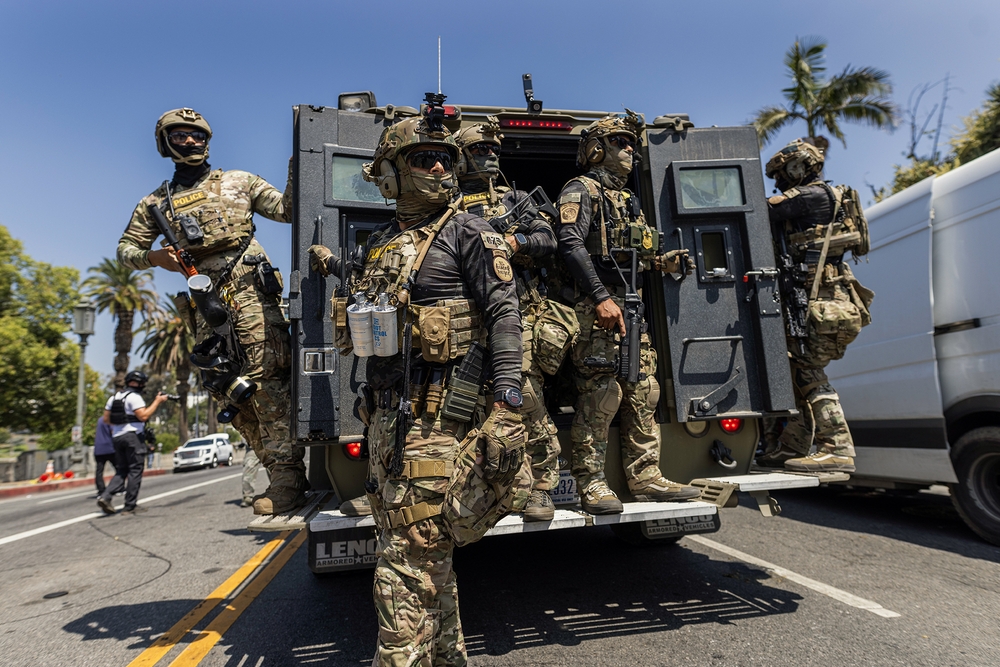
The contested law was part of a broader legislative package signed by Governor Gavin Newsom, which also included a ban on federal immigration agents wearing masks—a provision previously enjoined by a federal judge in February. The identification requirement was California’s direct response to incidents where federal Immigration and Customs Enforcement (ICE) agents conducted operations while masked and without clear, visible badges, raising profound concerns among communities and lawmakers about anonymity, intimidation, and the potential for abuse.
The legal foundation for the court’s decision rests on two well-established constitutional principles. First, Judge Mark J. Bennett, writing for the panel, invoked an 1890 Supreme Court precedent establishing that a state cannot prosecute federal law enforcement officers for actions taken in the course of their official duties. More critically, the ruling hinges on the Supremacy Clause of the U.S. Constitution, which fundamentally holds that federal law takes precedence over state law and that states cannot regulate the operations of the federal government. The court found that the California law “directly regulates the conduct of the United States” and is therefore void, regardless of the state’s intent or the perceived degree of interference with federal functions.
The state of California argued valiantly, though unsuccessfully, that the court should weigh the law’s public safety benefits—the need for communities to identify those purporting to have legal authority—against the federal interest. The court summarily “decline[d] to do so,” stating that once a likely Supremacy Clause violation was shown, the public interest and balance of equities tipped decisively in favor of a preliminary injunction against the state law.
The Principle of Transparency Under Siege
This is where the cold letter of the law collides with the warm, vital spirit of a free society. The court’s ruling, while legally sound from a strict constitutional interpretation standpoint, represents a profound moral and civic failure. It elevates a technical doctrine of federal supremacy over the fundamental human right to know who is exercising the coercive power of the state. The principle that agents of the government, especially those armed with the power to detain, separate families, and deport individuals, must be identifiable is not a trivial regulation; it is the absolute minimum requirement for accountability in a constitutional republic.
When armed officers can operate anonymously, shielded by masks and without displayed identification, they cease to be public servants and become potential instruments of terror. This anonymity destroys the essential bond of trust between law enforcement and the community. It creates an environment where abuse can flourish in the shadows, where victims cannot identify their accusers or captors, and where the powerful are insulated from the consequences of their actions. California’s law was not an attempt to obstruct federal immigration enforcement; it was a desperate and necessary measure to ensure that such enforcement did not degenerate into the tactics of a secret police force.
Federal Power and the Erosion of Public Trust
The Trump administration’s vigorous defense of its agents’ right to operate without visible identification is telling. Acting U.S. Attorney General Todd Blanche celebrated the ruling as support for “the brave men and women of ICE.” True bravery in law enforcement does not require hiding one’s identity; it operates with courage and integrity in the open. The administration’s stance suggests a disturbing preference for intimidation and opacity over transparency and community cooperation. Effective, just law enforcement relies on legitimacy, and legitimacy is impossible when the officers enforcing the law are unidentifiable.
Furthermore, the court’s refusal to even consider California’s public safety argument is a glaring judicial abdication. The Supremacy Clause is not a suicide pact for state sovereignty and local safety. The framers of the Constitution never intended for it to be a blank check allowing federal agents to operate as anonymous entities within sovereign states. By dismissing the state’s concerns out of hand, the 9th Circuit has endorsed a vision of federal power that is unmoored from local accountability and deaf to the legitimate fears of citizens who see masked, unidentified agents in their neighborhoods.
The Dangerous Path Forward
The implications of this ruling extend far beyond immigration enforcement. It sets a perilous precedent that could be used to shield any federal agent from state-level transparency measures. If ICE agents need not display ID, why should FBI, ATF, or DEA agents? The logic of the ruling creates a slippery slope toward a fully anonymized federal law enforcement apparatus, a concept utterly alien to American traditions of liberty and open government.
California Democrats, who passed the “No Vigilantes Act,” are now advancing further legislation to constrain federal immigration agents, including barring them from subsequent employment in state law enforcement and easing lawsuits for civil rights violations. This legislative fervor is a direct symptom of the disease diagnosed by this court ruling: a federal government that actively resists the basic accountability mechanisms that define a free society. When the legal system strips states of their ability to demand transparency, it forces them into ever more confrontational stances, deepening national fractures.
Conclusion: A Call for Constitutional Courage
As a firm supporter of the Constitution, I recognize the legal strength of the Supremacy Clause argument. But the Constitution is not merely a set of legal technicalities; it is the embodiment of our national commitment to liberty, justice, and limited government. A doctrine that allows federal agents to hide their identities while exercising power over American residents is a doctrine in dire need of re-examination. True constitutional fidelity requires balancing federal supremacy with the inalienable rights of the people to know their government.
This ruling is a victory for opaque power and a defeat for the public’s right to know. It is a sad day when a court, in the name of the Constitution, undermines a principle so central to the Constitution’s purpose: that government of the people must be visible to the people. We must demand that our federal representatives and the judiciary themselves recognize that the legitimacy of law enforcement is inextricably linked to its transparency. The mask of anonymity has no place in the American system. To accept it is to take a long, dark step away from the liberty we hold dear. The fight for accountability is not over; it has simply moved to a new, more difficult battlefield where we must argue not just policy, but the very soul of our democratic republic.