
The Missouri Hemp Ban: A Case Study in Government Overreach Masquerading as Child Protection
Published
- 3 min read
The Facts: A Swift Legislative Hammer Falls
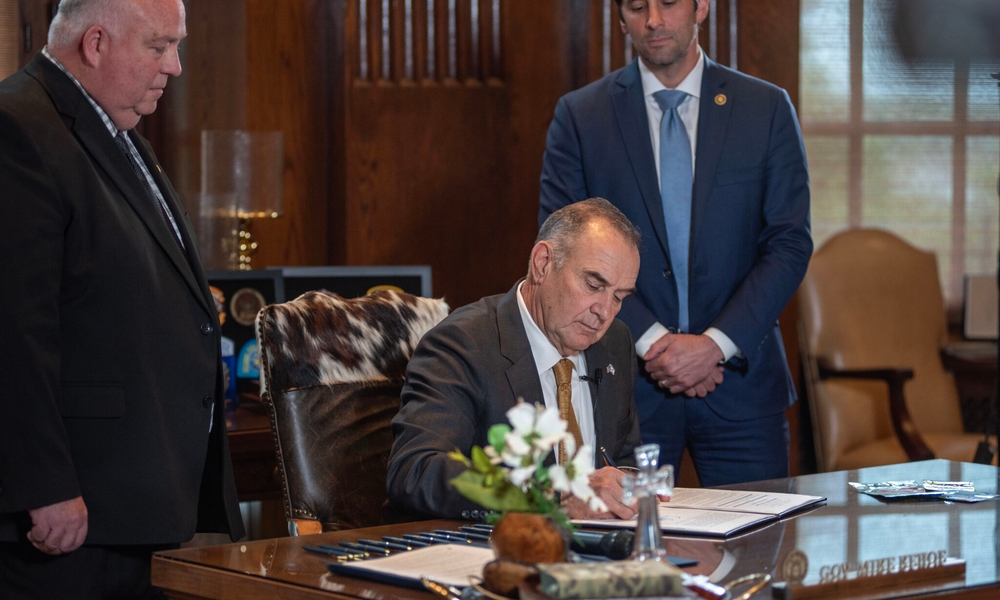
On a recent Thursday, Missouri Governor Mike Kehoe signed into law a bill that will, effective November 12, remove all intoxicating hemp-derived products from retail shelves across the state. This sweeping legislation targets THC seltzers, edibles, and other consumables currently sold in smoke shops, convenience stores, bars, and even grocery stores. The law’s primary stated aim is to align Missouri statute with an impending federal ban approved by Congress in November 2023.
Governor Kehoe, flanked by supportive legislators, framed the action as a necessary, bipartisan measure to protect children. He cited the lopsided legislative vote—151 ayes to 28 nays—as evidence of broad consensus. The bill’s mechanism is blunt: it institutes a near-total ban. The only potential exception is for intoxicating beverages, should the federal government delay its own ban. Furthermore, the law stipulates that if Congress ever reverses course and re-legalizes these products, Missouri would only allow their sale within the tightly regulated, licensed marijuana dispensary system—a system from which these hemp entrepreneurs are currently excluded.
Proponents of the bill, including Republican State Senator David Gregory and bill sponsor Representative Dave Hinman, presented a dramatic case. Senator Gregory held up packaging mimicking Oreo cookies and Doritos bags, warning that these look-alike products contained high-potency THC and were misleadingly labeled as hemp. Their argument centered on the danger these unregulated products pose, especially to children who might accidentally ingest them. Sarah Willson, Director of the Missouri Department of Health and Senior Services, provided sobering testimony, noting hospitalizations of children in Missouri and across the country due to such accidental ingestion, citing the current lack of THC content labeling as a critical failure.
Adding a layer of complexity, the bill was not a monolithic piece of prohibition. The state Senate added provisions aimed at protecting marijuana consumer privacy and safeguarding cannabis workers’ rights to organize—provisions that stand in stark contrast to the bill’s primary destructive force.
Simultaneously, on the federal stage, Acting U.S. Attorney General Todd Blanche signed an order initiating the process to reschedule marijuana from Schedule I to Schedule III of the Controlled Substances Act, a move prompted by a December executive order from President Donald Trump. This federal shift acknowledges potential medicinal benefits and offers tax relief to the licensed marijuana industry, even as Missouri moves to criminalize its hemp-derived cousin. Further complicating the picture, a new federal initiative could soon subsidize certain low-dose hemp-derived THC products for eligible users—products that will be illegal in Missouri under this new law.
The Context: An Industry Operating in Good Faith
To understand the full impact, one must recognize the landscape this law obliterates. Since the 2018 Farm Bill federally legalized hemp (defined as cannabis with less than 0.3% THC by dry weight), an entire industry has blossomed. Entrepreneurs, interpreting existing law, developed methods to create intoxicating products like delta-8 and delta-9 THC from legal hemp. In Missouri, as elsewhere, these products have been sold for years without the stringent regulations applied to the state-licensed recreational and medical marijuana markets.
The Missouri Hemp Trade Association represents this besieged sector. In response to the bill, they issued a statement that cuts to the heart of the matter: the law “effectively dismantles an industry built by real Missourians who have operated in good faith under existing federal and state law.” Their anguish is quantified: Governor Kehoe’s office received 10,000 handwritten letters in just ten days, gathered from small-business owners, farmers, and customers across the state, pleading for a veto. The association has vowed legal action, arguing that Missouri’s preemptive strike conflicts with ongoing federal efforts to create a “lawful framework for hemp.”
On the enforcement front, Missouri Attorney General Catherine Hanaway has been actively pursuing intoxicating hemp retailers since taking office, using consumer-protection laws. She endorsed the bill, stating, “A storefront and a sales counter do not make an illegal drug operation into a legitimate business.” This rhetoric frames the entire existing industry as inherently illegitimate, despite its foundation on federal law.
Opinion: A Destructive and Hypocritical Assault on Liberty and Livelihood
This legislation is a profound failure of governance, a betrayal of Missouri’s entrepreneurs, and a chilling example of how “protecting the children” can be weaponized to justify the expansion of state power and the destruction of economic liberty. The emotional appeal is potent and deliberately manipulative—no one argues for children to have access to dangerous intoxicants. But good intentions are not a substitute for good policy, and this law is policy at its most reckless and unjust.
First, the state is not introducing sensible regulation; it is enacting blanket prohibition. The problem, as clearly identified by health officials, is a lack of regulation—specifically, the absence of child-resistant packaging, clear labeling, and dosage controls. The responsible, liberty-preserving solution is to establish those regulations for the existing marketplace. Instead, Missouri has chosen the nuclear option: declaring thousands of Missourians criminals for participating in a market that was, until now, legal. This is not governance; it is legislative vandalism. It destroys capital, shatters dreams, and upends lives without due process. The added provisions protecting consumer privacy and worker rights in the marijuana industry only highlight the hypocrisy: the state recognizes the need for protections in one cannabis-adjacent field while annihilating another.
Second, the alignment with a “future federal ban” is a flimsy pretext for state overreach. Our federalist system is designed so that states can be laboratories of democracy, often acting as a check on federal excess or inertia. Missouri is abdicating that role to become a passive enforcer of a federal policy still in flux. Representative Hinman said the bill “brings order to an unregulated marketplace by directly mirroring federal standards.” But mirroring is not thinking. It is submission. A state truly committed to its citizens’ welfare and economic freedom would craft a regulatory framework that ensures safety while preserving enterprise, not one that waits for federal permission to allow commerce.
Third, the demonization of the industry by officials like AG Hanaway is disgraceful. To label businesses that have complied with all known state and federal laws as “illegal drug operations” is a slander that stains the rule of law. These are not cartels; they are shop owners, farmers, and processors who invested their savings and labor based on a legal framework. The state’s abrupt reversal pulls the legal rug out from under them, an action that fundamentally undermines the trust necessary for a functioning market economy. How can any entrepreneur trust the stability of law when it can be so capriciously overturned?
The human cost is staggering. Those 10,000 letters represent 10,000 stories of anxiety, fear, and impending loss. They are the voices of Main Street, not of some shadowy illicit trade. By ignoring them, the bipartisan coalition behind this bill has revealed a deep contempt for the very citizens they purport to serve. The government’s role is to secure rights and foster conditions for flourishing, not to unilaterally revoke the legal basis for entire sectors of the economy.
Finally, the timing is bitterly ironic. As the federal government finally acknowledges the absurdity of marijuana’s Schedule I status and moves toward a more rational, science-based Schedule III classification, Missouri is hurtling in the opposite direction. It is doubling down on prohibition for hemp products, creating a confusing and contradictory legal patchwork that will breed contempt for the law. The state is banning products that a federal health initiative may soon subsidize, a level of dissonance that highlights the policy’s incoherence.
Conclusion: Protection Through Empowerment, Not Prohibition
The path to protecting children and public health does not run through the destruction of legitimate businesses. It runs through education, parental responsibility, and smart, targeted regulation that addresses specific risks like packaging and labeling. Missouri had a historic opportunity to lead—to create a model regulatory framework for hemp-derived products that balanced safety with economic freedom. It chose instead to follow the oldest, most failed playbook: prohibition.
This law is a victory not for safety, but for government overreach. It is a loss for Missouri’s farmers, for its small-business owners, for the principle of fair notice under the law, and for the economic liberties enshrined in the spirit of the American dream. The fight now moves to the courts, where the Hemp Trade Association will challenge this legislative overreach. One can only hope that the judiciary will see this law for what it is: a destructive, emotional overreaction that sacrifices liberty and livelihoods on the altar of political expediency. The true protection of our communities begins with respecting the rights and dignity of every citizen, not by rendering them obsolete with the stroke of a governor’s pen.