
The Missouri Hemp Crossroads: 10,000 Voices Against Government Overreach
Published
- 3 min read
The Facts: A Deluge of Dissent and a Pending Ban
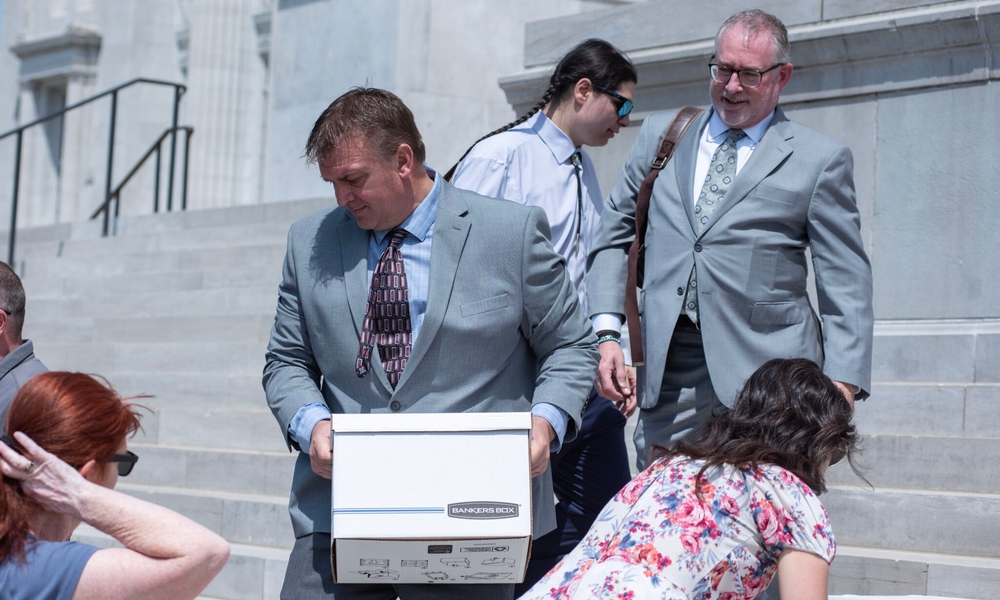
In a powerful display of civic engagement, the office of Missouri Governor Mike Kehoe was recently inundated with 10,000 handwritten letters. Collected in a mere ten days, this paper tsunami carried a single, urgent message: veto Senate Bill [Note: The article references a bill but does not give its number; we will refer to it generally], legislation that would impose a comprehensive statewide ban on intoxicating hemp products. The senders were not faceless entities but small-business owners, farmers, and customers from across the state, united in their fear that this law could annihilate Missouri’s burgeoning hemp industry. This grassroots mobilization, described by the governor’s spokeswoman as “somewhat unique,” underscores the profound economic and personal stakes involved.
The legislative context is fraught with uncertainty. The bill, sponsored by State Representative Dave Hinman of O’Fallon, arrives amidst a swirling national debate. Congress has included a provision in a federal spending package that would enact a nationwide ban on these products, set to take effect on November 12. However, as noted in the article, there is a distinct possibility that Congress could delay this ban or set different, more nuanced regulations for certain product categories like beverages or low-THC CBD items.
Missouri’s proposed law adds a layer of complexity and potential severity. It mandates that all intoxicating hemp products be removed from shelves starting November 12, mirroring the federal deadline. The critical divergence lies in the state’s response to any potential federal reversal. If Congress were to pull back from its ban, Missouri’s bill would only allow the sale of these products within the tightly controlled ecosystem of licensed marijuana dispensaries. Even if Congress simply delays the federal ban, Missouri would still prohibit all products except for intoxicating beverages. In essence, the state is poised to adopt a posture that could be more restrictive and less flexible than the federal government’s final position.
The Stakes: Livelihoods, Medicine, and Regulatory Chaos
The human impact of this policy is crystallized in the voices of those leading the opposition. Jay Patel, president of the Missouri Hemp Trade Association, framed the letters as the “voices of Missourians that want their voices to be heard,” warning that the bill would “effectively eliminate an entire industry in Missouri.” Business owners like Brian Riegel of South Point Hemp express a palpable sense of being left behind. He is developing products meant to qualify for a new federal initiative under the Centers for Medicare & Medicaid Services that could cover certain hemp-derived products for eligible users. Under the Missouri bill, patients in the state would be barred from participating in this program, creating a cruel paradox where a federally acknowledged potential benefit is blocked at the state line.
The regulatory landscape is further complicated by actions at the federal level. Former President Donald Trump signed an executive order in December directing the administration to work on a framework for full-spectrum CBD products. Meanwhile, Missouri Attorney General Catherine Hanaway has expressed support for the state ban, having sent 33 cease and desist letters to businesses since November. Representative Hinman himself admitted this was not his preferred bill, stating his original goal was to craft a specific regulatory framework for hemp outside of marijuana rules. He argues the current bill merely codifies the federal language and enables local enforcement, claiming that regardless of his bill’s fate, “their businesses are still going to be gone” due to the federal action.
Opinion: A Failure of Principled Governance and a Threat to Liberty
This situation is not merely a policy dispute; it is a case study in the erosion of prudent governance and the principles of a free society. The receipt of 10,000 handwritten pleas is not an administrative footnote—it is a thunderclap of democratic sentiment that should give any leader pause. In a constitutional republic founded on the consent of the governed, such a direct and labor-intensive appeal from citizens, business owners, and farmers represents the very essence of civic duty. To ignore it is to disregard the foundational compact between the people and their government.
The bill before Governor Kehoe represents a profound failure of legislative nuance and foresight. It is a blunt, preemptive strike that substitutes flexibility and adaptive regulation with rigid prohibition. The principle of federalism allows states to be laboratories of democracy, to tailor solutions to local needs and industries. Here, Missouri is poised to do the opposite: to potentially impose stricter rules than the federal government, suffocating a legal industry before the national regulatory picture is even clear. This is not prudent caution; it is economic strangulation. It prioritizes the ease of a blanket ban over the hard work of crafting smart, effective regulations that protect consumers while allowing legitimate commerce to flourish.
Furthermore, the potential ban exposes a deep hypocrisy in our approach to health and commerce. The federal government, through the CMS initiative, is exploring the therapeutic and supportive use of hemp-derived products for eligible individuals. Yet, Missouri’s law would slam the door on its own citizens accessing these potential benefits. This creates a two-tiered system where patients in other states might have access to covered alternatives while Missourians are denied, based not on science or patient need, but on a regulatory overreach. This is antithetical to a humanist approach that should seek to expand safe options for care and wellness.
Representative Hinman’s defense that the bill simply aligns state law with federal action is a capitulation of state responsibility. It is the duty of state lawmakers to advocate for their constituents and their unique economic landscape. To throw one’s hands up and say the federal government has doomed these businesses anyway is an abdication of that duty. The very existence of the 10,000 letters proves that Missourians believe their state government can and should act as a buffer and an advocate, not merely as a passive enforcer of potentially flawed federal dictates.
The support from Attorney General Hanaway, through cease and desist letters, amplifies this concerning trend. While enforcement of law is her duty, the aggressive posture against an industry operating in a legal gray area—precisely because the legislature has “failed to pass legislation regulating these products since 2023”—punishes entrepreneurs for the government’s own failure to provide clear rules. This creates a chilling effect on innovation and investment, the very engines of economic liberty.
Conclusion: A Call for Principled Leadership
Governor Mike Kehoe now stands at a consequential crossroads. On one path lies the easy choice of alignment with a simplistic, restrictive bill supported by some law enforcement and regulatory bodies. On the other lies the harder, principled path of veto—a path that honors the 10,000 voices pleading for their livelihoods, that demands the legislature go back and do its job correctly, and that preserves economic liberty while demanding responsible regulation.
True leadership in a democracy requires listening, especially when the message is delivered with such undeniable force. It requires the courage to reject poorly crafted legislation, even from one’s own party, and to demand better. It requires a commitment to the rule of just law, not just the rule of law as a cudgel. A veto would not be an endorsement of unregulated intoxicants; it would be a demand for a regulatory framework that protects public safety without committing economic arson. It would be a stand for the small-business owners, the farmers, and the consumers who have taken the time to engage in their democracy.
The preservation of our democratic institutions and a free market depends on leaders who can distinguish between necessary regulation and destructive overreach. The Missouri hemp debate is a microcosm of this eternal tension. By vetoing this bill, Governor Kehoe would send a powerful message that in Missouri, the voices of its citizens and the promise of its economy will not be sacrificed to regulatory panic or legislative laziness. He would affirm that the path to a safe and prosperous society is built through engagement, nuance, and a steadfast commitment to liberty, not through preemptive bans that crush an industry and ignore the people it serves.