
The Missouri Hemp Purge: When State Power Meets Competitive Sabotage
Published
- 3 min read
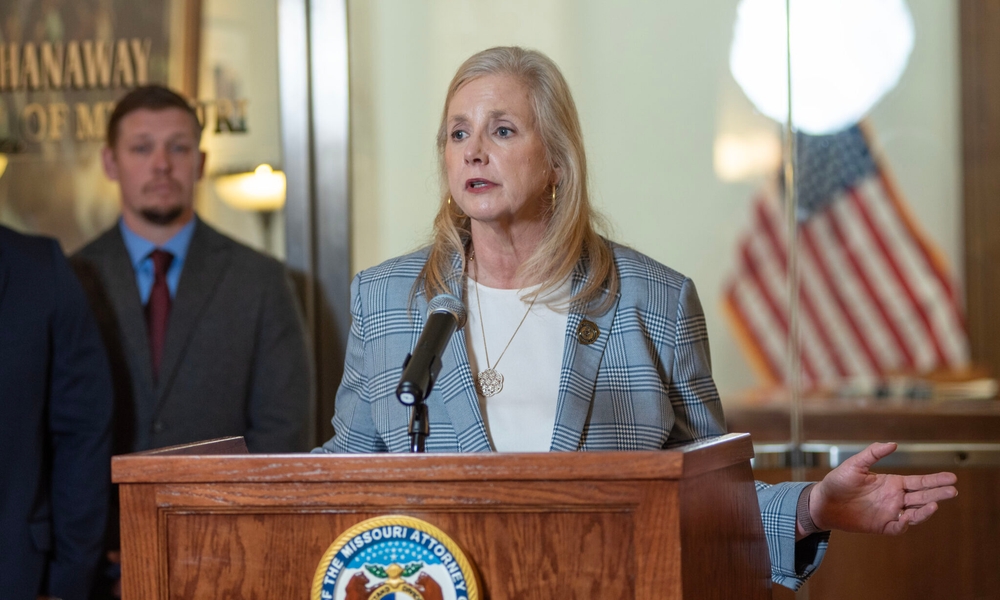
In a move that sends a chilling message to small businesses across Missouri, Attorney General Catherine Hanaway has launched a targeted crackdown on 33 stores selling intoxicating hemp products. This action, however, is mired in controversy, not just for its timing and legal basis, but for the deeply problematic origins of its evidence. The core of the state’s case relies not on impartial state-led testing, but on lab results compiled and provided by the Missouri Cannabis Trade Association (MoCann), a trade group representing the very licensed marijuana dispensaries that compete directly with these hemp retailers. This isn’t merely a regulatory action; it is a case study in how state power can be potentially co-opted by commercial interests to stifle competition under the guise of consumer protection.
The Facts of the Case
Last month, the Attorney General’s office, through Assistant Attorney General Jane Dueker who leads an informal “vice squad,” issued cease-and-desist letters to 18 stores in the St. Louis region, 13 in the Kansas City area, and two in Springfield. The letters ordered these businesses to stop selling products like “THCA hemp flower” and pre-rolled joints, alleging they contain more than the legal limit of 0.3% total THC. The letters further accused shops of using language like “cannabis” and “weed” to illegally deceive consumers, and some alleged the presence of dangerous contaminants like heavy metals and pesticides.
The Attorney General’s press release stated that “following lab testing,” it was confirmed many businesses sold contaminated substances. However, a critical revelation from spokeswoman Stephanie Whitaker confirmed that the state’s own lab conducted no testing, nor did the office commission any independent tests. The evidence was provided “through complaints,” conducted by licensed marijuana labs. That primary source of complaints was MoCann’s “Missouri Hemp Hoax Report” from October, which tested 55 products from smoke shops and gas stations. MoCann’s Executive Director, Andrew Mullins, declared the results “proved that these bad actors were perpetrating a fraud on Missourians.” Of the 33 businesses targeted by the state, all but two were named in MoCann’s report.
The targeted business owners, represented by the Missouri Hemp Trade Association, mount a multi-faceted defense. First, they assert their products remain legal under the 2018 Farm Bill until a new federal provision takes effect on November 12, 2024. They argue the law clearly defines hemp by its Delta-9 THC content, not “total THC” (which includes THCA), a method both MoCann and the Attorney General are using. Second, they fundamentally question the integrity of an enforcement action built on evidence supplied by their direct competitors. As J.C. Cirese, owner of Dr. Smoke in Kansas City, pointedly stated, “taking the word of our competitors might not be the best way to approach it.”
Individuals like Cameron Fleet of Center Smoke in Independence express confusion and frustration, noting alleged inaccuracies in their specific letters (Fleet claims he never sold the “THC Nerd Rope” candy cited) and the obvious correlation between MoCann’s “Hemp Hoax” website and the Attorney General’s target list. Craig Katz, manager of government compliance for the larger chain CBD Kratom, called the allegations “misguided and false,” and highlighted the intimidation such letters pose to small “mom and pop” entrepreneurs who lack in-house legal counsel.
Opinion: A Fundamental Betrayal of Due Process and Fair Competition
This episode is far more than a regulatory dispute over cannabinoid chemistry. It represents a profound and alarming departure from the basic principles of transparent governance, due process, and economic liberty that should underpin any action by the state. The Attorney General’s office has effectively outsourced its investigative and evidence-gathering function to a private, partisan trade association with a clear and admitted financial interest in eliminating its competition. This creates an irreconcilable conflict of interest that fatally undermines the legitimacy of the entire enforcement action.
Let us be unequivocal: consumer safety is paramount. If products are contaminated with heavy metals or pesticides, they must be addressed. But the state’s duty is to ascertain those facts through its own objective, transparent mechanisms. To build a case on evidence provided by a commercial rival—without independent verification—is an abdication of that duty. It transforms the Attorney General’s office from a guardian of public welfare into a tool for corporate capture. The process is the punishment for these small businesses, who now face the weight of the state based on what they reasonably see as a hatchet job by their competitors.
The legal argument at the heart of this—the shift from Delta-9 THC to “total THC”—is a complex regulatory interpretation. However, the business owners’ point stands: they operated under a federal framework for years. To have the rules changed via an enforcement action backed by competitor-funded research, before the federal rule change itself takes effect, smacks of entrapment and selective prosecution. Where is the grace period? Where is the educational outreach? The action feels less about orderly regulation and more about a preemptive strike.
Furthermore, the narrative pushed by MoCann and echoed by the state—that these are “bad actors” running “unlicensed dispensaries”—deliberately obscures a critical injustice. As J.C. Cirese astutely notes, the hemp industry “never been given the opportunity to have licensing in Missouri.” They were pioneers in the cannabinoid space, and their market success was even used by marijuana advocates to build the case for recreational legalization. Now, the very industry that helped pave the way is being demonized and dismantled by the established players who followed, with the state’s complicity. This is not a level playing field; it is a bait-and-switch of the highest order.
This case should outrage anyone who believes in fair play, economic liberty, and limited, impartial government. The use of state power must be beyond reproach, its motives pure and its evidence unassailably independent. Here, the process is poisoned at the source. Attorney General Hanaway’s office has sent a dangerous message: that in Missouri, if you have enough money and lobbying power, you can potentially use the Attorney General’s letterhead and the threat of legal sanction to cripple your competition. This erodes trust in public institutions and makes a mockery of the rule of law.
The path forward is clear. The Attorney General’s office must immediately pause this enforcement action. It must conduct its own independent, transparent testing of the products in question. It must engage with the hemp industry stakeholders directly, not through their competitors. And it must develop a coherent, fair regulatory pathway that doesn’t simply hand the market over to a privileged few. The principles of democracy and liberty demand a government that referees the market with fairness, not one that picks winners and losers based on who provides the most convenient dossier. Missouri’s small business owners, and indeed all its citizens, deserve nothing less.