
The Missouri Medicaid Maneuver: A Constitutional Sidelining of Voter Intent and Vulnerable Lives
Published
- 3 min read
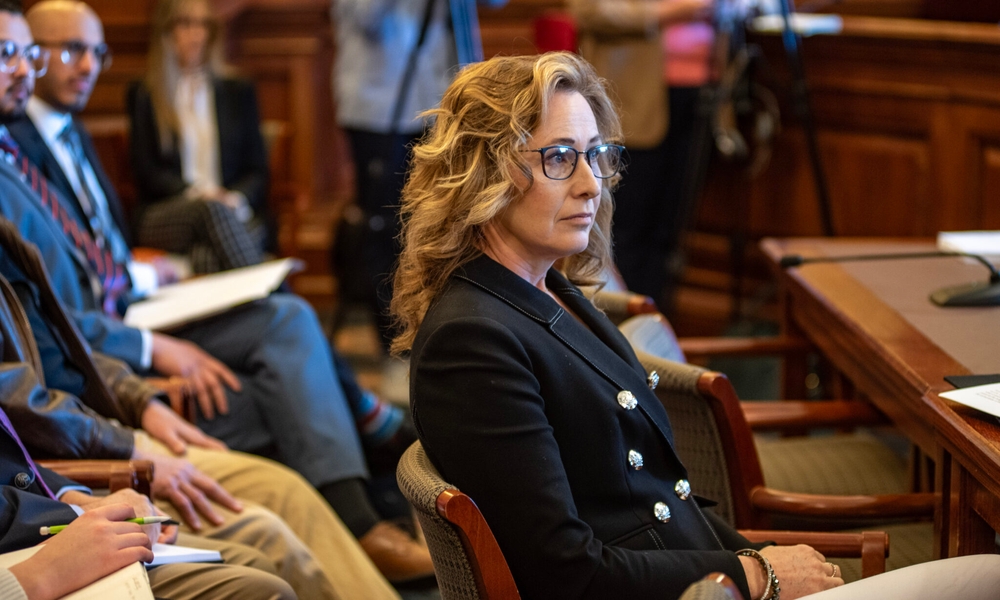
In the intricate and often opaque theater of state governance, a profound drama is unfolding in Jefferson City that strikes at the heart of democratic accountability, healthcare access, and the social contract. The subject is Medicaid, the vital healthcare program for low-income Americans, and a proposed amendment to the Missouri Constitution that has been significantly altered, revealing a troubling shift from direct mandate to ambiguous authority. This is not merely a policy tweak; it is a case study in how legislative processes can be used to potentially undermine a clear public mandate while creating bureaucratic traps for the most vulnerable.
The Facts: From Constitutional Mandate to Ambiguous Authority
The core narrative begins with a federal backdrop. The so-called “One Big Beautiful Bill Act” passed by Congress will, starting January 1, 2027, require states to implement work reporting requirements for adults enrolled in Medicaid expansion. These individuals, aged 19 to 64, must verify they are working, volunteering, or in school for at least 80 hours per month, with eligibility checks occurring twice a year.
In response, Missouri’s Republican-controlled House passed legislation that sought to go further. Sponsored by State Representative Darin Chappell of Rogersville, the original proposal aimed to embed these work requirements directly into the state constitution, making them permanent even if the federal law were later changed or repealed. This was a preemptive and rigid move.
However, the Senate Committee, chaired by Republican Senator Jill Carter of Granby, has dramatically reshaped the proposal. The amended version, which mirrors Senator Carter’s own legislation, strips out the constitutional mandate. Instead, it asks voters to approve a constitutional amendment that would grant the state—specifically the legislature, the governor, or the Department of Social Services—the authority to impose work requirements. It does not require them. As Dennis Rhodes, Senator Carter’s chief of staff, explained, the change is designed to clear a constitutional hurdle. The current Missouri Constitution, amended by voters in 2021 to expand Medicaid, prohibits “greater or additional burdens or restrictions on eligibility.” This new amendment would create an explicit exception for work requirements, allowing future lawmakers to implement them via statute without returning to voters for another constitutional change.
The Context: Stakes, Statistics, and Stakeholders
The financial and human context is critical. To qualify for expanded Medicaid in Missouri, a single individual working full-time cannot earn more than $10.59 per hour—a figure roughly 30% below the state’s $15 minimum wage. Data from Washington University in St. Louis reveals that about two-thirds of Missouri Medicaid recipients already work, either full- or part-time. Of the remainder not working, most are in school, retired, disabled, ill, or have caregiving responsibilities. Only about 12% cited none of these reasons.
Opposition to the original proposal was fierce and broad-based. Lobbyists for cancer patients, older adults (AARP Missouri), people with disabilities, and rural advocates argued it would cause needless loss of coverage and create administrative chaos. Their concerns were amplified by the state’s precarious financial position regarding Medicaid. Social Services Director Jess Bax warned lawmakers in January that Missouri faces a potential clawback of up to $1.2 billion in federal funds if it fails to reduce its Medicaid error rate from a staggering 35% in 2019 to below 3% by October 2029. Adding complex new verification systems threatens to exacerbate this error rate.
The Senate’s diluted version has somewhat quieted fears, particularly regarding exemptions. The original bill sought to ban self-declared exemptions and prohibit the department from granting optional hardship waivers without specific legislative approval. The new language appears to allow more administrative flexibility, which advocates like Jay Hardenbrook of AARP see as crucial for creating exemptions for caregivers.
Yet, the fundamental threat persists. Jamie Blair of the Missouri Rural Crisis Center testified that even “less severe” work reporting requirements will disproportionately hurt rural Missourians—who are more reliant on Medicaid—and their already-strained hospitals, twelve of which have closed since 2014. The financial cost is also immense: the Senate’s passed budget allocates $53.9 million in state general revenue (part of a $356.5 million total) just to implement the federal work requirements in FY2027—funds that Democratic Senator Maggie Nurrenbern of Kansas City argues should go to direct care, not “more bureaucracy.”
Opinion: A Betrayal Wrapped in Procedural Paper
This legislative maneuver is a masterclass in obfuscation and a profound betrayal of democratic principles. The voters of Missouri spoke clearly in 2021, using the ballot initiative process to expand Medicaid and provide healthcare to hundreds of thousands of their low-income neighbors. That vote was an affirmation of a basic compact: in a civilized society, we do not let our fellow citizens suffer or die from treatable conditions because of poverty.
The original House proposal was a blunt-force assault on that compact, attempting to constitutionally lock in a punitive and ideologically driven barrier to care. The Senate’s “softer” version is arguably more insidious. By shifting from a mandate to an authority, it performs a political sleight of hand. It allows legislators to tell concerned constituents they have merely provided “flexibility,” while in reality, they have planted a constitutional landmine. They have created the legal precondition for a future legislature—perhaps next year, as Rep. Chappell suspects—to pass strict work requirement statutes with far less public scrutiny, hiding behind the veil of “authority” voters supposedly granted.
This is governance by misdirection, and it is an affront to the rule of law. Constitutions are meant to enshrine fundamental rights and broad frameworks of governance, not to serve as loophole-generators for specific, contentious policy goals. Jane Drummond of the Missouri Hospital Association wisely cautioned that “the more we touch in the Constitution, the more it opens it up to issues of construction, interpretation, ambiguity.” She is correct, but the danger is greater than legal ambiguity; it is the corruption of the document’s purpose. Using the amendment process to carve out an exception to a voter-approved right to healthcare sets a terrifying precedent. What cherished provision will be the next target for a “narrow exception”?
The human cost of this bureaucratic edifice is being callously ignored. The data is unequivocal: the vast majority of Medicaid enrollees who can work, do work or are prevented by profound life circumstances. The administrative machinery required to police the small minority will be Kafkaesque, expensive, and error-prone. It will inevitably snare the working poor, the caregiver tending to a dying parent, the rural resident whose seasonal job doesn’t fit the 80-hour monthly mold. They will lose coverage. They will get sicker. Some will die. And for what? To satisfy a ideological fixation on “personal responsibility” that the facts simply do not support?
Representative Chappell’s moral justification is particularly galling. He declares, “I will not let $1 be wasted on someone who’s capable and will not work, [and] be taken from those folks,” referring to vulnerable populations. This framing is a false dichotomy of the most pernicious kind. It pits the poor against the disabled, the unemployed against the ill, in a brutal scramble for scraps from the state table. The real waste is the $54 million in state revenue—and hundreds of millions more in federal matching funds—being funneled into a verification system instead of into doctors, nurses, hospitals, and medicines. The real threat to services for the developmentally disabled is not a mythical “capable” person refusing work; it is a legislature willing to spend limited resources on punitive bureaucracy rather than compassionate care.
In conclusion, the Missouri Senate’s amendment is not a compromise; it is a capitulation to a dangerous ideology, dressed in the garb of procedural prudence. It seeks to use the sacred instrument of the state constitution to lay the groundwork for undermining a public good that the people themselves demanded. It is a stark reminder that the fight for liberty and democracy is not just about grand, federal overreaches but also about these quiet, technical battles in statehouses where access to healthcare—a fundamental determinant of life, liberty, and the pursuit of happiness—is incrementally stripped away. The principles of a free society demand that we provide a floor of basic dignity and security. Missouri’s political leadership, in its pursuit of this work requirement authority, is not just chipping away at that floor; it is voting to install a trapdoor.