
The Ninth Circuit's Ruling: A Victory for Federal Authority, A Blow to Public Accountability
Published
- 3 min read
The Core of the Decision and Its Immediate Context
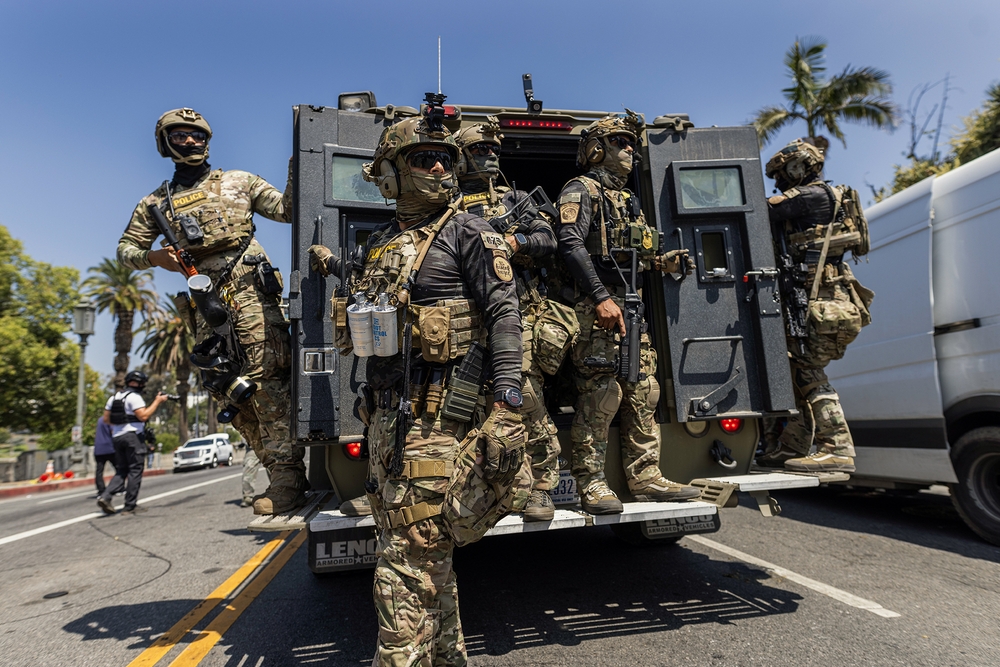
In a unanimous 3-0 ruling, a panel of the United States Court of Appeals for the Ninth Circuit has delivered a decisive legal victory to the federal government in its ongoing clash with the State of California over immigration enforcement. The court permanently blocked the enforcement of a key provision of California’s 2025 legislation, commonly referred to as the “Anti-Vigilante Act.” This specific provision mandated that federal law enforcement officers, including Immigration and Customs Enforcement (ICE) agents, visibly display their identification while performing their duties. The court’s reasoning was unequivocal and rooted in foundational constitutional law. Citing the Supremacy Clause, Judge Mark J. Bennett, writing for the panel, stated that a state law which directly regulates the conduct of the United States is void, regardless of whether the regulated activities are essential to federal functions or the degree of interference. This ruling follows a separate injunction against another section of the same law that sought to prohibit federal immigration agents from wearing masks.
Governor Gavin Newsom had signed this legislative package as part of California’s broader resistance to the Trump administration’s immigration enforcement policies. The “Anti-Vigilante Act” was a direct response to reports and concerns that federal agents were conducting operations while masked and without clear identification, a practice that state Democrats argued created fear, hindered accountability, and resembled vigilantism. The federal government, under the Trump administration, swiftly sued to challenge both laws. Acting US Attorney General Todd Blanche publicly celebrated the Ninth Circuit’s decision, framing it as a total and unwavering support for ICE agents who “risk their lives daily” and a “major win for protecting law enforcement.”
The Legal Precedent and California’s Argument
The court’s decision did not occur in a legal vacuum. It leaned heavily on the precedent set by an 1890 Supreme Court case which established that a state cannot prosecute federal law enforcement officers for actions taken in the performance of their official duties. The Ninth Circuit panel extended this logic to regulation, finding that California’s identification requirement was an impermissible attempt to regulate the federal government itself. The state’s attorneys made a valiant, if ultimately unsuccessful, effort to broaden the court’s consideration. They argued that even if the law violated the Supremacy Clause, the court should balance that against California’s legitimate concerns for public safety. The state contended that the manner of federal immigration enforcement—specifically, the use of anonymous, masked agents—was creating a climate of fear that undermined trust in local law enforcement and compromised community safety. The court summarily dismissed this line of reasoning. Judge Bennett wrote, “We decline to do so,” asserting that once a likely Supremacy Clause violation was shown, the public interest and balance of equities tipped “decisively in favor” of a preliminary injunction.
The Chilling Message of Anonymity in Law Enforcement
While the Ninth Circuit’s legal reasoning on federal supremacy is technically sound and rooted in long-standing doctrine, the practical and philosophical implications of this ruling are deeply troubling. The principle of federal supremacy, enshrined in our Constitution, is not an end in itself; it is a structural mechanism to ensure a coherent national governance. It was never intended to be a shield for government agents to operate without the most basic accountability to the public they serve. A visible identification requirement is not an onerous regulation; it is the absolute bare minimum for any legitimate law enforcement activity in a free society. It is the cornerstone of transparency, allowing individuals to know who has the authority to detain, question, or arrest them. It is the first, most fundamental step in ensuring that abuses of power can be reported, investigated, and rectified.
To celebrate the right of federal agents to be anonymous while exercising the coercive power of the state is to celebrate a profound erosion of liberty. The language used by supporters of the ruling, framing anonymity as “protection” for law enforcement, dangerously inverts the relationship between the government and the governed. In a democracy, it is the people who need protection from the potentially unchecked power of the state, not the other way around. The brave men and women of law enforcement deserve robust support, but that support must be contingent on their adherence to the principles of accountability and transparency that legitimize their authority. When ICE agents, or any federal agents, can conduct raids or make arrests without clear identification, they are not acting as officers of the law in the classical, accountable sense; they are acting as a nameless, faceless force. This is the very definition of an authoritarian tactic, one that breeds fear and subverts the rule of law from within.
Federalism, Safety, and the Degradation of Trust
California’s argument about public safety was not a frivolous one, and the court’s refusal to even consider it reflects a legal formalism that is detached from on-the-ground reality. The bedrock of effective public safety is community trust. When residents, particularly in immigrant communities, see unmarked vehicles and masked individuals without identification conducting enforcement actions, they do not see the legitimate arm of the law. They see a threat. This perception—regardless of the legality of the federal operation—has tangible consequences. It drives a wedge between local communities and all law enforcement, making people less likely to report crimes, serve as witnesses, or cooperate with investigations for fear of any official contact. In its zeal to assert federal primacy, the court and the administration it supported have effectively endorsed a policy that degrades the very fabric of communal safety they claim to uphold. This is a catastrophic failure of governance, where the abstract principle of supremacy is allowed to bulldoze the concrete necessity of trust and cooperation.
Furthermore, this ruling represents a perversion of federalism. The system of dual sovereignty is designed as a check and balance, allowing states to serve as laboratories of democracy and as counterweights to potential federal overreach. California’s law was a classic example of a state using its police powers to address a local concern—the destabilizing impact of certain federal tactics—within its own communities. The Ninth Circuit has now sharply curtailed that power, declaring that any state attempt to impose basic transparency standards on federal agents is presumptively invalid. This creates a dangerous imbalance, where federal agents operate with a unique lack of accountability that would be unacceptable for any state or local officer. It creates a two-tiered system of justice: one for local authorities, bound by state transparency laws, community oversight, and clear identification; and another for federal agents, potentially operating in the shadows under the banner of the Supremacy Clause.
Conclusion: A Call for Principle Over Power
The individuals in this case—Judge Mark J. Bennett, Acting Attorney General Todd Blanche, and Governor Gavin Newsom—are actors in a larger drama about the soul of American governance. The Ninth Circuit’s decision is a legal victory for one interpretation of federal power, but it is a profound moral and civic loss. As a nation committed to liberty, we must ask ourselves: what kind of republic sends armed agents among its people without requiring them to bear the simple badge of their name and office? The answer is a republic that has lost its way, prioritizing bureaucratic power over public accountability.
Supporting the Constitution means supporting its entire spirit, not just its clauses on federal authority. The Bill of Rights exists to protect the individual from the state. Anonymity in law enforcement is antithetical to that protection. Therefore, while the court may have been correct on the narrow, technical law of supremacy, it has failed in its broader duty to safeguard the principles of an open and accountable government. The fight for transparency is not over. It must move to the federal level, where Congress has both the power and the responsibility to mandate clear identification for all federal law enforcement officers as a condition of their authority. Until that day comes, rulings like this one from the Ninth Circuit will stand as a stain on our democracy, a reminder that without constant vigilance, the mechanisms of government can be twisted to shield power rather than to serve the people.