
The Parking Lot Papers: A Federal Judge's Rebuke and the Alarming Contempt for the Rule of Law
Published
- 3 min read
The Facts: A Court Order Defied, Rights Violated Again
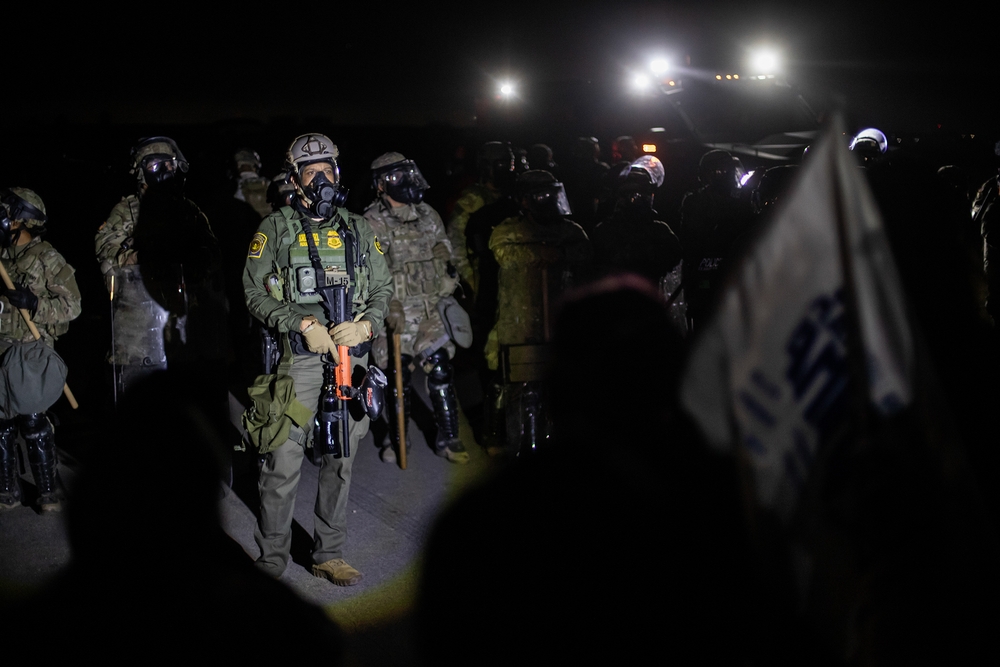
The foundational principle of American liberty is that no government agent is above the law. Yet, a recent federal court ruling paints a disturbing portrait of a federal agency operating in willful defiance of that very principle. In a concise decision made public on a Thursday morning, U.S. District Judge Jennifer L. Thurston for the Eastern District of California found that U.S. Border Patrol agents had once again violated the law and her own prior judicial order by conducting illegal immigration stops and arrests.
The case stems from a July operation in Sacramento, where Border Patrol agents descended upon a Home Depot parking lot, detaining a group of day laborers. Court records show they arrested 11 non-citizens and one U.S. citizen. This raid came after Judge Thurston, in a 2022 preliminary injunction, had explicitly prohibited Border Patrol agents from stopping people in California’s Central Valley without documenting the specific facts and reasons for each stop. The injunction, secured by the United Farm Workers (UFW) union, also barred warrantless arrests without first assessing flight risk. In her latest ruling, Judge Thurston was unequivocal: the Sacramento raid violated her order. She wrote that agents had “stopped people again without reasonable suspicion,” relying on broad assumptions about workers rather than specific evidence of immigration violations. Her words from a prior hearing echoed forcefully: “You can’t just go up to brown-skinned people and say, ‘Give me your papers.‘”
The government’s defense rested on claims of surveillance, intelligence, and “general knowledge” that workers congregate in such parking lots, even suggesting the use of drone footage. However, Judge Thurston’s scrutiny of the agents’ records revealed a shocking pattern of negligence and obfuscation. Agents filed nearly identical boilerplate reports for multiple arrests; their names were redacted; reports contained inaccuracies or couldn’t be linked to specific individuals; and in one glaring instance, an agent claimed a “brief foot pursuit” for a detention location a twelve-minute walk away, which the judge deemed documentation “inaccurate and incomplete.” Furthermore, the ruling was kept under seal for two weeks to redact agents’ names and “law enforcement sensitive information,” a procedural step that, while standard, underscores the charged and secretive nature of these operations.
The Legal Context: “Kavanaugh Stops” and a Pattern of Contempt
This incident does not exist in a vacuum. It intersects with a contentious legal doctrine colloquially known as “Kavanaugh stops,” referencing a 2022 opinion by Supreme Court Justice Brett Kavanaugh. This concept involves stops not based on reasonable suspicion and faced a separate legal challenge that reached the Supreme Court. While the high court allowed a temporary restraining order against such stops in Los Angeles to be paused, it did not rule on their legality. As U.S. District Judge Maame Ewusi-Mensah Frimpong noted, “The Supreme Court has issued no decision indicating what the Government did in Los Angeles — and appears to continue to do — was lawful.” Judge Thurston’s ruling is thus a critical lower-court affirmation that such tactics are, in fact, unlawful when they lack documented, individualized suspicion.
The individuals involved embody this conflict. Judge Thurston, a Biden appointee, demonstrated what UC Davis law professor Kevin Johnson called “judicial restraint” by giving the Trump administration (which oversees the pending litigation) an opportunity to comply before escalating sanctions. Elizabeth Strater of the UFW framed the victory succinctly: “The ruling affirms what we’ve been saying from the beginning: you can’t just stop people for being brown and working-class.” The shadow of past contempt looms large; Professor Johnson pointed to the 2017 criminal contempt conviction of former Arizona Sheriff Joe Arpaio for violating a court order against profiling Latinos—a conviction later pardoned by then-President Donald Trump. This historical parallel serves as a stark warning of how far judicial patience can be tested.
Opinion: This Is an Affront to the Constitution and the Soul of the Nation
The facts presented are not a dry legal dispute; they are a five-alarm fire for democracy and constitutional governance. What we are witnessing is not merely aggressive enforcement, but the normalization of lawlessness by the state. When federal agents, armed with the authority of the United States government, repeatedly ignore a federal judge’s direct orders, they are not enforcing the law—they are subverting it. The bedrock of the American system is the separation of powers and the idea that the judiciary serves as a check on executive overreach. Judge Thurston’s order was that check. The Border Patrol’s alleged actions represent a conscious decision to render that check null and void.
The methodology exposed—relying on “general knowledge” about where “brown-skinned” people might gather—is textbook racial profiling. It is the antithesis of the Fourth Amendment’s protection against unreasonable searches and seizures. It reduces American citizens and residents alike to suspects based on their appearance and economic status, evoking the darkest chapters of history where papers were demanded to prove one’s right to simply exist in a public space. Judge Thurston’s blunt language cuts through the bureaucracy: this is about skin color. For an agency to operationalize such bias is to betray the promise of equal protection under the law.
The shoddy, nearly fabricated documentation is perhaps the most damning evidence of institutional contempt. Identical reports, redacted names, and invented foot pursuits are not signs of overworked agents; they are the hallmarks of an operation that never expected, or never cared, to be scrutinized. It suggests a culture where the end—making arrests—is seen as justifying any means, including lying on official reports. This corrupts the very integrity of law enforcement and makes a mockery of the transparency required in a free society.
Professor Johnson’s analysis is correct but understates the peril. This is “part of a process,” but it is a process of erosion. Each ignored order, each racially motivated stop, each falsified report chips away at the legitimacy of our institutions. The reference to Joe Arpaio is prophetic and terrifying. Arpaio’s pardon sent a catastrophic message that politically aligned lawmen could flout court orders with impunity. The current administration and all future ones must understand that compliance with judicial mandates is not optional. The escalation Professor Johnson mentions—from court orders to fines to criminal contempt—must be pursued relentlessly if the rule of law is to have any meaning.
Conclusion: A Call for Vigilance and Unyielding Principle
This case is a microcosm of a fundamental struggle: between a government of laws and a government of men. The United Farm Workers, representing some of the most vulnerable workers in our economy, have stood in the breach to defend principles that protect us all. Judge Jennifer Thurston has upheld her oath with clarity and courage. Now, the burden falls on the executive branch to enforce its own compliance and on the American public to demand it.
We cannot be a nation where liberty is conditional on complexion or where parking lots become Constitution-free zones at the whim of federal agents. The “parking lot papers” test imagined by Judge Thurston is a line we must not cross. The defense of due process, of equal protection, and of a judiciary free to curb executive excess is not a partisan issue; it is the American issue. This ruling is a victory for the rule of law, but it is a fragile one. Our vigilance must be constant, our demand for accountability must be loud, and our commitment to the principle that no one is above the law—especially those sworn to uphold it—must be absolute. The soul of our republic depends on it.