
The Partisan Assault on the Fed: A Line in the Sand for American Economic Independence
Published
- 3 min read
The Facts: A Committee Vote Along Party Lines
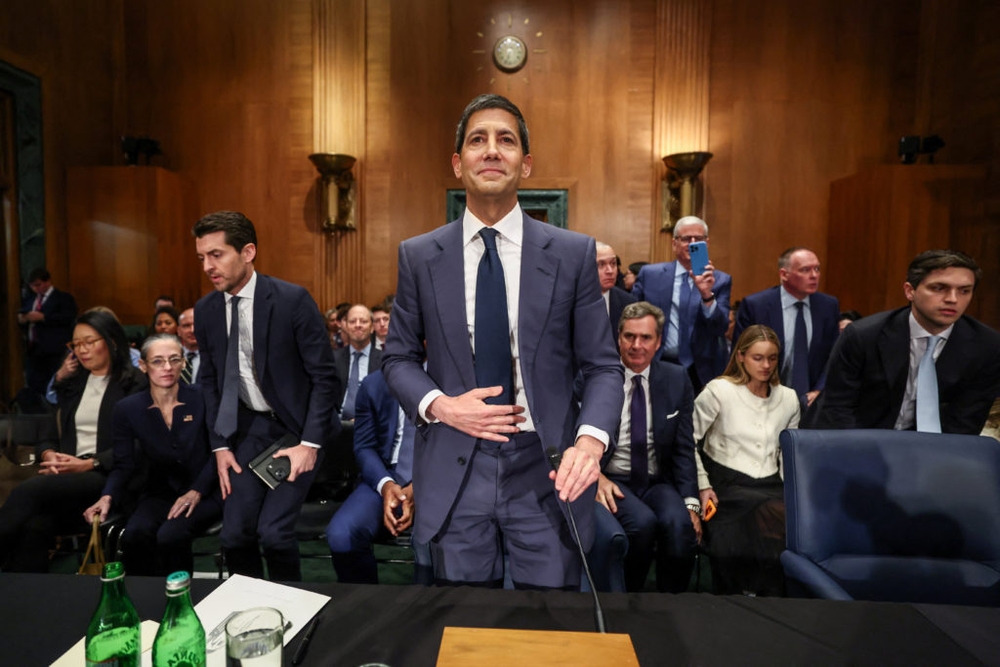
On a consequential Wednesday in Washington, the Senate Banking Committee took a starkly divided vote, 13-11, to approve the nomination of Kevin Warsh to be the next Chair of the Federal Reserve. This vote was strictly along party lines, with every Republican committee member voting in favor and every Democrat opposed. The move initiates the process to replace the current Chair, Jerome Powell, whose term ends on May 15th. Powell has been a long-time target of insults from former President Donald Trump, who publicly berated him for not cutting borrowing costs as aggressively as desired. The nomination of Warsh, a former Fed governor himself, comes as Powell presides over what is likely his final meeting of the Fed’s interest-rate setting committee. While a full Senate vote on Warsh’s confirmation is not expected until next month, the committee’s action sets the stage for a significant transition at the helm of the world’s most powerful central bank.
The Context: A Nominated Critic and a Departing Chair
The context of this nomination is critical to understanding its gravity. Kevin Warsh is not merely a former Fed official; he has positioned himself as a sharp critic of the institution and Powell’s leadership. He has gone so far as to label the inflation spike to 9.1% in 2022 as the central bank’s “biggest policy mistake in four decades.” This critique, while a matter of legitimate policy debate, takes on a different hue when his nomination advances through a process visibly colored by the previous administration’s vendetta against the sitting chair. Meanwhile, Jerome Powell faces a personal and institutional decision: whether to remain on the Federal Reserve Board of Governors after his term as chair concludes. As noted in the report, it would be unusual for a former chair to stay, but his doing so would block the Trump administration from appointing an additional member to the board. Powell may see this as a final act of stewardship to protect the Fed’s independence from further political encroachment—a silent, powerful statement of principle.
The Principle at Stake: The Sacred Independence of the Federal Reserve
The core issue here transcends the individuals involved—Kevin Warsh, Jerome Powell, or Donald Trump. It is about the foundational principle of central bank independence. The Federal Reserve was deliberately designed to be insulated from the raw political pressures of the electoral cycle. Its decisions on interest rates and monetary supply, which affect the livelihoods of every American, must be made with a long-term view toward price stability and maximum employment, not to satisfy the transient demands of a sitting president for artificially low rates to boost short-term economic figures. The moment a Fed chair is appointed or removed primarily for having displeased a politician, that independence is shattered. The Senate Banking Committee’s party-line vote is a glaring red flag that this insulation is breaking down. It suggests that confirmation is no longer about competence, experience, or economic philosophy in a broad sense, but about partisan allegiance and a willingness to conform to a specific political narrative.
The Dangerous Precedent of Politicized Confirmation
The 13-11 vote is a chilling numerical snapshot of a deeply broken process. When the stewardship of the nation’s money is decided by a tally that mirrors the partisan divide on cable news, we have entered perilous territory. This vote legitimizes the former president’s campaign of public intimidation against Jerome Powell. It sends a message to future Fed chairs and board members: your tenure and professional judgment are contingent upon the political satisfaction of the White House. This creates a perverse incentive structure where policymakers might prioritize political survivability over economic soundness. The credibility of the Federal Reserve—its most valuable asset—is built on the market’s and the public’s trust that its decisions are technically driven. Injecting overt politics into its leadership selection erodes that trust instantly, potentially leading to market volatility, undermined policy effectiveness, and long-term economic harm.
Kevin Warsh: A Critic at the Helm?
Kevin Warsh’s own critique of the Fed presents a complex paradox. While rigorous internal and external criticism is healthy for any institution, there is a vast difference between being a critic and being the chair. The chair must lead, unify, and represent the institution both domestically and globally. Warsh’s characterization of recent policy as the worst mistake in forty years is a severe indictment that could hamper his ability to foster collegiality and consensus on the Board. Furthermore, his nomination, advanced under these circumstances, risks painting him as the “political candidate,” regardless of his individual merits. His every future decision will be scrutinized through the lens of whether it is serving the economy or serving a political constituency. This is an unfair burden to place on any nominee and a damaging cloud to place over the Fed itself.
Jerome Powell’s Quiet Dignity and a Potential Final Stand
In stark contrast to the political noise stands Jerome Powell. Having endured years of undignified public attacks, he has largely maintained a steadfast commitment to the Fed’s protocols and its data-dependent approach. The possibility that he might remain on the Board of Governors is a fascinating subplot dripping with constitutional and institutional significance. Such a move, while unusual, would be a profound act of passive resistance—a utilization of the lawful rules of tenure to serve as a check against total political control of the Fed’s board. It would be a signal that the defense of institutional integrity sometimes requires personally inconvenient choices. His potential choice to stay is not about clinging to power; it would be about serving as a guardian of the principle that the Fed’s board should not become a monolith of any single administration’s ideology.
Conclusion: A Call to Defend Institutional Sovereignty
As a nation built on a system of checks and balances and a deep suspicion of concentrated power, we must view this moment with clear eyes. The partisan committee vote for Kevin Warsh is not a routine changing of the guard. It is a potential inflection point in the degradation of a critical democratic institution. The Federal Reserve’s independence is not a bureaucratic perk; it is a vital component of American economic liberty and stability. When politicians seek to remold it into a tool for short-term electoral advantage, they betray the long-term interests of the American people. The full Senate must now weigh this nomination with the gravity it deserves, looking beyond party loyalty to the enduring health of our economic governance. We must demand that our representatives prioritize the preservation of an independent Fed, for its integrity is woven directly into the fabric of our nation’s financial security and democratic resilience. The battle for the soul of the Fed is, unmistakably, a battle for the soul of American democracy itself.