
The Patel Precedent: When a $250 Million Lawsuit Is the First Line of Defense
Published
- 3 min read
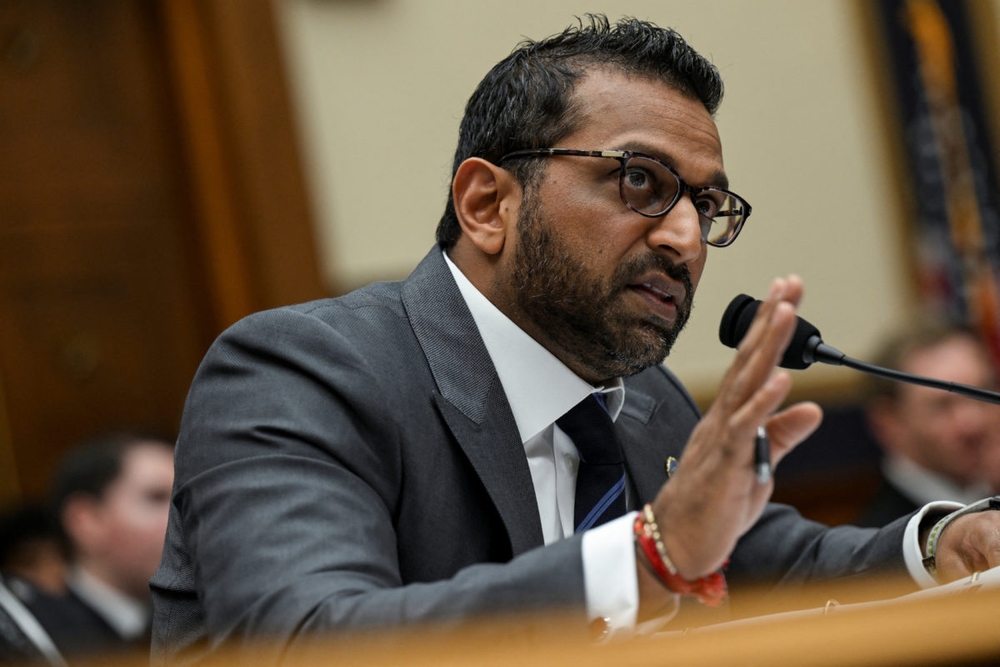
A profound and unsettling tremor has rippled through the intersection of American law enforcement, political power, and a free press. The news that FBI Director Kash Patel has filed a staggering $250 million defamation lawsuit against The Atlantic magazine is not merely a legal dispute; it is a political statement, a warning shot, and a test of the resilience of our democratic institutions. At its core, this case forces us to confront fundamental questions: What is the proper recourse for a public official facing serious allegations? And when does the legal system become a tool not for justice, but for the intimidation of the Fourth Estate? This blog post will dissect the factual allegations, the legal context, and the dangerous precedent this lawsuit seeks to establish.
The Allegations and The Lawsuit: A Factual Recap
The controversy stems from an article published by The Atlantic on its website, authored by reporter Sarah Fitzpatrick. The report painted a portrait of an FBI Director whose conduct has allegedly caused significant alarm within the upper echelons of the FBI and the Department of Justice. The central, most explosive claim involves allegations of “bouts of excessive drinking.”
The article cites more than two dozen anonymous sources who describe a pattern of behavior that includes “conspicuous inebriation” at Washington and Las Vegas establishments, meetings being rescheduled due to prior-night drinking, and incidents where Patel’s security detail had difficulty rousing him, even to the point of considering equipment to forcibly open a door. Most chillingly, the article quotes one anonymous official stating that worry over what would happen during a U.S. terrorist attack under such circumstances “keeps me up at night.” These are not trivial accusations; they speak directly to the fitness for duty of one of the nation’s top law enforcement officials, charged with safeguarding national security.
In response, Director Patel did not convene a press conference to categorically deny the specifics, nor did he request an internal review to clear his name. Instead, his first public move was the filing of a quarter-billion-dollar lawsuit in a Washington D.C. district court. The lawsuit categorically denies the allegations and labels the article a “malicious hit piece.” It criticizes The Atlantic for relying on anonymous sources, calling them “sham sources,” and claims the magazine demonstrated “actual malice” by not granting his lawyers more time to respond to the accusations before publication. The Atlantic has stated it stands by its reporting and will vigorously defend against what it calls a “meritless lawsuit.”
The Political and Legal Context: A Familiar Playbook
To understand the significance of this lawsuit, one must view it within a specific political and legal lineage. The article notes that Patel, described as a “pivotal” player on former President Donald Trump’s “law and order team,” is following a “playbook used by his boss.” This is a critical context. Former President Trump has a well-documented history of using defamation lawsuits—often with astronomically high damages demands—against media organizations whose reporting he finds displeasing.
The article references the dismissal of his lawsuit against The Wall Street Journal over a report concerning Jeffrey Epstein, and the initial dismissal (with leave to amend) of a suit against The New York Times. It also notes that CBS News and ABC News settled lawsuits out of court. This pattern establishes a tactic: using the immense cost and burden of litigation as a weapon to punish and chill critical reporting. The goal is often not to win in court—the legal bar for proving defamation against a public figure is intentionally high, requiring proof of “actual malice”—but to drain resources, create a narrative of persecution, and signal to other outlets the potential price of scrutiny.
Patel’s lawsuit fits this model perfectly. By demanding $250 million, a sum wildly disproportionate to any conceivable calculable damage, the suit transforms from a legal claim into a spectacle of intimidation. It sends a clear message to The Atlantic and every other newsroom: investigating this administration’s key figures will invite financial warfare.
Opinion: An Assault on Accountability and the Bedrock of Trust
The facts presented, and the chosen response, reveal a crisis of accountability that should alarm every citizen who values democratic governance. My analysis, grounded in a commitment to institutional integrity, freedom, and the rule of law, leads to a stark conclusion: this lawsuit is an anti-democratic maneuver that prioritizes personal reputation over public trust and seeks to undermine a core mechanism of checks and balances.
First, the use of anonymous sources, while imperfect, is not a journalistic conspiracy; it is often a necessity. When individuals within powerful, hierarchical institutions like the FBI or DOJ witness behavior they believe compromises national security, speaking on the record can mean professional suicide or worse. The promise of anonymity is what allows vital, uncomfortable truths to surface. To dismiss all such sources as “sham” is to demand a transparency from whistleblowers that the powerful themselves rarely afford. The lawsuit’s fixation on anonymity seems less about truth-seeking and more about discrediting the only pathway through which these allegations could emerge.
Second, the response is profoundly disproportionate and telling. Faced with detailed allegations from two dozen sources about conduct that directly impacts his capacity to lead the FBI—an agency whose credibility is already fragile—Patel’s instinct was not to reassure the public or his workforce through transparency. It was to lash out with a legally daunting, financially crippling action against the messenger. This suggests a mentality that views criticism not as a call for accountability, but as an act of war to be met with maximum retaliation. For a law enforcement leader, this is a frightening model of conflict resolution.
Third, this lawsuit represents a direct assault on press freedom, a pillar of the First Amendment. A free press must be able to investigate and report on public officials—especially those wielding the immense power of the FBI—without the constant specter of bankrupting litigation. By adopting the Trumpian playbook of “sue the media,” Patel is contributing to the normalization of using courts to suppress scrutiny. This chills not just The Atlantic, but every outlet, large and small, that might consider investigating misconduct. The lifeblood of democracy is informed dissent, and this tactic seeks to poison that well.
Finally, the most tragic casualty in this conflict is public trust. The FBI’s authority derives entirely from the faith of the American people. When its director is accused of behavior that allegedly causes national security professionals sleepless nights, and his primary response is a massive lawsuit against the media, it erodes that faith at its foundation. It tells the public that the institution’s priority is shielding its leader from embarrassment, not confronting hard questions about its own readiness and integrity. The White House’s statement defending Patel as a “critical player” on a “law and order team” who is “pleasing” for going after the president’s rivals only deepens this concern, politicizing the FBI’s leadership in a manner antithetical to its mission.
Conclusion: A Line in the Sand
The lawsuit by Kash Patel is a symptom of a deeper malady in our body politic: the erosion of norms that once discouraged the weaponization of legal and political power against independent institutions. This is not a partisan issue; it is a democratic one. Whether the allegations in The Atlantic are ultimately proven true or false is, in one sense, secondary to the dangerous precedent set by the chosen method of rebuttal.
We must stand firmly for the principle that those who accept the tremendous responsibility of public office, particularly in national security, must also accept the fierce, uncomfortable, and relentless scrutiny that comes with it. Their first duty is to the Constitution and the people, not to their own reputation. Defending a free press from intimidation is not about siding with a media outlet; it is about defending the mechanism that allows citizens to hold power accountable. The $250 million figure is meant to shock and awe. Our response must be a resolute and unwavering commitment to the much more valuable, non-negotiable principles of transparency, accountability, and liberty that price tag seeks to intimidate into silence.