
The Perilous Undermining of NATO: Why Trump's Threats Betray American Security and Values
Published
- 3 min read
The Facts: A Pattern of Reckless Brinkmanship
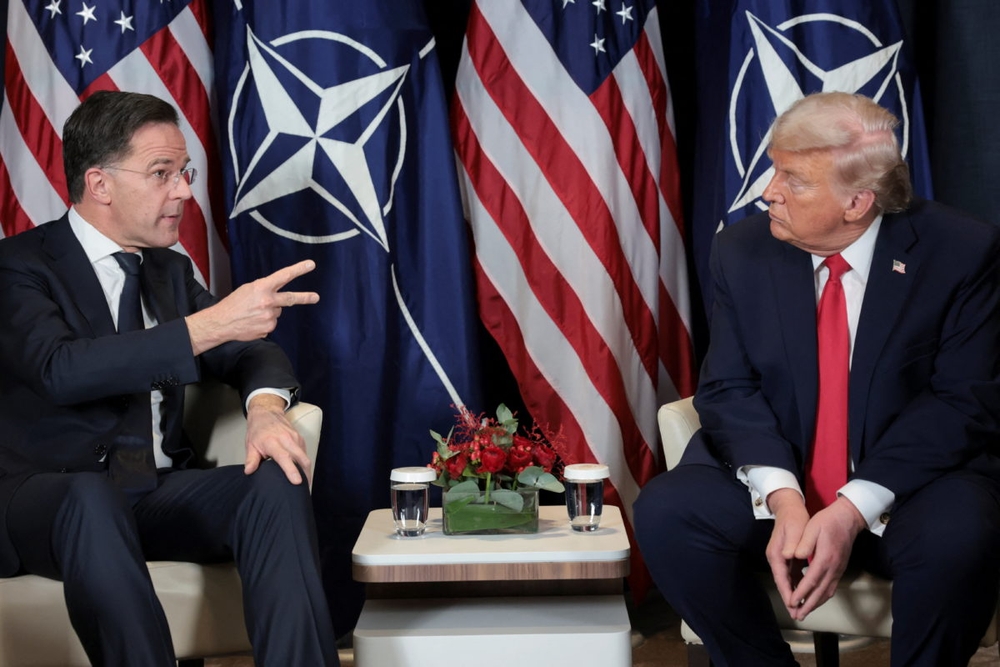
President Donald Trump’s Wednesday meeting with NATO Secretary-General Mark Rutte was supposed to soothe tensions following the Iran conflict. Instead, it became another platform for threatening the very foundation of transatlantic security. According to Associated Press reporting, Trump emerged from closed-door discussions repeating his complaints about NATO allies and suggesting the U.S. might consider leaving the military alliance that has defined Western security since 1949.
The context is critical: This confrontation follows Iran’s effective shutdown of the Strait of Hormuz, a vital shipping waterway that handles approximately one-fifth of the world’s oil transit. Trump had demanded NATO assistance in responding to this economic and strategic threat, and when member countries didn’t immediately comply with his expectations, he resorted to familiar threats of abandonment. His subsequent social media post in all caps—“NATO WASN’T THERE WHEN WE NEEDED THEM, AND THEY WON’T BE THERE IF WE NEED THEM AGAIN”—demonstrates either a fundamental misunderstanding of NATO’s operational protocols or a deliberate distortion of reality.
White House Press Secretary Karoline Leavitt acknowledged that Trump had discussed leaving NATO, despite Congress passing legislation in 2023 that prevents any U.S. president from unilaterally withdrawing from the alliance without congressional approval. This legislation, championed by Trump’s own Secretary of State Marco Rubio, represents a bipartisan recognition of NATO’s indispensable value to American security.
The historical context cannot be overstated: NATO was founded in 1949 specifically to counter Soviet threats to European security, and its mutual defense agreement—that an attack on one member is considered an attack on all—has been activated only once in its history: following the September 11, 2001 attacks on the United States. Despite this demonstrated commitment, Trump has consistently complained during his “war of choice” with Iran that NATO has failed to support American interests.
The Dangerous Escalation of Petty Grievances
What makes this particular episode especially concerning is the petty nature of Trump’s grievances. His Wednesday social media outburst included a bizarre reference to Greenland—“REMEMBER GREENLAND, THAT BIG, POORLY RUN, PIECE OF ICE!!!”—harking back to his earlier failed attempt to purchase the Danish territory. This childish rhetoric about a semi-autonomous territory of a NATO ally demonstrates how personal pique rather than strategic calculation appears to drive his foreign policy decisions.
The Iran conflict context adds another layer of complexity. While Trump claims NATO allies ignored his call for help regarding the Strait of Hormuz, the reporting indicates that nations like Spain and France restricted use of their airspace and military facilities specifically for the Iran war—a position consistent with many allies’ reservations about this conflict. However, these same nations had agreed to help with an international coalition to reopen the strait once hostilities ended. This nuance appears lost in Trump’s binary worldview where allies must either provide unconditional support or face abandonment.
Senator Mitch McConnell’s Tuesday night statement supporting NATO deserves particular attention. The Kentucky Republican noted that “following the September 11th attacks, NATO allies sent their young servicemembers to fight and die alongside America’s own in Afghanistan and Iraq.” McConnell, who sits on the defense spending oversight committee, urged Trump to be “clear and consistent” and warned that it’s not in America’s interest to “spend more time nursing grudges with allies who share our interests than deterring adversaries who threaten us.”
Why This Threatens American Security and Democratic Values
From a national security perspective, Trump’s repeated threats to abandon NATO represent perhaps the most dangerous aspect of his foreign policy approach. The North Atlantic Treaty Organization isn’t some discretionary club—it’s the bedrock of Western security architecture that has prevented major power conflict in Europe for three generations. Dismantling this structure based on transient grievances or personal pique would constitute one of the greatest strategic blunders in American history.
The mutual defense commitment—Article 5 of the NATO treaty—has served as the ultimate deterrent against aggression toward any member state. While Trump focuses obsessively on financial contributions, he fundamentally misunderstands that NATO’s value isn’t measured in dollars but in stability, deterrence, and collective security. The alliance represents America’s strategic depth—allowing us to project power and influence while sharing burdens with partners who share our democratic values.
From an institutional perspective, Trump’s disregard for the congressional legislation preventing unilateral NATO withdrawal demonstrates contempt for constitutional processes and separation of powers. The 2023 law represents the people’s representatives exercising their constitutional authority over foreign policy matters. Any administration attempt to challenge this law would constitute a dangerous power grab that undermines our system of checks and balances.
The Human Cost of Damaged Alliances
Beyond the strategic calculations, we must consider the human dimension. When Trump casually threatens alliance relationships, he’s not just rearranging geopolitical chess pieces—he’s undermining the trust that enables intelligence sharing, military coordination, and diplomatic cooperation that saves lives. NATO’s integrated command structure, joint training exercises, and intelligence sharing arrangements have prevented conflicts and saved countless American and allied lives.
The men and women who serve in our military deserve leadership that strengthens alliances rather than sabotaging them. They deserve to know that when they’re deployed abroad, they have the support of capable allies rather than facing isolation because of presidential temper tantrums. Our service members have fought alongside NATO allies in Afghanistan, Iraq, and numerous other missions—this shared sacrifice deserves respect, not contemptuous dismissal.
The Path Forward: Reaffirming Commitment to Collective Defense
America must immediately reaffirm its ironclad commitment to NATO regardless of who occupies the White House. This requires:
- Bipartisan congressional leadership making clear that NATO membership is non-negotiable and protected by law
- Diplomatic outreach to reassure nervous allies that America remains committed to collective defense
- Strategic patience in working through disagreements with allies rather than resorting to ultimatums
- Recognition that building and maintaining alliances requires consistent engagement, not transactional demands
The world is watching whether America will remain a reliable partner or descend into erratic isolationism. Our adversaries—including Russia, China, and Iran—are undoubtedly encouraged by these divisions within the Western alliance. They recognize that divided democracies are weaker democracies.
Conclusion: Standing Firm for Democratic Values
President Trump’s threats against NATO represent more than just poor diplomacy—they constitute a fundamental betrayal of American security interests and democratic values. The alliance has protected freedom and prevented major war for generations, and we abandon it at our extreme peril.
As Americans who cherish both our security and our values, we must reject this dangerous rhetoric and reaffirm our commitment to the alliances that have made America secure and prosperous. Our freedom depends on standing with those who share our democratic values, not abandoning them over transient disagreements or personal grievances. The stakes couldn’t be higher—the future of the free world depends on getting this right.