
The Powell Probe: A Political Sword Sheathed, Not Broken
Published
- 3 min read
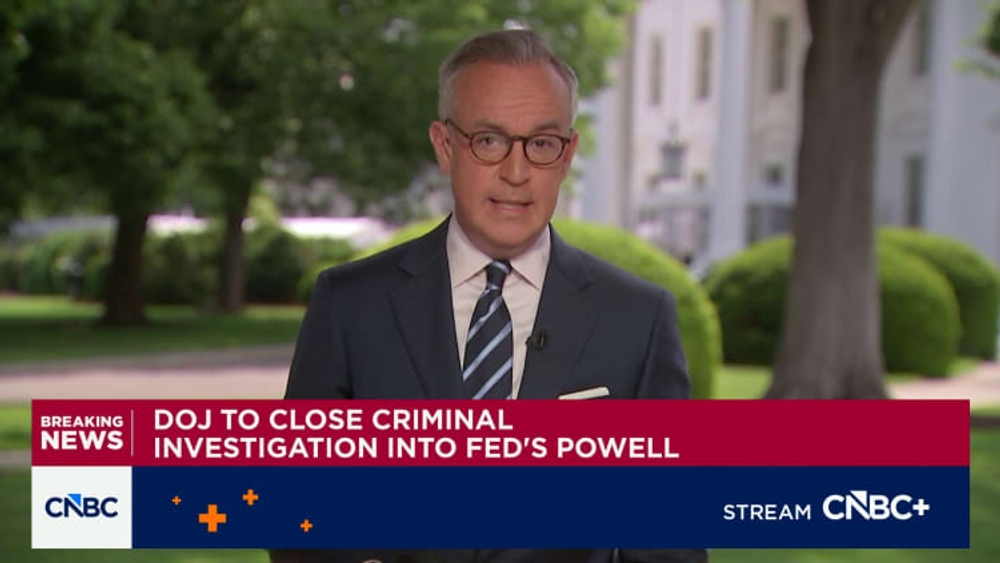
In the intricate dance of American governance, few institutions are as sacrosanct in their designed independence as the Federal Reserve. Its mandate—to ensure price stability and maximum employment—requires a fortress of impartiality, insulated from the electoral cycles and political demands of the day. Yet, a recent series of events chronicled by CNBC reveals a concerted and alarming effort to breach that fortress, using the formidable power of the Department of Justice as a battering ram. The dropping of a criminal investigation into Fed Chair Jerome Powell is not an exoneration; it is a tactical retreat in a broader campaign to subjugate monetary policy to political will.
The Facts: A Timeline of Pressure
The core narrative is stark. U.S. Attorney Jeanine Pirro, the top federal prosecutor for the District of Columbia, announced via social media platform X that her office was abandoning its criminal investigation into Federal Reserve Chair Jerome Powell. This investigation had been crippled by a federal judge’s ruling quashing subpoenas. The stated reason for the probe involved cost overruns in the multi-billion dollar renovation of the Fed’s headquarters and Powell’s testimony about the project to the Senate Banking Committee.
However, the immediate and consequential effect of dropping this probe was the removal of a major hurdle for the Senate confirmation of Kevin Warsh, President Donald Trump’s nominee to replace Powell. Senator Thom Tillis (R-N.C.), a member of the Banking Committee, had placed an effective hold on a full Senate vote, demanding an end to the criminal investigation before allowing Warsh’s confirmation to proceed. With Pirro’s announcement, that hold dissolved.
Pirro stated that the Fed’s Office of the Inspector General (IG) had “been asked this morning” to investigate the renovation cost overruns—a matter the IG had already been reviewing since the previous summer. She closed her criminal investigation but issued a stark warning: “Note well, however, that I will not hesitate to restart a criminal investigation should the facts warrant doing so.” This creates a sword of Damocles hanging over the Fed’s leadership.
White House spokesman Kush Desai framed the shift to the IG as a move to better position the inquiry, expressing confidence the Senate would “swiftly confirm Kevin Warsh… to finally restore competence and confidence in Fed decision-making.” Senate Banking Committee Chairman Tim Scott (R-S.C.) welcomed the IG review, emphasizing oversight and taxpayer accountability.
The article reports that Powell and others believed the “real reason” for Pirro’s probe was to pressure him and the Fed to lower interest rates in alignment with President Trump’s desires. This context is critical. It paints the investigation not as a pursuit of fiduciary misconduct, but as an instrument of policy coercion.
Furthermore, the article notes the parallel, unresolved “ridiculous criminal probe” against Fed Governor Lisa Cook, whom Trump previously sought to fire after she, like Powell, resisted pressure to cut rates. Senator Elizabeth Warren (D-Mass.) decried the move, calling the abandoned Powell investigation “bogus” and labeling Warsh as “President Trump’s sock puppet.” She warned, “Anyone who believes Donald Trump’s corrupt scheme to take over the Fed is over is fooling themselves.”
Opinion: An Assault on Institutional Independence
This episode is not a minor bureaucratic shuffle; it is a five-alarm fire for the principle of institutional independence. The Framers of our system understood that certain functions must be buffered from direct political control to serve the long-term health of the republic. The Federal Reserve is perhaps the paramount modern example. Its decisions on interest rates must be made based on economic data, not political calendars or presidential tweets.
The weaponization of a criminal investigation for political ends is a tactic straight from the playbook of autocracy. When a prosecutor—an office meant to be a blind arbiter of justice—opens or closes a case explicitly to influence a political appointment or a policy outcome, the rule of law corrodes. Jeanine Pirro’s probe, widely perceived as pressure on Powell over interest rates, and its convenient termination just as it blocked a key presidential nominee, reeks of political theater with real-world consequences. The threat to restart the investigation at any time transforms the IG’s administrative review into a potential pretext for renewed legal harassment, a constant shadow over whoever leads the Fed.
The targeting of Lisa Cook reinforces this pattern. It suggests a systematic effort to remove or intimidate Fed officials who demonstrate independence, replacing them with individuals perceived as more compliant. Kevin Warsh’s nomination, now cleared of this obstacle, must be scrutinized not just on his professional merits, but through the lens of this profoundly politicized confirmation process. The question for every Senator is whether they are voting for a qualified economist or a political operative in central banker’s clothing.
Senator Warren’s characterization is blunt but accurate: this is a “corrupt scheme to take over the Fed.” The vocabulary is emotional because the stakes are existential. A politicized Federal Reserve would lead to disastrous economic outcomes: boom-and-bust cycles engineered for political gain, eroded international confidence in the U.S. dollar, and skyrocketing inflation that most cruelly impacts the most vulnerable. It is the very definition of sacrificing long-term stability for short-term political advantage.
The responses from Senators Tillis and Scott, while couched in the language of oversight and taxpayer value, must be seen as enabling this dangerous gambit. Legitimate questions about cost overruns are appropriate for the Inspector General and congressional committees. Using a criminal investigation as leverage in a confirmation battle is not oversight; it is coercion. Their actions, however intended, served to apply the pressure that this entire episode was designed to generate.
Conclusion: Defending the Ramparts
The independence of the Federal Reserve is not a perk for economists; it is a vital safeguard for every American citizen. It is a bulwark against the kind of political manipulation that destroys economies and destabilizes societies. The events described in this article represent a direct assault on that bulwark.
As citizens committed to democracy, freedom, and the rule of law, we must be clear-eyed about what is happening. This is not normal. It is a test of our institutions. The Senate now holds a profound responsibility: it must reject the confirmation of any nominee who arrives under the cloud of a politically-manipulated investigative process. It must demand unequivocal, public commitments to Fed independence from Kevin Warsh. It must use its power to protect the integrity of the central bank from executive overreach.
The sword over Jerome Powell’s head may have been sheathed, but it remains sharpened and ready. The message to his successor—and to every public servant who values impartial governance—is chilling: fall in line, or face the legal consequences. We cannot, we must not, accept a America where economic policy is set by prosecutor’s subpoena and political threat. The defense of our institutions begins with recognizing these attacks for what they are and raising our voices in firm, principled opposition.