
The Powell Pursuit: A Political Assault on Federal Reserve Independence and the Rule of Law
Published
- 3 min read
The Facts: An Investigation on the Brink
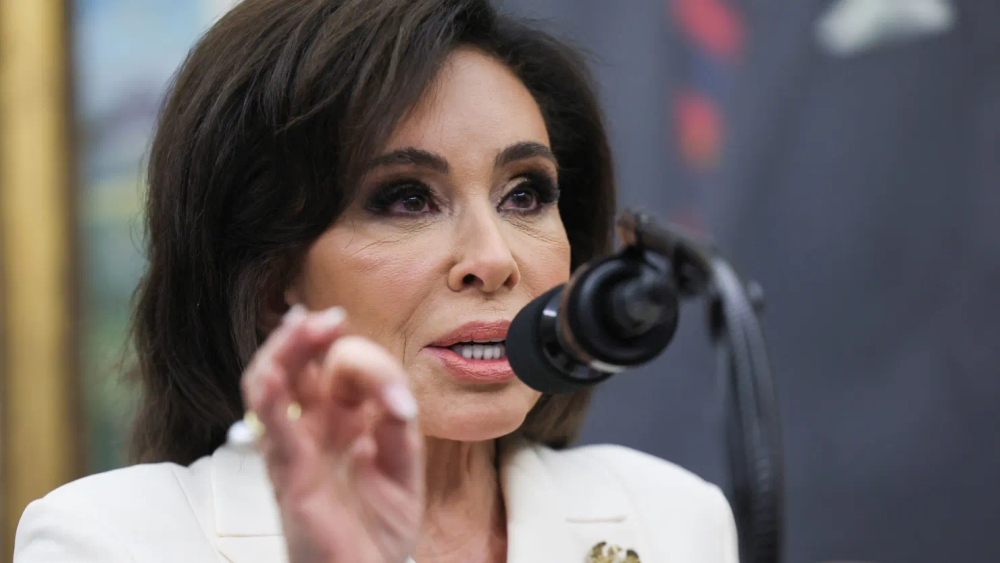
At the heart of this unfolding story is an aggressive but faltering legal action emanating from the office of U.S. Attorney for the District of Columbia Jeanine Pirro. According to multiple reports, including from CNBC and The Wall Street Journal, federal prosecutors under Pirro have been investigating Federal Reserve Chair Jerome Powell concerning cost overruns in the renovation of the Fed’s headquarters. The investigation has manifested in actions such as prosecutors “without prior notice” visiting a Fed construction site this week.
The probe, however, has consistently faced formidable judicial skepticism. Chief Judge James E. Boasberg of the U.S. District Court for the District of Columbia delivered a series of significant setbacks. Last month, he ruled that prosecutors had not met even the minimum legal bar to seek a subpoena, subsequently quashing subpoenas Pirro’s office had issued. Critically, a prosecutor from Pirro’s own office admitted to Judge Boasberg in March that the Department of Justice does “not know” if improper conduct occurred, and declined an offer to present suspicions privately. As a result, Judge Boasberg ruled the government had “presented no evidence whatsoever of fraud.” This has prompted legal experts like Columbia University law professor Daniel Richman to state the investigation “won’t survive judicial scrutiny” without new evidence.
The timeline is now critical. Pirro has a 30-day window to appeal Judge Boasberg’s ruling, creating a de facto countdown. This countdown is directly intertwined with the political calendar. Senator Thom Tillis (R.-N.C.) has explicitly stated his intention to block the confirmation of former Fed Governor Kevin Warsh, President Trump’s nominee to replace Powell, until the probe into Powell is resolved. Both Tillis and Powell have characterized the investigation as an attempt at political bullying, specifically to pressure the Fed into lowering interest rates. Meanwhile, with no credible evidence in hand, U.S. Attorney Pirro continues to express that the scale of the renovation’s cost overruns provides sufficient cause to persist.
The Context: Power, Politics, and Institutional Integrity
This confrontation did not occur in a vacuum. The Federal Reserve’s operational independence from direct political pressure is a cornerstone of modern American economic policy. Congress deliberately insulated the Fed’s monetary policy decisions—particularly interest rate setting—from the political winds of the moment, recognizing that the popular move of keeping rates artificially low can have disastrous long-term inflationary consequences. This independence is not a privilege but a necessary shield for the nation’s economic health. Any attempt to coerce or intimidate the Fed’s leadership for political ends strikes at this foundational principle.
The cast of characters amplifies the political nature of the events. U.S. Attorney Jeanine Pirro is a Trump-appointed interim official, and her tenure has been marked by a pursuit of this high-profile case. Her investigation’s fate is linked to the nomination of Kevin Warsh, a preferred candidate of the former administration. Furthermore, former President Donald Trump himself has publicly continued to assert Powell “did something wrong,” stating he would fire Powell if necessary. The report also notes that Pirro is reportedly under consideration to replace the recently fired Attorney General, Pam Bondi, adding a layer of potential political reward to her actions. This confluence of appointments, nominations, and public statements paints a stark picture of a politically motivated campaign.
Opinion: A Dangerous Spectacle That Threatens the Republic’s Foundations
What we are witnessing is not a legitimate law enforcement action; it is a cynical and dangerous political spectacle that threatens two pillars of our democratic republic: the rule of law and the independence of essential institutions. The facts speak plainly: a judge of unimpeachable standing has reviewed the government’s case and found it utterly lacking—“no evidence whatsoever.” When the very prosecutors admit under oath that they do not know if any crime occurred, it is past time to drop the charade. Yet, the pursuit continues.
This persistence transforms the awesome power of the federal prosecutor’s office into a political cudgel. Its apparent purpose is twofold: to tarnish a public servant, Jerome Powell, whose real sin in the eyes of his political detractors appears to be maintaining the Fed’s independence, and to create leverage for a preferred political outcome in the form of a new Fed chair. Senator Tillis’s blocking of Kevin Warsh’s nomination, while constitutionally within his rights, becomes part of a high-stakes hostage situation where the integrity of a federal investigation is the ransom demanded. This corrupts the Senate’s advice-and-consent role and turns a sober legal matter into a political bargaining chip.
The human cost here is significant, but the institutional cost is catastrophic. Jerome Powell is a dedicated public servant whose reputation is being sullied in a proceeding that lacks legal merit. The Federal Reserve itself, an institution that must command global confidence, is being portrayed as a site of potential criminality based on construction budgets rather than its monetary policy decisions. This undermines its credibility at home and abroad at a time of economic fragility. Most alarmingly, it signals to every independent agency—from the Securities and Exchange Commission to the Federal Communications Commission—that their leadership can be subject to politically driven legal harassment if their decisions displease a powerful faction. The chilling effect on principled governance is immeasurable.
Jeanine Pirro’s stated rationale—that an 80% cost overrun on a construction project demands scrutiny—is, on its face, a reasonable administrative concern. But when that scrutiny is wielded by a special prosecutor’s office, rubber-stamped by a political appointee, and deployed against the chairman of the Fed as his term expires and a successor awaits confirmation, it loses all credibility. It becomes a pretext. If this were a genuine oversight issue, it would be handled by inspectors general, congressional oversight committees, or the Government Accountability Office—not through a grand jury process that a federal judge has already deemed illegitimate.
As a firm believer in the Constitution, the rule of law, and the necessity of robust, apolitical institutions, I find this episode reprehensible. The rule of law demands that legal power be exercised based on evidence, not conjecture; for justice, not political gain. Judge Boasberg’s rulings are a testament to that principle, a judicial firewall against its erosion. That this firewall is being tested so brazenly is a warning sign for our democracy.
The path forward is clear, yet fraught. U.S. Attorney Pirro should, in the interest of justice and the preservation of institutional integrity, formally close this investigation. The Department of Justice must reassert its commitment to non-partisan law enforcement. The Senate must separate the confirmation of a Fed chair from the resolution of a dubious legal probe. To do otherwise is to normalize the weaponization of law enforcement, a precedent that would haunt this nation long after this particular controversy fades. The independence of the Federal Reserve was hard-won and is essential. All who value economic stability and democratic norms must stand in its defense against this transparent political assault. The clock is ticking, and what expires on May 4 may be far more than an appeal window—it could be another measure of our commitment to the principles that sustain our republic.