
The Presumption of Guilt: How Immigration Enforcement in Rural America is Shattering Lives and Betraying Core American Values
Published
- 3 min read
Introduction: A Citizen’s Walk Home Interrupted
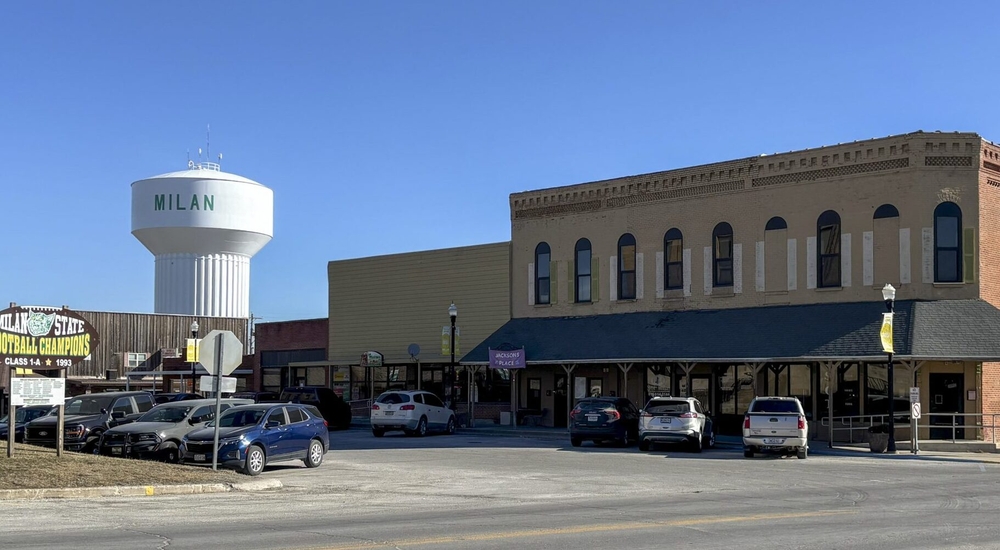
On February 24, in the small town of Milan, Missouri, a routine act—walking home after a 12-hour overnight shift—became a profound lesson in the fragility of American liberty. Eliseo Affholter, a 36-year-old U.S. citizen of Maya descent, found himself followed, surrounded, and interrogated by U.S. Immigration and Customs Enforcement (ICE) agents. His crime? Raising his phone to record their arrest of other individuals. In a moment that should be unthinkable in a constitutional republic, an agent informed Mr. Affholter, “We have the right to assume that you’re an illegal alien.” This assumption, based on his appearance and his language, frames the central crisis unfolding not just in Milan, but in agricultural communities across the United States: the replacement of due process with profiling, and the terrifying normalization of a two-tiered system of rights.
The Facts: Enforcement Beyond the Factory Gates
The arrest of Mr. Affholter, though he was later released, was part of a series of ICE actions in Milan that day. Federal agents arrested three other men: Victorino Martínez-Chávez from Guatemala, and Serigne Ciss and Thierno Amar, both from Senegal. Critically, these arrests did not occur inside the local Smithfield Foods pork processing plant, the town’s largest employer. Instead, they happened on public roads and in residential areas—the spaces where workers live and travel. This represents a strategic shift, moving enforcement from the workplace into the fabric of the community itself.
This shift appears bolstered by a September 2025 U.S. Supreme Court decision that broadened the scope of “reasonable suspicion” for immigration stops. As noted by Kevin R. Johnson, a law professor at UC Davis, the decision effectively “encouraged ICE to engage in racial profiling in immigration enforcement.” The ruling allows agents to consider a mix of factors, including apparent race, ethnicity, language, location, and type of work. While the 1975 precedent in United States v. Brignoni-Ponce forbade stops based solely on “Mexican appearance,” it permitted it as one factor among others—a loophole that has now been widened, creating a legal framework for suspicion based on phenotype.
The human consequences are immediate and devastating. Mr. Martínez-Chávez was arrested minutes after dropping his daughter at school. His wife, who primarily speaks the Indigenous Mayan language Mam, was left as the sole caretaker for their three young children, one an infant, with a pending paycheck and a newly discovered pregnancy. An error on her baby’s birth certificate has trapped her in the U.S., unable to follow her deported husband back to Guatemala. The family is economically shattered and physically divided.
The Context: An Economy Built on Immigrant Labor
To understand the full impact, one must grasp the economic reality of towns like Milan. The American food system is deeply dependent on immigrant labor. Nationwide, nearly half of all meat-processing workers are foreign-born; in agriculture, undocumented workers constitute an estimated 44% of the workforce. The Smithfield plant in Milan employs at least 500 people, a workforce equivalent to over a quarter of the town’s population. Nearly half of Milan’s residents identify as Hispanic, and more than a quarter were born outside the U.S.
This demographic shift has brought economic life to many rural communities facing population decline. Immigrants are net positive contributors to public coffers. As David Bier of the Cato Institute testified in 2023, immigrants generate nearly $1 trillion in taxes, almost $300 billion more than they receive in benefits. In Milan, Latino-owned businesses anchor the downtown. Yet, the fear generated by current enforcement is crippling this economic engine. One restaurant owner reported her daily sales plummeting from $1,000 to as low as $100, and remittance transfers she facilitates dropped from $40,000 to $6,000 weekly.
The enforcement strategy, as described by geographer Elizabeth Cullen Dunn, is often “designed to be visible without disrupting production.” It creates a climate of fear that disciplines the workforce without formally shutting down the plants that rely on them. However, the disruption is real. Workers at the Smithfield plant reported that operations began late the day after the arrests because sanitation crews were afraid to leave their homes. Those who did show up faced increased line speeds and reduced breaks, elevating the risk of injury in an industry already plagued by musculoskeletal disorders.
Opinion: A Betrayal of Constitutional Principles and Human Dignity
The events in Milan are not merely a policy dispute; they are a five-alarm fire for American democracy and the rule of law. What we are witnessing is the institutionalization of a presumption of guilt based on ancestry—a concept fundamentally antithetical to the Fourth and Fourteenth Amendments. When a U.S. citizen like Eliseo Affholter can be detained because agents have “the right to assume” he is illegal, the foundational principle of innocent until proven guilty is not just bent; it is broken. This is not law enforcement; it is power exercised without meaningful constraint, justified by a veneer of legalism that masks a deeply un-American prejudice.
The Supreme Court’s role in enabling this cannot be overstated. By expanding the concept of “reasonable suspicion” to explicitly include factors like race and language, the Court has provided a legal fig leaf for racial profiling. It has sanctioned a world where the color of your skin or the accent in your speech becomes a quantifiable data point for state suspicion. This erodes the equal protection of the laws, creating a separate track of justice for those who appear “foreign.” Professor Johnson’s assessment is correct: this is state-sanctioned profiling, and it is a stain on our judicial system.
Furthermore, this strategy of community-based terror is economically self-destructive and morally bankrupt. It targets the very communities that perform the difficult, essential labor of feeding the nation. As Daniel Costa of the Economic Policy Institute warns, you cannot “round up and deport” a significant portion of the workforce “without expecting major negative impacts on the economy.” The suffering extends beyond statistics: it is the autistic child who can no longer go on weekend outings for fear of a checkpoint; the 9-year-old girl who dreams of fixing her family’s “papers” to end the fear; the wife who wonders, “Who’s going to take care of me now?” This is the human cost of a policy that prioritizes performance over humanity.
ICE’s statement regarding Mr. Affholter—that he “deliberately interfered” and “verbally assaulted” agents—is a classic tactic to discredit a citizen exercising a fundamental right: documenting the actions of public officials. In a free society, recording the police is a check on power, not an interference. To weaponize that act as justification for an immigration interrogation is to twist liberty into a pretext for its own denial.
Conclusion: Reclaiming the America We Know
Eliseo Affholter’s poignant words hang in the air: “What I am experiencing now is not normal. I can’t accept that this is normal. Because that’s not the America I know.” He is right. The America he knows, the America enshrined in our founding documents, is one where we are all equal under the law, where freedom is not contingent on skin tone or surname, and where the state must justify its intrusion into our lives with specific, individualized suspicion—not broad, discriminatory assumptions.
The campaign in Milan and towns like it is a direct assault on that idea. It replaces justice with fear, community with suspicion, and equality with hierarchy. It weakens the economic vitality of rural America while shredding the social contract. As a nation committed to liberty, we must reject this path. We must demand that enforcement respect constitutional boundaries, that the Supreme Court revisit doctrines that enable profiling, and that our policies recognize the indispensable humanity and contribution of immigrant workers. The soul of America is not found in the fear on the streets of Milan, but in the defiant hope of those who still believe, as Mr. Affholter does, in an America where we are all free, no matter our roots, our color, or the language we speak. It is an America we must fight to restore, before it vanishes entirely.