
The Pretextual Pursuit: How a Politicized Probe Threatens the Heart of Economic Democracy
Published
- 3 min read
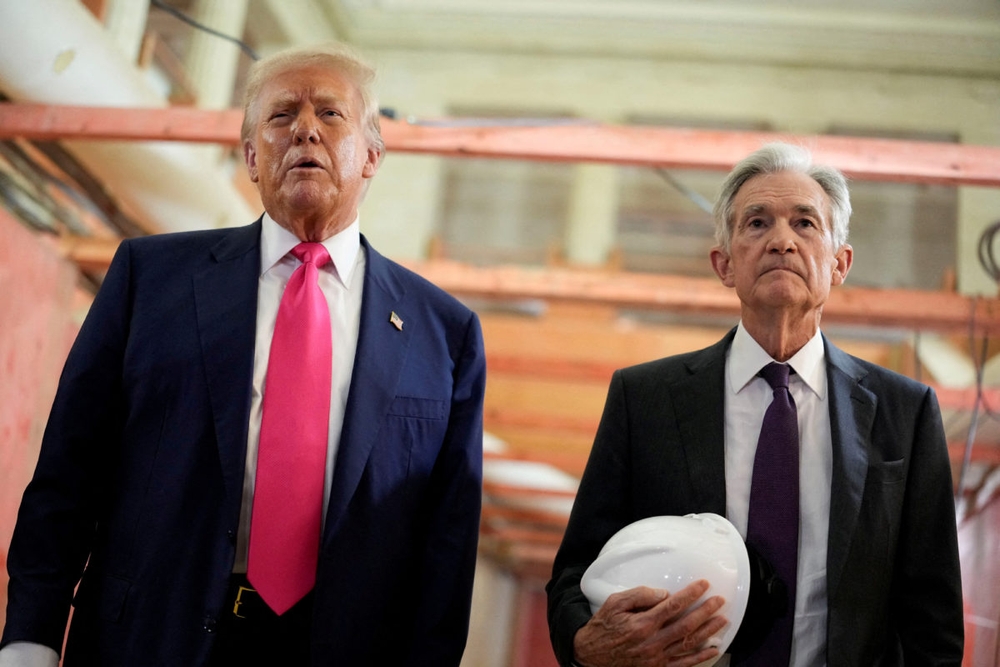
The Facts: A Curious Investigation and an Unannounced Visit
This week, in a move that reads more like a political stunt than legitimate oversight, federal prosecutors from the office of U.S. Attorney Jeanine Pirro made an unannounced visit to the construction site at the Federal Reserve headquarters in Washington, D.C. According to reports, two prosecutors and an investigator were turned away by a building contractor and referred to the Fed’s legal team. This site is the focus of a Justice Department investigation into cost overruns for the Fed’s extensive building renovation, a project whose estimated price tag has risen from $1.9 billion in 2022 to approximately $2.5 billion currently.
However, this investigation has been mired in controversy and judicial skepticism from the start. Last month, in a closed-door hearing, a top deputy from Pirro’s office conceded they had found no evidence of a crime. More decisively, U.S. District Judge James Boasberg concluded that the Justice Department’s interest in the renovation project was “pretextual.” This critical finding was echoed in a pointed email from Federal Reserve attorney Robert Hur to the prosecutors, who noted their request for a “tour” to “check on progress” and warned them not to try to circumvent the judge’s ruling.
The Context: Political Pressure and Institutional Independence
The backdrop for this peculiar scene is a high-stakes battle over the leadership and independence of the world’s most powerful central bank. Fed Chair Jerome Powell’s term expires on May 15th. President Donald Trump has for months wanted to remove Powell, publicly criticizing him for not cutting interest rates faster to boost the economy. Trump has explicitly stated that if Powell tries to remain on the Fed’s governing board after his chair term ends, “I’ll have to fire him.” Powell, for his part, has framed the Justice Department’s renovation probe as a pretext to undermine the Fed’s operational independence.
This investigation has direct consequences. It has delayed Senate consideration of Kevin Warsh, President Trump’s nominee to replace Powell as Chair. Furthermore, Senator Thom Tillis (R-NC), a key member of the Senate Banking Committee, has declared he will not vote to confirm any Fed nominees until the investigation is dropped. In a telling commentary, Senator Tillis recently posted a link to news of the prosecutors’ site visit beneath an image of the Three Stooges, captioning it, “The U.S. Attorney’s Office for D.C. at the crime scene.”
The probe itself appears to originate from brief testimony Powell gave last June before the Senate Banking Committee, where he was asked about the renovation’s cost increases. From that routine congressional exchange, an extensive Justice Department investigation was launched, one that a federal judge has now explicitly labeled as lacking genuine criminal purpose.
Opinion: A Chilling Assault on Democratic Guardrails
What we are witnessing is not diligent law enforcement; it is the weaponization of legal process for political ends. This is a chilling, textbook example of how to undermine a critical democratic institution not through a direct coup, but through a death by a thousand cuts—through harassment, through bogus investigations, and through the creation of a cloud of suspicion where none is warranted.
The independence of the Federal Reserve is not a bureaucratic technicality; it is a foundational pillar of modern economic democracy. It exists to ensure monetary policy decisions are made based on data, economic analysis, and long-term stability, not the short-term political calculations or electoral whims of any president. When Jerome Powell states that this investigation is a pretext to undermine that independence, we must take him at his word, for the evidence overwhelmingly supports his claim. A federal judge has labeled the probe pretextual. The investigators admit they have found no crime. The President openly links his desire to fire Powell to interest rate policy. The sequence and motivations could not be clearer.
The unannounced site visit is the perfect metaphor for this entire affair: a heavy-handed, theatrical attempt to intimidate and demonstrate power, which upon contact with reality—the rule of law as represented by the contractor following protocol and the judge’s prior ruling—is revealed to be empty and illegitimate. It is prosecutorial bullying, pure and simple.
Senator Tillis’s Three Stooges analogy, while glib, cuts to a profound truth. This investigation makes a mockery of the serious, solemn duty of law enforcement. It transforms the hallowed pursuit of justice into a slapstick performance designed to serve a political master. Every dollar and every hour spent on this charade is a resource stolen from pursuing actual crimes and upholding actual justice.
The Dangerous Precedent and the Path Forward
The ramifications extend far beyond a real estate project or even the tenure of one Fed Chair. This is about establishing a precedent. If a sitting president can deploy the Justice Department to harass and potentially remove a central bank chair whose policies he dislikes, then no institution is safe. The wall of separation between politics and technocratic, evidence-based governance will have been breached. The next target could be any independent agency—the Federal Communications Commission, the Securities and Exchange Commission, or the Federal Election Commission. The autonomy that allows these bodies to function for the long-term public good would be permanently compromised.
Robert Hur’s email to the prosecutors was a dignified but firm defense of the rule of law: “Should you wish to challenge that finding, the courts provide an avenue for you; it is not appropriate for you to try to circumvent it.” This statement is a beacon. The proper avenues are congressional oversight, the judicial system, and the established norms of appointment and confirmation. Backdoor investigations and presidential threats of firing are the tools of autocracy, not democracy.
Civil society, the media, and members of Congress from both parties who value institutional integrity must rally in defense of the Federal Reserve’s independence. Bipartisan opposition in Congress to this investigation is a start, but it is not enough. There must be clear, unequivocal statements that the weaponization of law enforcement against political opponents or independent institutions is unacceptable. The confirmation of Fed officials must proceed based on merit and philosophy, not held hostage to a politicized probe.
Conclusion: Defending the Bedrock
The $2.5 billion renovation at the Fed’s headquarters is intended to modernize a physical building. The real renovation we need is a recommitment to the foundational principles that sustain our republic: the rule of law, the separation of powers, and the independence of non-partisan institutions. The spectacle of prosecutors being turned away from a construction site is a small victory for procedure, but the larger war for the soul of our governance continues. We must not be distracted by the pretext. We must focus on the principle: in a free society, the central bank must be free from political coercion. To sacrifice that is to sacrifice economic stability and democratic maturity on the altar of raw political power. The cost of that would be immeasurably higher than any building renovation.